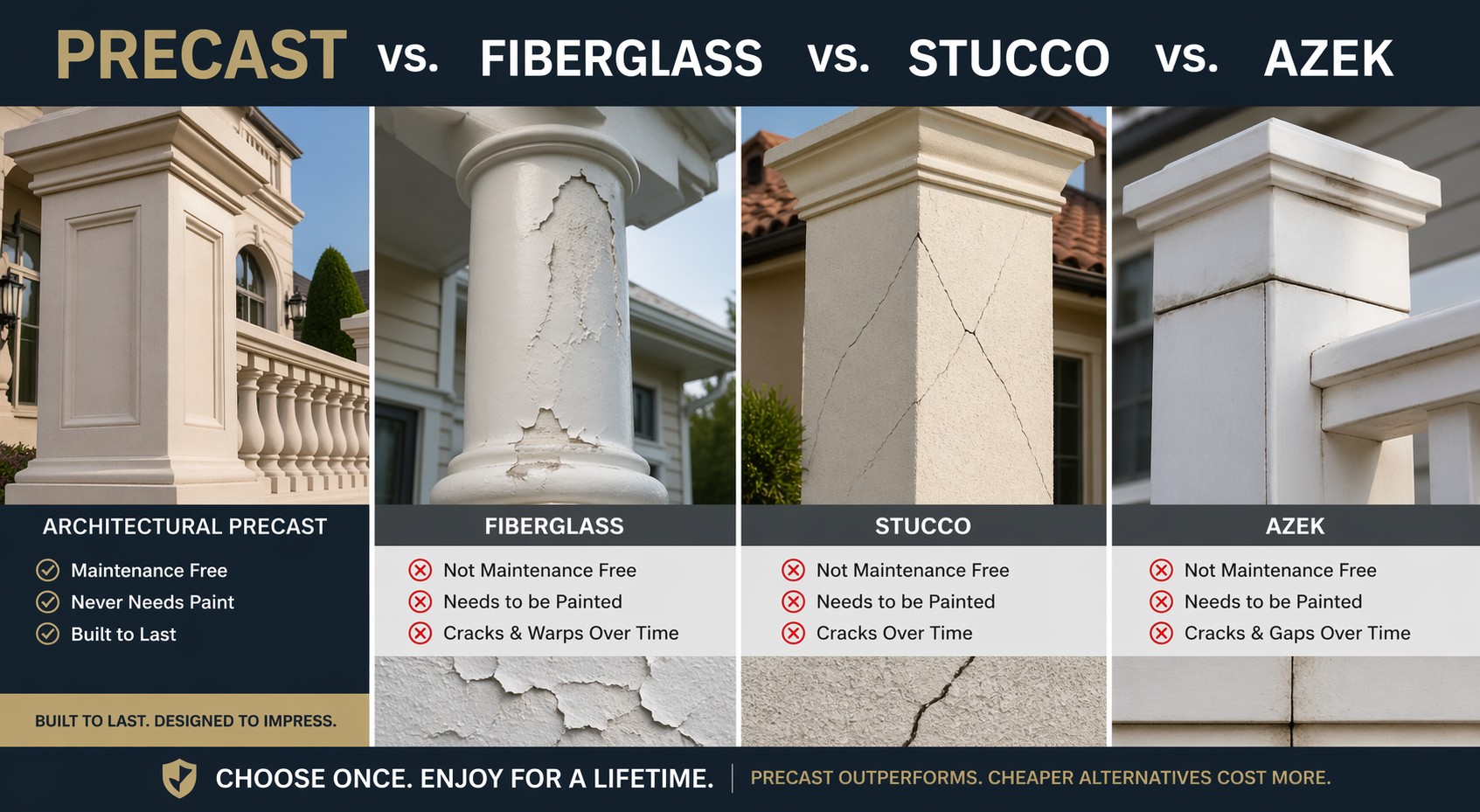
When it comes to building or upgrading a home or commercial property, one of the most common decisions people face is choosing materials. On paper, cheaper options like fiberglass, stucco, or Azek seem like smart choices. They promise lower upfront costs and quick installation, which can be appealing—especially when trying to stay within budget.
But here’s the reality most people don’t realize until it’s too late: saving money upfront often leads to spending far more over time.
Architectural precast, while sometimes perceived as a higher initial investment, consistently proves to be the smarter long-term choice. To understand why, it’s important to break down why people gravitate toward cheaper materials—and what they’re actually sacrificing in the process.
Why People Choose Cheaper Materials
The decision usually comes down to one thing: immediate cost.
Builders, contractors, and even homeowners are often under pressure to reduce expenses. Whether it’s to win a bid, stay within a strict budget, or maximize short-term ROI, materials like fiberglass, stucco, and Azek become attractive options.
They’re lightweight, easy to install, and widely available. On the surface, they “get the job done.”
But what’s often overlooked is how these materials perform over time.
The Hidden Downsides of Cheap Alternatives
1. They’re Not Maintenance-Free
One of the biggest misconceptions about materials like fiberglass, stucco, and Azek is that they require little to no maintenance.
In reality, the opposite is true.
- Stucco can absorb moisture, leading to staining, mold, and deterioration.
- Fiberglass can fade, warp, or degrade when exposed to constant sun and weather.
- Azek (PVC-based materials) can expand and contract with temperature changes, leading to gaps and instability.
Architectural precast, on the other hand, is engineered for durability. Its dense composition makes it far less porous, meaning it resists water penetration, weather damage, and long-term wear.
2. You’ll Eventually Have to Paint (Again and Again)
Cheaper materials almost always require painting or refinishing over time.
At first, everything looks clean and polished. But after a few seasons of sun, rain, and temperature shifts, fading and discoloration begin to show.
That means:
- Repainting costs
- Labor expenses
- Ongoing maintenance schedules
What started as a “cost-saving” decision quickly turns into a recurring expense.
Architectural precast eliminates this cycle. Its finish is designed to last, maintaining its color and texture without constant upkeep.
3. Cracking Is Almost Inevitable
This is where cheap materials really fall short.
- Stucco is notorious for cracking due to building movement and temperature changes.
- Fiberglass can develop stress cracks over time.
- Azek can shift and separate at joints.
Cracks don’t just affect appearance—they allow moisture to seep in, which leads to deeper structural issues.
Architectural precast is built to handle environmental stress. Its strength and density significantly reduce the likelihood of cracking, even in fluctuating climates.
The Long-Term Cost Breakdown
Let’s be honest—most decisions in construction come down to cost.
But the real question isn’t: What’s cheaper today?
It’s: What will cost less over the next 10–20 years?
With cheaper materials, you’re looking at:
- Regular repainting
- Repairs from cracks or damage
- Replacement of worn-out sections
- Labor costs for ongoing maintenance
These expenses add up quickly—and often surpass the initial savings.
Architectural precast flips that equation. While the upfront investment may be higher, the long-term costs are significantly lower due to minimal maintenance and extended lifespan.
Performance in Real-World Conditions
Another factor people underestimate is how materials perform in actual environments—not just in ideal conditions.
In areas with extreme heat, cold, humidity, or coastal exposure:
- Stucco can deteriorate faster
- Fiberglass can weaken under UV exposure
- Azek can expand and contract excessively
Architectural precast is specifically designed to handle these variables. Its composition allows it to perform consistently across different climates, making it a reliable choice whether you’re building in New York, Florida, or anywhere in between.
Aesthetic Value That Lasts
There’s also a visual difference that becomes more noticeable over time.
Cheaper materials often start strong—but gradually lose their appeal:
- Colors fade
- Surfaces wear down
- Cracks become visible
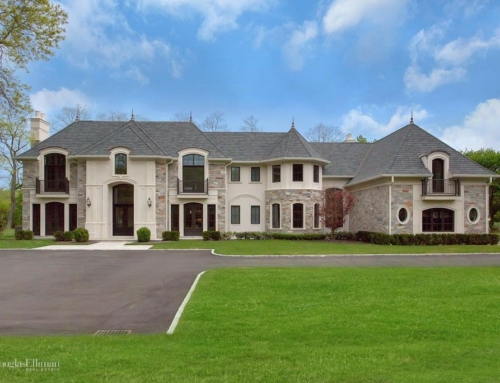
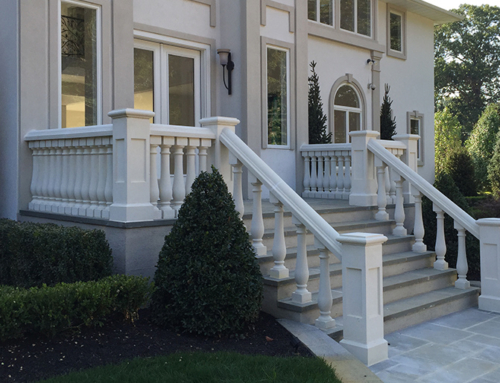
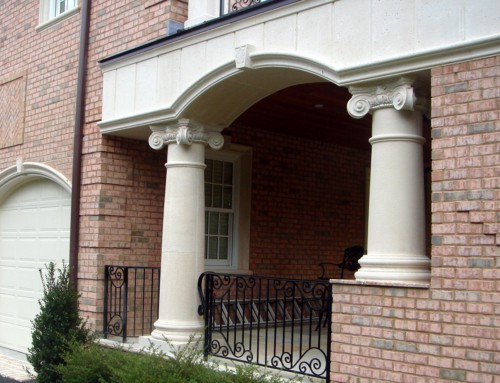
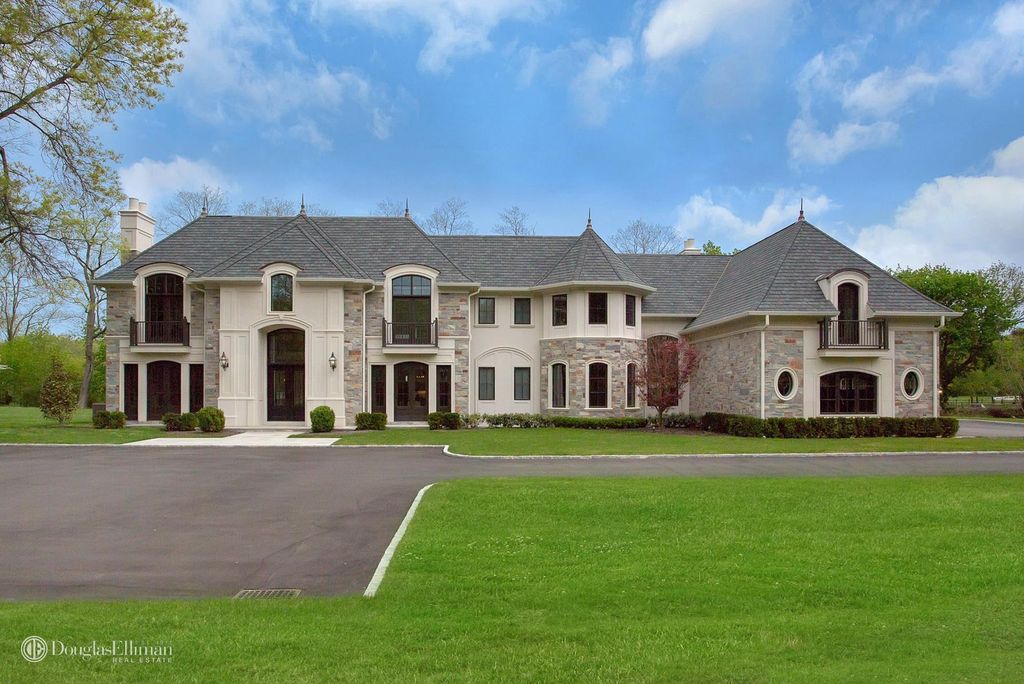
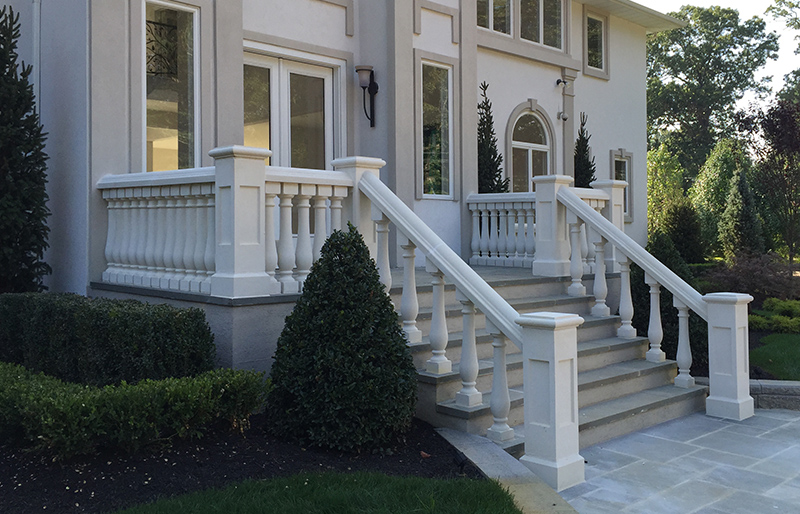
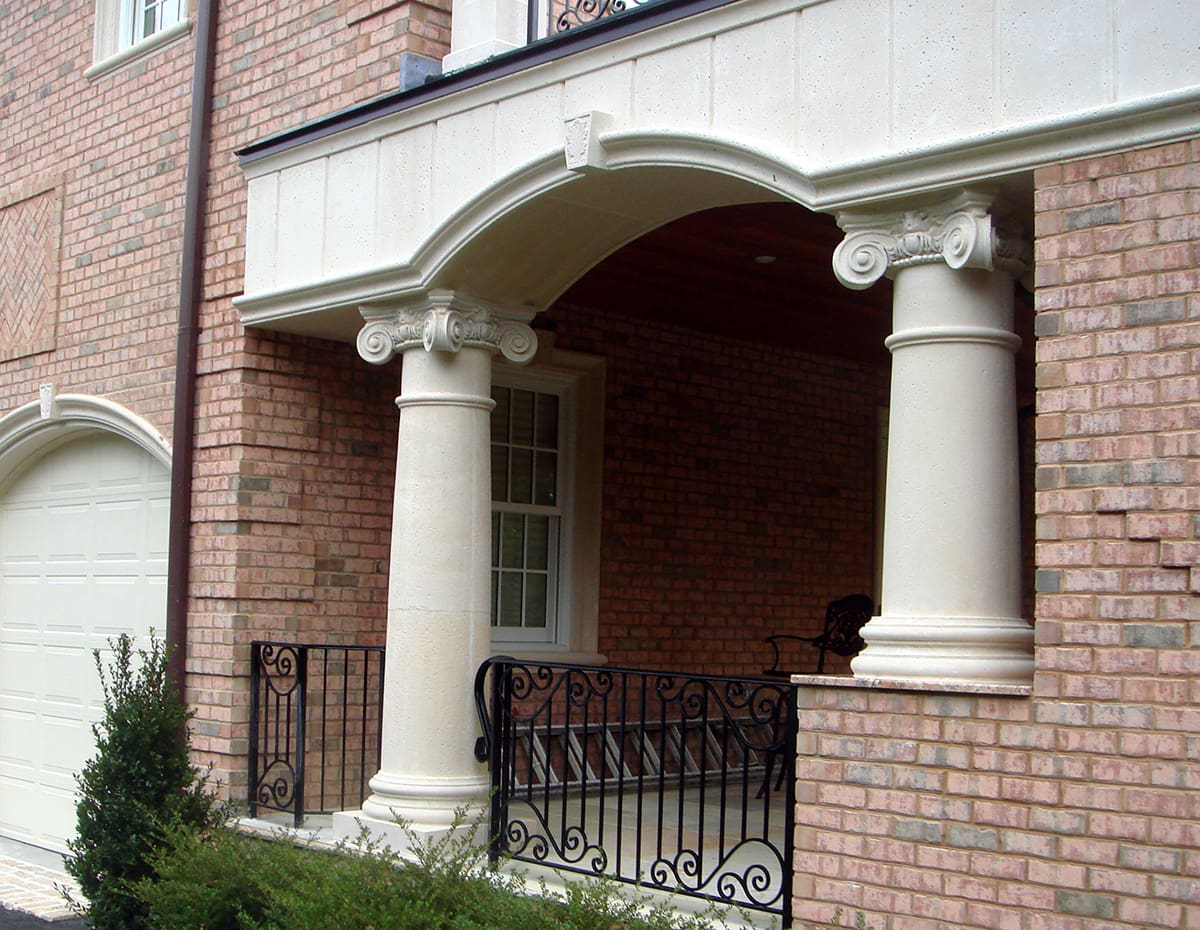
Architectural precast maintains its clean, high-end appearance for years. Whether it’s balustrades, columns, or full façade elements, the material holds its form and finish, preserving the original design intent.
For homeowners and developers, that means stronger curb appeal—and in many cases, higher property value.
Where Precast Really Makes a Difference
Architectural precast isn’t just about durability—it’s about versatility.
It works seamlessly across:
- Residential homes (small and large)
- Apartment buildings and condos
- Hotels and resorts
- Commercial properties like banks and restaurants
- Restoration projects where precision matters
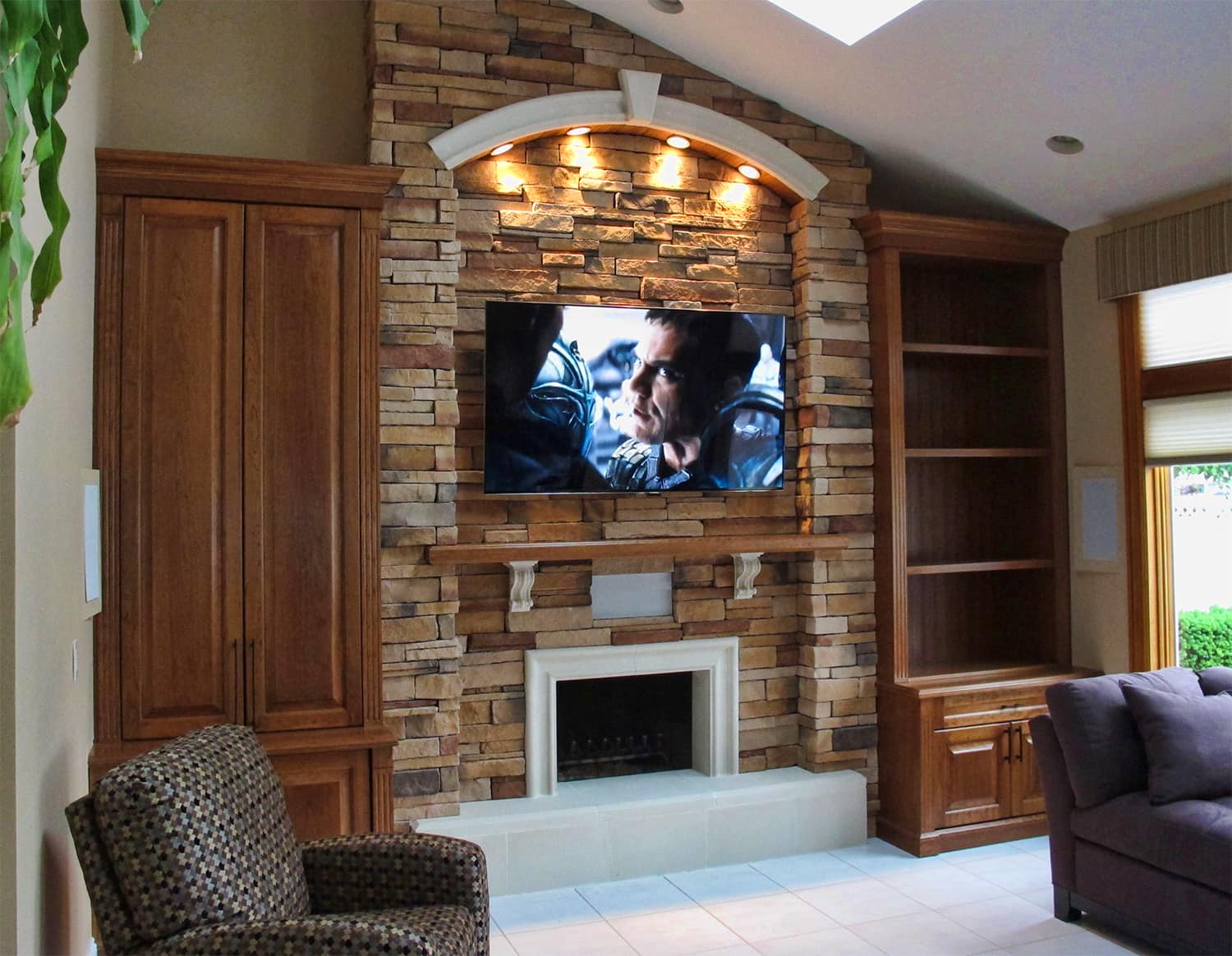
Because it integrates well with materials like brick, stucco, and natural stone, it enhances rather than limits design possibilities.
The Bigger Picture: Investment vs Expense
At the end of the day, choosing materials comes down to mindset.
Cheaper options are often treated as a way to reduce expenses.
Architectural precast should be viewed as an investment.
An investment in:
- Long-term durability
- Reduced maintenance
- Consistent appearance
- Structural reliability
When you factor in time, labor, and repeated repairs, the “cheaper” route often becomes the more expensive one.
Final Thoughts
It’s easy to understand why people choose fiberglass, stucco, or Azek. They’re accessible, familiar, and initially affordable.
But those short-term savings come with long-term trade-offs—maintenance, repairs, and performance issues that can’t be ignored.
Architectural precast offers a different path. It’s built to last, designed to perform, and proven to reduce costs over time.
So before making a decision based purely on price, it’s worth asking:
Are you saving money—or just delaying the cost?