Stucco vs Precast: A Side-by-Side Comparison for Your Home’s Exterior
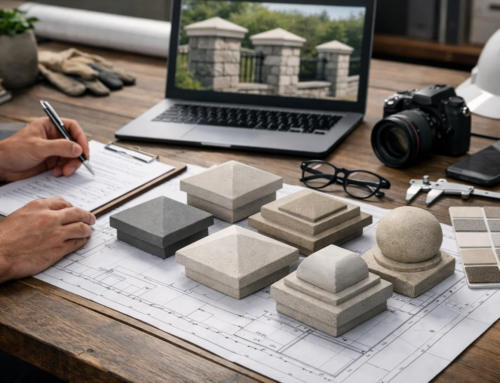
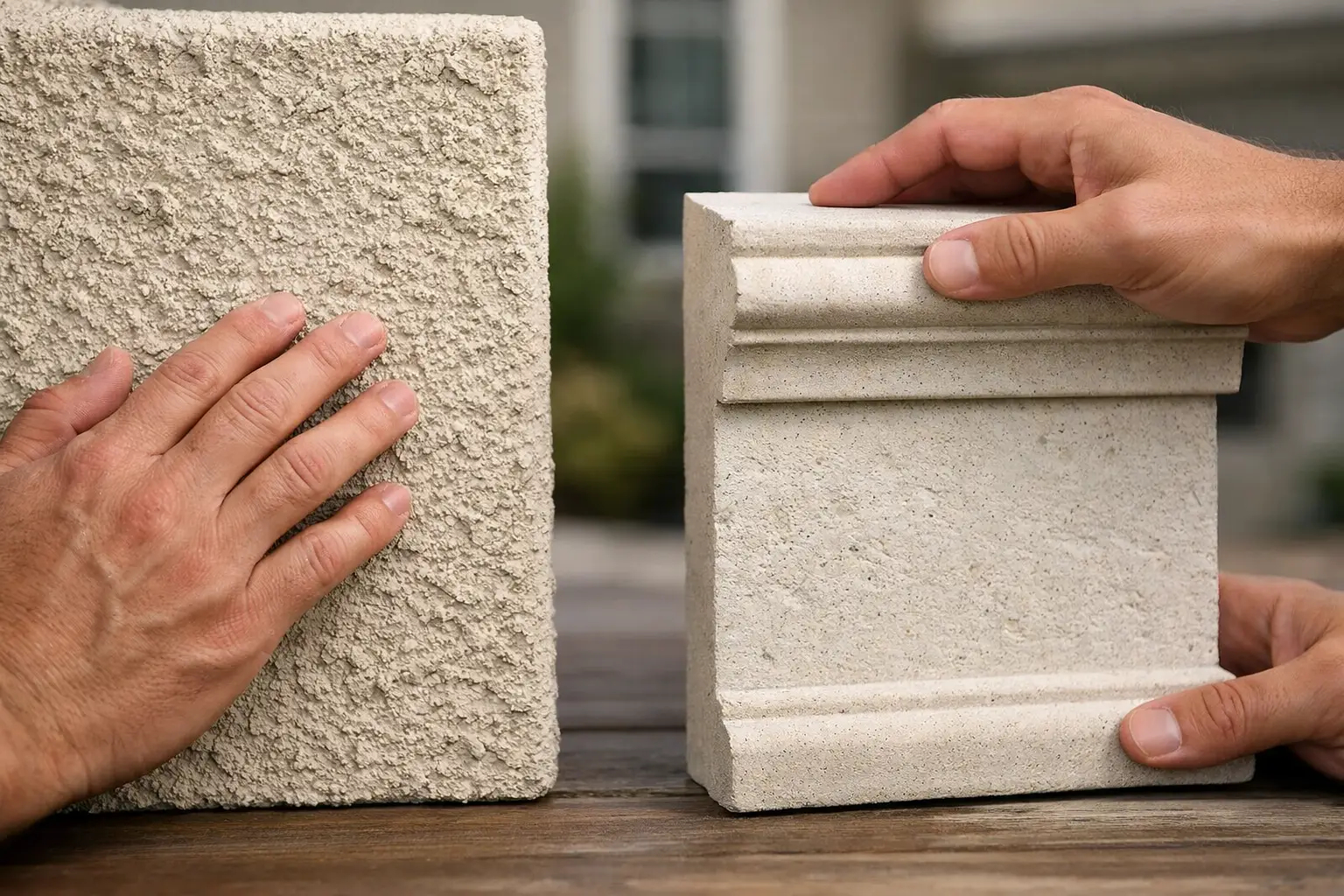
On a framed exterior wall, two crews pause beside sample boards. One board shows a smooth troweled surface that catches the morning light in a single plane. The other carries a cast piece with a deep shadow line and a crisp edge around a mock window opening. The owner stands between them, tape measure in hand, trying to decide what belongs on the house.
That moment gets to the heart of Stucco vs Precast. You are not just choosing a look. You are choosing between two different ways of building an exterior: one usually goes on wet and cures in place, and the other arrives as a made piece that gets attached to the wall.
If you have searched this lately, you have probably seen why the choice feels muddy. The first five results on Google lean toward precast product pages and general exterior comparisons, not a clean explanation of what each material actually does. So let’s separate the categories first, then compare them by appearance, installation, maintenance, and detail.
What Stucco vs Precast Actually Means
Stucco as a finish system, not a decorative panel
Stucco is best understood as a finish system. In common residential practice, it is a cementitious exterior finish applied in layers over a prepared wall assembly, often over lath and a weather-resistive barrier. On many homes, that means a scratch coat, a brown coat, and a finish coat, though one-coat assemblies exist too.
Once it cures, stucco reads as one continuous skin. That is why it works so well on broad wall planes. You are not looking at a separate object fastened to the facade. You are looking at the wall wearing a finish.
Precast as a manufactured exterior component
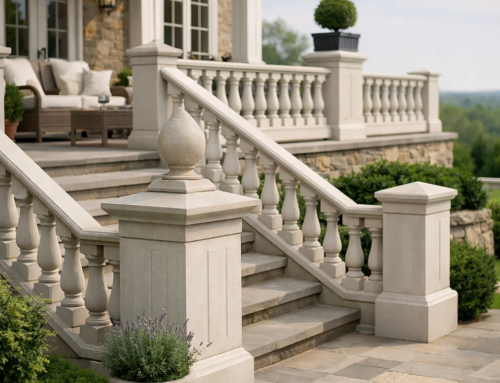
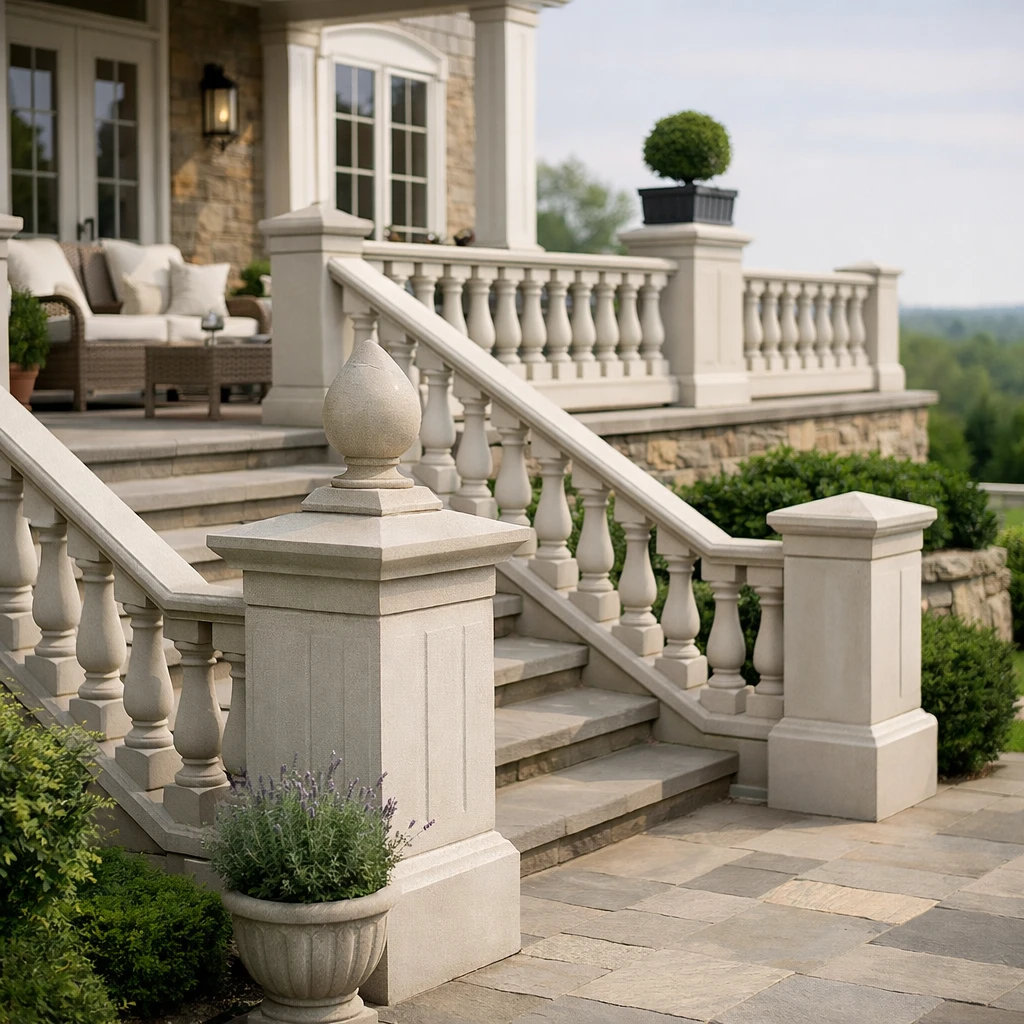
Precast, in the context of home exteriors, usually means a factory-made architectural component. Think window surrounds, sills, coping, cornices, columns, balustrades, pier caps, wall caps, pavers, thin veneer, and decorative stone elements cast in molds, cured off site, then delivered ready for installation.
That distinction matters. Precast behaves more like a part than a coating. You see its edges, reveals, returns, and joints. Even when it mimics carved stone, it still arrives as a manufactured piece with a defined profile. For a house with 12 identical windows, that repeatability can be a real advantage.
Why these two get compared on the same project
They get compared because they often show up on the same set of drawings. A builder might be deciding whether to keep an elevation quiet with a continuous skin or introduce more depth around openings. An architect might weigh site labor against factory-made trim. A homeowner may simply want to know why one sample looks flatter and the other throws a stronger shadow at 4 p.m.
Many good exteriors use both. But when you are making a budget or design decision, you need cleaner criteria than the search results usually give you.
Practical rule: compare the wall system, not just the surface look.
Stucco Overview: Where It Shines and Where It Struggles
How stucco is typically built up on the wall
Stucco earns its reputation from how it is built. The wall gets prepared. Flashings, control joints, lath, and substrates have to be right before the finish ever goes on. Then the material is applied in layers and cured on site, which means weather, crew skill, scheduling, and drying conditions all matter.
That site-built character is both its strength and its vulnerability. On a straightforward two-story home in Phoenix or a renovation in Santa Barbara, an experienced crew can create a beautiful exterior plane. But the finished result depends heavily on workmanship and substrate conditions because the wall is being created in real time, not in a factory.
Design styles and building types that use stucco well
Stucco works best when your design wants visual continuity. Mediterranean homes, Spanish Colonial revivals, Southwestern houses, and many simple contemporary volumes all benefit from that broad, uninterrupted surface. Even a lightly sanded texture can soften a big wall in a way that trim-heavy systems do not.
Compared with manufactured cladding or attached cast pieces, stucco gives you fewer pronounced architectural shadows. That is not a flaw. It is often the point. If you want the house to read as mass and surface rather than part and profile, stucco usually gets you there faster.
Tradeoffs: cracking, curing, and maintenance sensitivity
Stucco is not carefree. Hairline cracking can happen as buildings move, substrates shift, or curing conditions fall short. Moisture management matters — especially around windows, roof-to-wall intersections, and grade transitions. If drainage details are weak, the finish cannot save the wall behind it.
Repairs are possible, and that is one reason stucco remains practical in many markets. Still, patches can telegraph. Color and texture matching are not always perfect, especially on a sun-faded wall that has been out in Buffalo winters or Los Angeles heat for a decade. If you want a field-applied finish, you have to respect field-applied variables.
If you want a seamless exterior plane, stucco usually beats anything that reads as a separate attached piece.
Precast Overview: What the Material Is Designed to Do
How precast stone and cast stone pieces are made
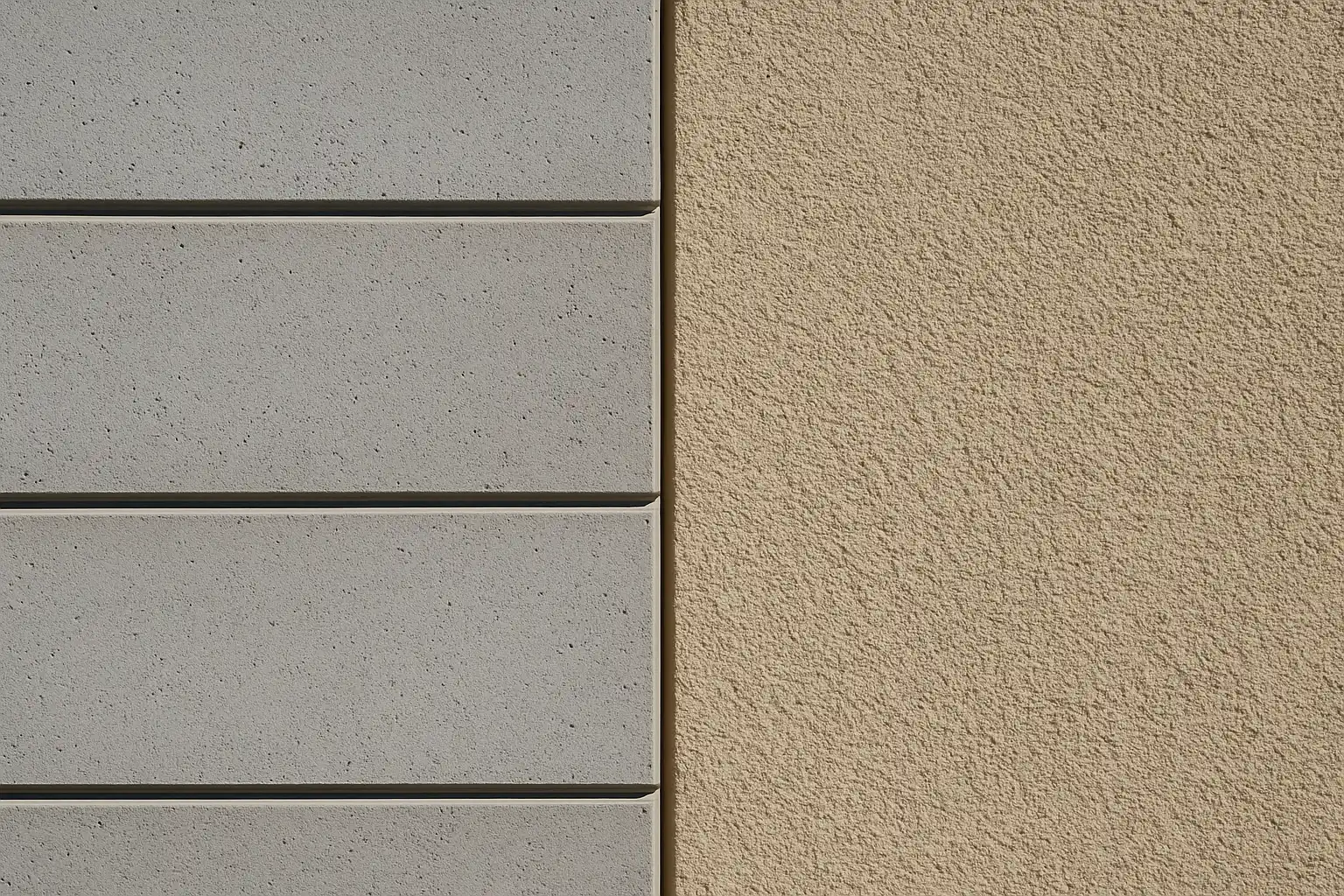
Architectural precast and cast stone are made in molds, cured off site, and shipped as finished units. For residential and light commercial work, that often means trim and accent pieces rather than the massive structural panels you would see on a warehouse. The goal is control: repeatable shapes, consistent profiles, and predictable installation.
That manufacturing approach opens up a wider design vocabulary. You can order deep cornices, window surrounds, column capitals, coping, keystones, arches, pier caps, or stone moldings that would be slow to build by hand on scaffolding. The material is chosen not only for a stone-like look, but for its ability to arrive ready to become architecture.
Strength, weight, and install advantages
Here the search results become more specific. Stucco Moulding, Inc. says its Tuscan Cast Stone has compressive strengths exceeding 7,000 PSI and flexural strengths exceeding 1,600 PSI. The same source says the material can be cast at 1/2 inch thick with a foam core and can be up to 70% lighter than traditional pre-cast concrete. Those are manufacturer claims for that product line, not a blanket number for every mix on the market, but they point to why many buyers look at precast in the first place.
Stucco Moulding, Inc. also says the color is built into the base material and that, in many cases, masonry adhesive is all that is needed for installation. On a scaffold around a tall second-story window, lighter handling changes the day. A crew can move faster. Alignment is easier to control. Repeating the same profile across 8 or 20 openings becomes less of a hand-sculpting exercise and more of an installation workflow.
Contrarian take: precast is not just about looking like stone; it is often chosen because the component itself is easier to handle and install.
Where precast is most useful on a facade
Precast is especially useful where the facade needs crisp edges and shadow depth. Window sills, surrounds, banding, coping, balustrades, wall caps, columns, cornices, and thin veneer all benefit from factory-made profiles. If the drawing depends on light catching a molded edge at 3/4 inch or 2 inches, attached cast elements tend to outperform flat field finishes.
It also shines on repeat work. A row of townhouse entries. A multifamily building with stacked window trims. A commercial facade with matching pier caps and coping. If your exterior language comes from repeated detail rather than one large monolithic skin, precast starts to make more sense.
Stucco vs Precast: Side-by-Side Comparison Table
What the table should compare
A useful comparison has to go beyond curb appeal. You need to compare look, labor, speed, maintenance, repairability, and how much architectural detail the system can realistically deliver on your wall.
Where each material tends to win
| Project Factor | Stucco | Precast | Typical Edge |
|---|---|---|---|
| Primary role | Continuous field-applied exterior finish | Factory-made exterior component or trim piece | Depends on whether you need a skin or a part |
| Visual character | Flat to lightly textured, monolithic, fewer deep shadows | Crisp profiles, stronger shadow lines, more sculpted look | Stucco for calm surfaces; precast for depth |
| Best use area | Large wall surfaces and simple masses | Accents, surrounds, coping, columns, and focal zones | Each wins in a different zone |
| Dependence on field workmanship | High — prep, layering, curing, and finish all happen on site | Moderate — fit and attachment matter, but pieces are shop-made | Precast |
| Curing control | Weather and jobsite conditions affect the outcome | Factory curing is more controlled | Precast |
| Architectural detail | Limited for deep, repeatable profiles | Strong for moldings, cornices, sills, caps, and ornament | Precast |
| Installation rhythm | Applied wall by wall, coat by coat | Delivered as finished units and installed piece by piece | Depends on scope |
| Speed on repetitive accents | Can slow down if details are handmade | Often faster when repeating the same profile many times | Precast |
| Repairability | Patchable, though color and texture matching can be tricky | Discrete pieces may be replaced if matching units are available | Depends on product availability and finish matching |
| Maintenance focus | Cracks, repainting, sealants, and moisture details | Joints, sealants, attachment points, and occasional cleaning | No universal winner |
The fast read is simple. Stucco is typically the stronger answer for broad, seamless wall surfaces. Precast product claims in the search results emphasize strength, lighter weight, and easier installation, which is why it tends to win when the design relies on manufactured detail rather than a continuous finish coat.
The one-line verdict for busy readers
If you only keep one sentence from this table, keep this one: choose stucco when you want the wall to read as one skin, and choose precast when you want the facade to read as assembled architecture.
Best table rule: make the reader choose by project priority, not by brand language.
When to Choose Stucco
Choose stucco for a clean, monolithic facade
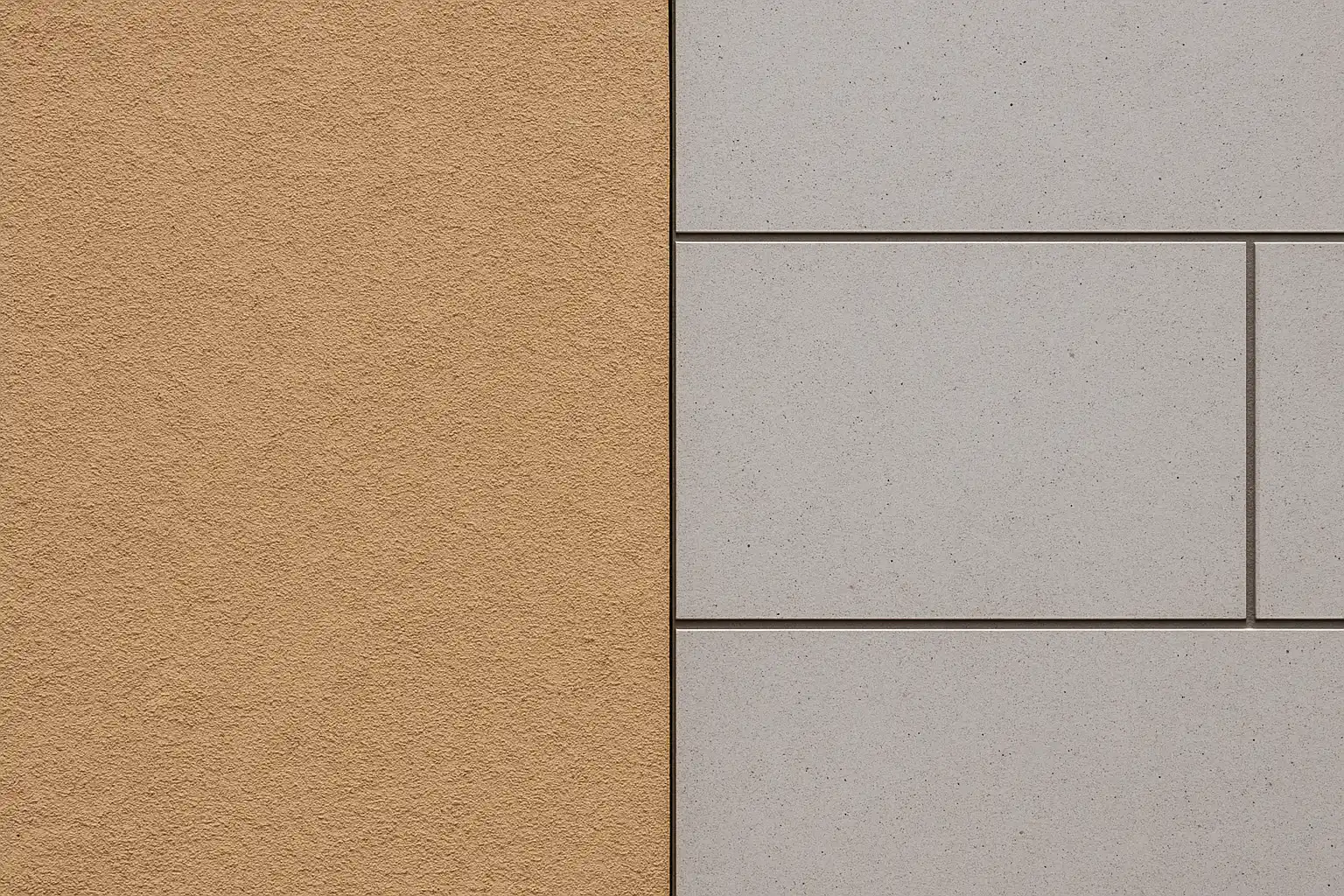
Pick stucco when your exterior should feel calm and continuous. A Mediterranean home with broad sunlit walls, a Southwestern ranch, or a simple contemporary box often looks better when the finish carries the composition instead of ornamental pieces. From 30 feet away, the continuity is the feature.
This is where stucco earns its place. It can make large wall planes feel intentional rather than empty, especially when the design relies on mass, proportion, and subtle texture instead of strong trim lines.
Choose stucco when the design favors texture over ornament
If your palette is smooth trowel, sand float, lace, or another restrained texture, stucco gives you a lot without introducing attached profiles. That works well on homes where the roofline, openings, and landscaping already do the visual heavy lifting. You do not always need a window surround to make a window look finished.
Stucco generally works best when the goal is a smooth or textured finish across large surfaces rather than deep decorative profiles. When the design language is quiet, a separate cast piece can feel like too much.
Choose stucco when local craft and repairs matter more than prefabricated detail
In many markets, good stucco crews are easier to find than specialized trim installers. On a straightforward remodel in Tucson or a modest infill house in Southern California, that matters. You may prefer a system your local trades know well, especially if future touch-ups or alterations are likely.
That does not make stucco “better.” It makes it practical. If you value a field-built finish and are comfortable managing site conditions, stucco is often the right call.
Choose stucco when the wall itself is supposed to disappear behind the finish.
When to Choose Precast
Choose precast for trim, cornices, columns, and accents
Choose precast when the facade needs pieces with shape. This is the lane for balustrade, coping, thin veneer, stone moldings, columns, pavers, pier caps, wall caps, cornices, window surrounds, and decorative stone. Those elements rely on profile, edge, and repeatable geometry — things a field-applied finish does not naturally deliver.
If your rendering lives or dies on shadow lines around openings, precast is often the cleaner path. You are buying detail as a manufactured object, not asking a wet-applied wall finish to imitate one.
Choose precast when weight and handling are major concerns
This point surprises people. Many buyers assume “concrete” always means heavy and awkward. Yet the product claims in the search results push the opposite story for cast stone trim. Stucco Moulding, Inc. says its material can be up to 70% lighter than traditional pre-cast concrete and cast at 1/2 inch thick with a foam core. That is a meaningful difference when installers are working on ladders, swing stages, or second-floor window bands.
So if your project needs shaped pieces but you want easier handling than old-school heavy units, precast deserves a serious look. Just make sure you are comparing the specific product, not assuming every precast item shares the same mix or weight.
Choose precast when you want repeatable detail across multiple units
Precast becomes especially compelling when consistency matters across many openings or elevations. A 24-unit townhouse row, a garden apartment building, or a commercial frontage with matching caps and surrounds benefits from factory-made repetition. One mold can support a whole vocabulary of parts.
That repeatability is why architectural precast remains a favorite for builders and architects who care about rhythm on the facade. When the schedule depends on installing the same profile again and again, ready-made units can reduce variation and simplify the field workflow.
Choose precast when repeatable detail and faster installation matter more than an all-in-one finish layer.
Stucco vs Precast gets easier once you compare roles instead of buzzwords: stucco gives you a seamless site-built skin, while precast delivers crisp, factory-made depth.
If your house wants quiet wall planes, stucco usually wins. If it needs surrounds, coping, columns, or repeatable accents, precast is hard to ignore. Which parts of your exterior need a finish — and which need a component?
Coral Cast For Lasting Detail
For homeowners, builders, architects, contractors, and property owners, New York manufacturing means properly cured, maintenance-free architectural precast and stone, many styles, secure U.S. shipping, showroom help, and free estimates.
Generated on SEOPro AI