Top 7 Precast Concrete Railings for 2026
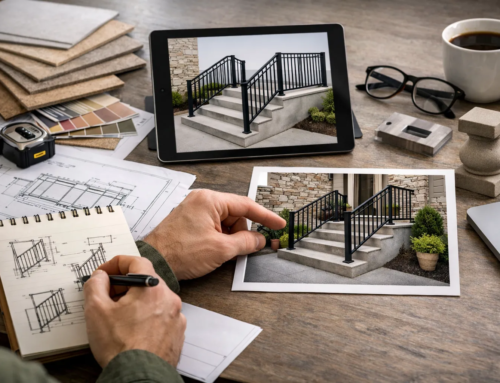
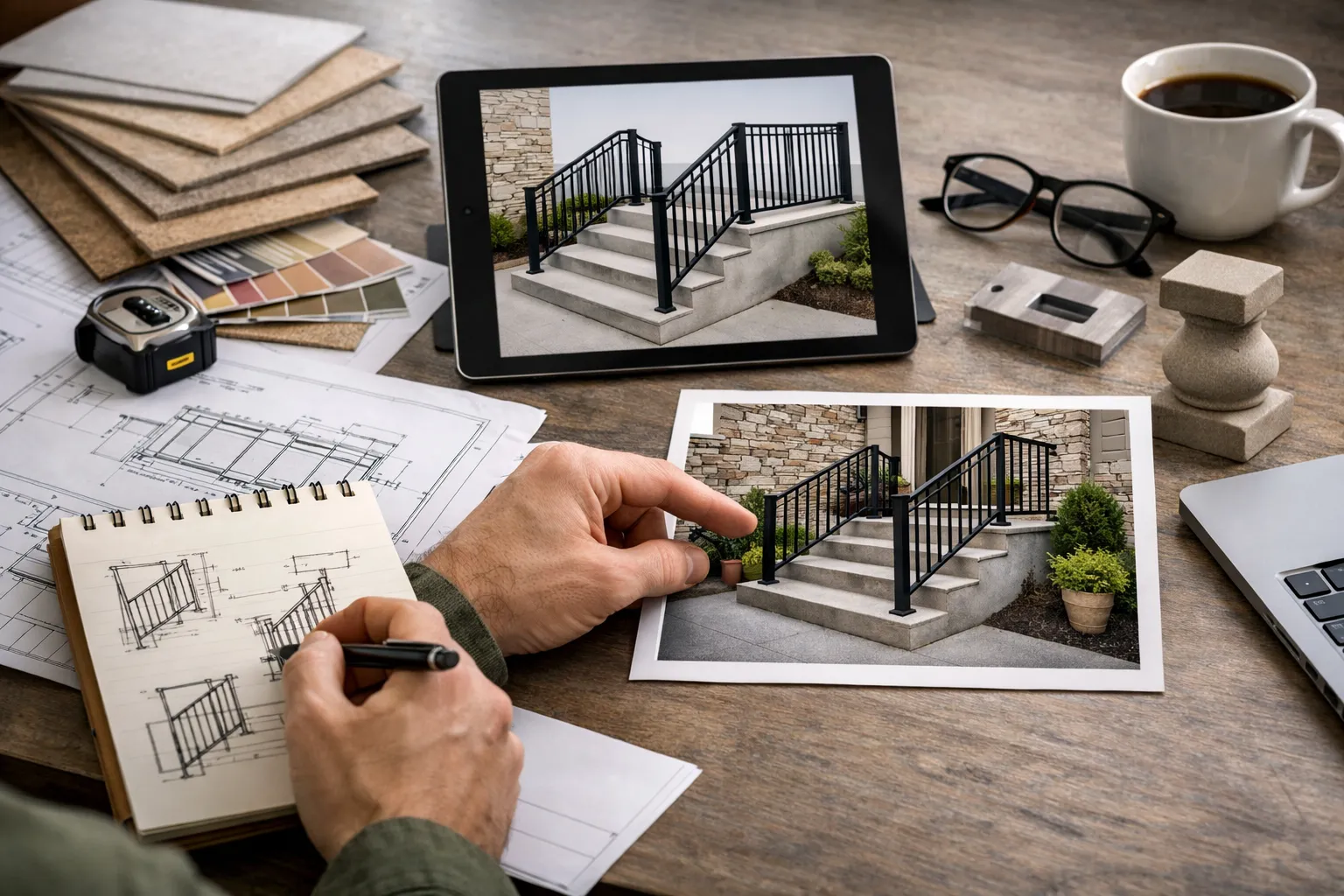
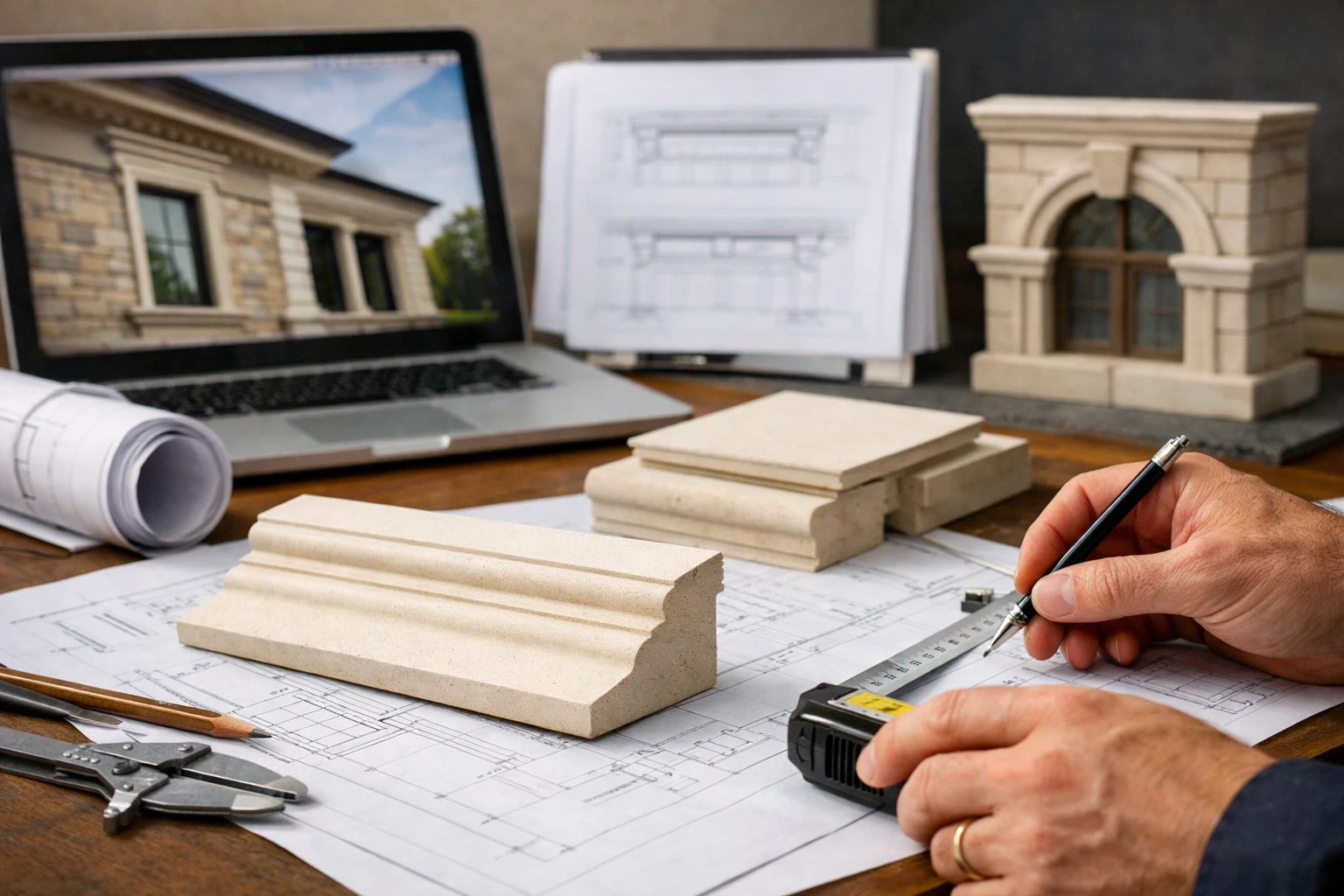
A contractor lays a tape measure across a concrete stair landing while a homeowner points to the balcony edge and marks where the run will stop. The level rocks once, settles, and suddenly the sketch turns into hard numbers: 36 inches here, 42 there, 11 feet to the corner, then a turn.
If you are comparing precast concrete railings for a porch, stair, pool surround, or commercial entry, that measuring moment matters more than any brochure cover. This guide is for homeowners, builders, architects, contractors, and property owners working on new or existing residential and commercial projects who want a shortlist that can actually be fitted and specified.
We are not starting with style alone. We are starting with fit — run length, target height, slope, radius, finish, and whether the same system needs to carry across balconies, front entrances, columns, or wall-related details. Once those numbers are real, the better options surface quickly.
Selection criteria for precast concrete railings
Match the rail to the project type
The first cut is simple: decide whether you need a general straight run, a stair run, or a curved run. The source material for a precast balustrade system describes it as suitable for new or existing homes and useful at patios, pools, porches, front entrances, backyards, balconies, or stairs. That broad range is helpful. It can also lure you into assuming one section will solve every condition. It will not.
When we lay out a front porch in Westchester or a stair landing in Queens, we separate the job into conditions first. A balcony edge may want repeated straight modules. The stair wants a stair-specific section. A curved terrace wants radius parts — or a different layout if the radius is wrong.
Check height, run length, and radius
Height and length narrow the field fast. A 3-foot section behaves differently from a 6-foot section, even when the profile looks similar from the driveway. Shorter modules usually give you more freedom near corners, posts, and short returns. Longer modules can reduce joints on a wide balcony run, but only when the layout is true and repetitive.
For curved work, the radius is not a detail you solve later. The catalog excerpt with spiral sections calls out a 4-foot radius and separates left and right versions. That tells you the geometry is built into the piece. Bring actual field measurements, not a rough guess from a phone photo.
Confirm finish options and installation notes
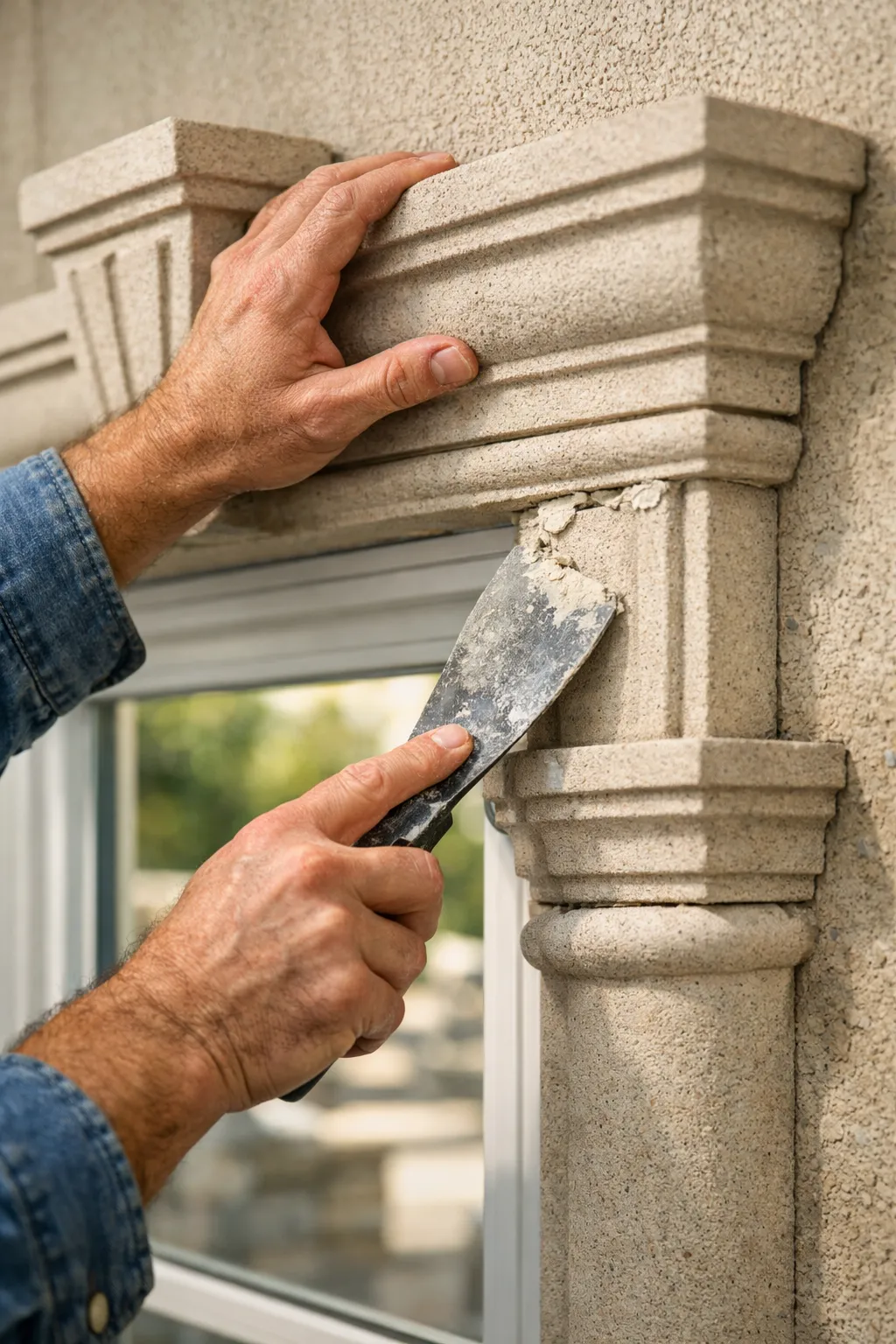
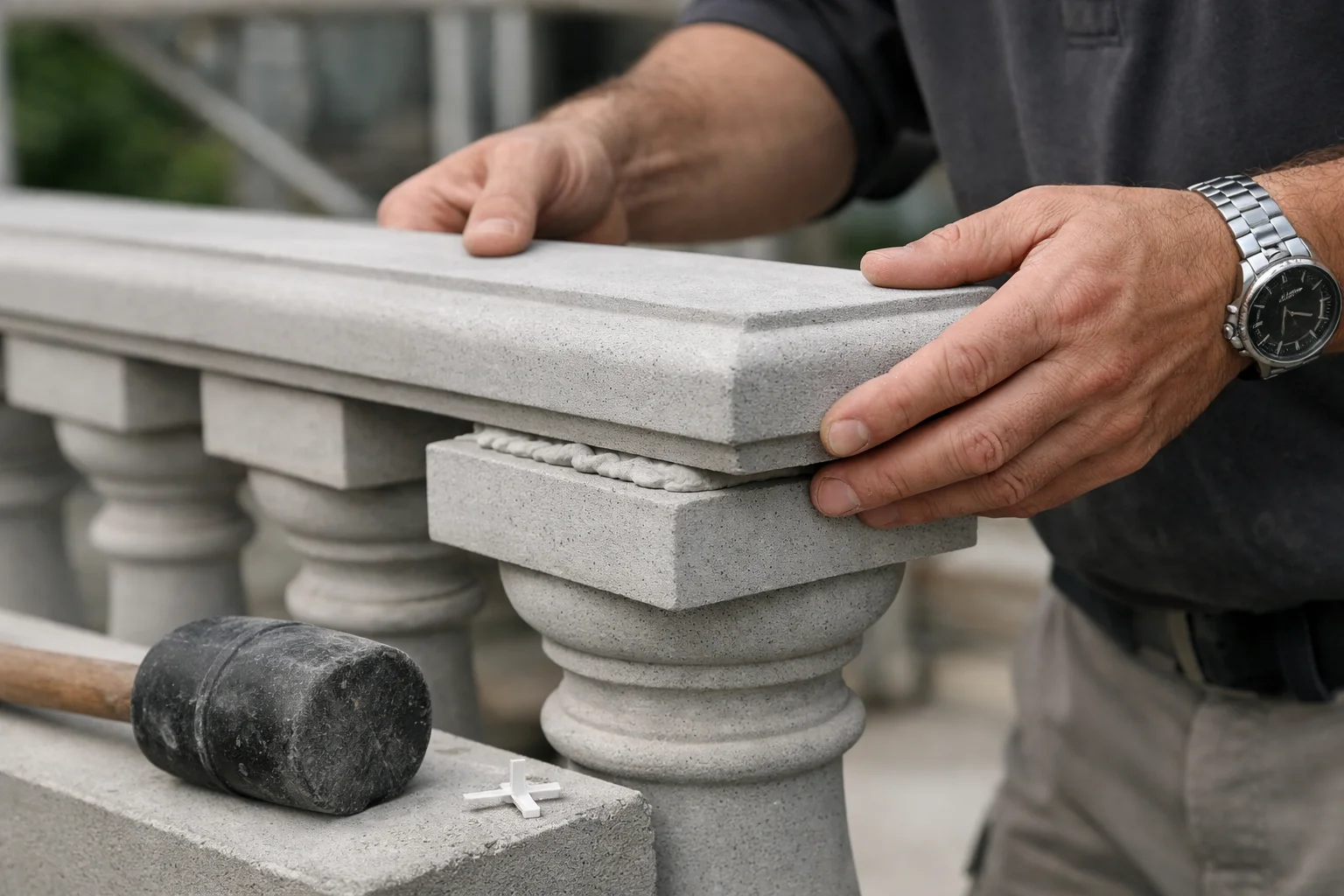
The source material notes that the precast balustrade system is designed to support straightforward installation on a well-planned project, which is a real advantage on both residential and commercial work. Still, “straightforward” does not mean “measure later.” Before choosing sections and rails, review the available layout and setting notes carefully. That order matters.
Finish matters too. The source material specifically mentions textures and finishes including Coral (Travertine) and Smooth. If the railing will sit beside stone moldings, columns, pavers, pier caps, or other architectural stone details, review finish compatibility early. You will catch a mismatch much faster on a jobsite table than on a small screen.
Measure first, shop second — the right section is the one that fits the run cleanly.
| Option | Type | Height | Pieces | Price in Excerpts | Best For |
|---|---|---|---|---|---|
| #1 Classic balustrade system | Modular system | Varies | Varies | Varies by components and finish | Coordinated residential or commercial projects |
| #2 3’L section | Straight run | 30 1/2″ | 7 | $221 | Compact porch and balcony runs |
| #3 3’L section | Straight run | 39″ | 7 | $243 | Mid-height straight runs |
| #4 3’L section | Straight run | 42″ | 7 | $287 | Taller guards and landings |
| #5 Stairs section | Sloped run | 42″ | 6 | $277 | Outdoor stair transitions |
| #6 6′ section | Straight run | 42″ | 12 | $574 | Long balcony or terrace spans |
| #7 Spiral section | 4′ radius, left or right | Not listed | 6 | $273 each | Curved runs with handed layout |
Those prices give you a useful baseline, not a final quote. One catalog excerpt also shows another 3’L, 42″ listing at a different price, so verify the exact profile and SKU before you order.
Top all-around straight-run picks
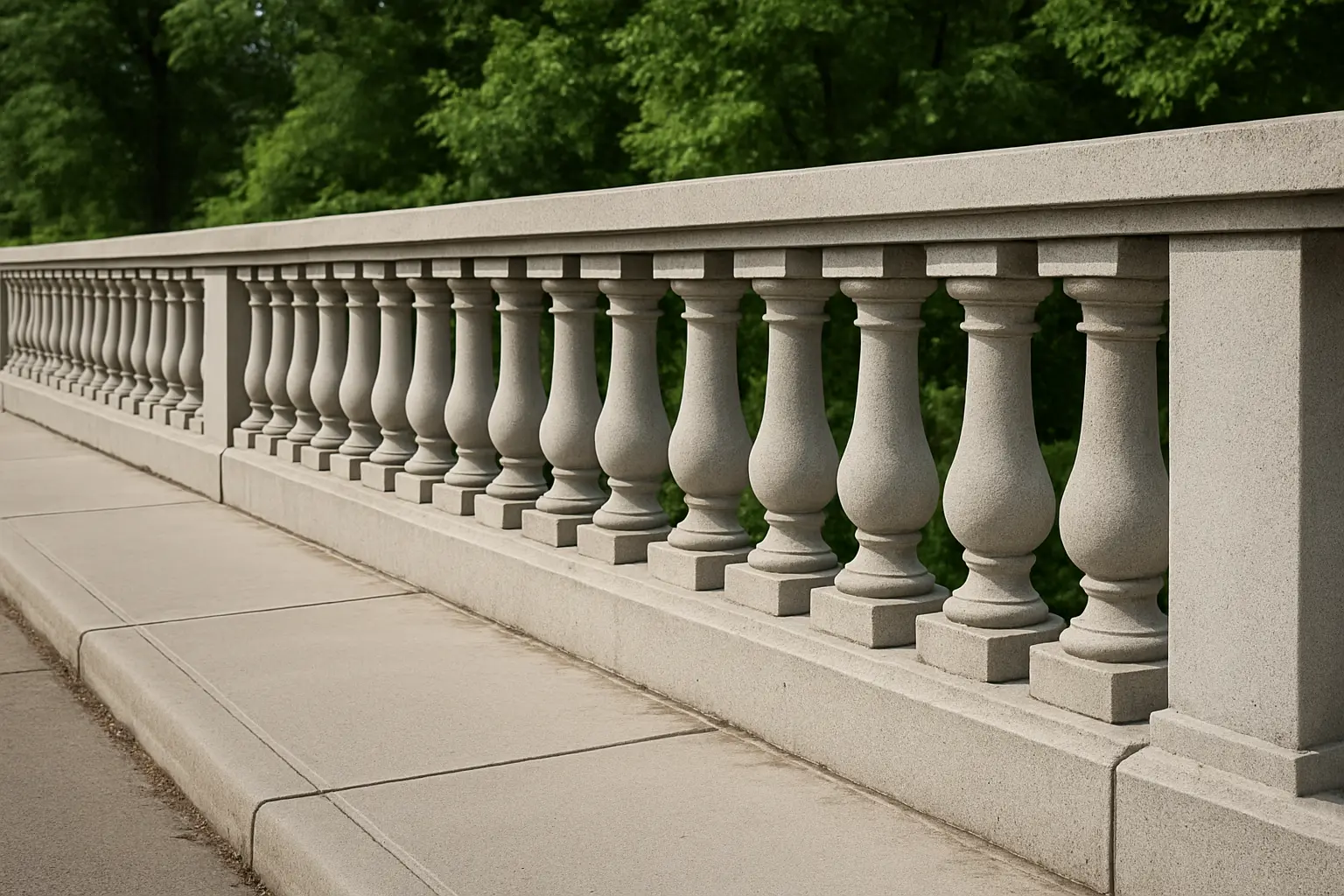
These are the workhorse choices for porches, balconies, and general edges where the line stays straight. If one look needs to carry from a front entry to a rear terrace, this is where most buyers should begin.
#1 Classic balustrade system for homes and commercial buildings
Summary: This is the most flexible option in the group because it is presented as a full balustrade system, not a single fixed section. The source material positions it for residential homes and commercial buildings, and also notes use at patios, pools, porches, front entrances, backyards, balconies, or stairs.
- Run type: modular system with coordinated balusters, posts, and handrails
- Finish cues: Coral (Travertine) and Smooth are specifically named
- Installation note: designed for projects that follow straightforward layout and setting practices
Best for: projects that need one consistent family of pieces across several locations — for example, a porch, stair, and pool surround on the same property.
#2 Baluster section, 3’L, 30 1/2″H, 7 pcs
Summary: At $221 in the catalog excerpt, this 3-foot straight section is the lowest listed price among the highlighted straight-run picks. The shorter module gives you useful flexibility at posts, corners, and small returns without pushing you into custom work too early.
- Run type: straight
- Height and count: 30 1/2″ high, 7 pieces
- Price in excerpt: $221
Best for: low, compact straight runs where you want the look of a concrete balustrade without moving into taller or longer sections.
#3 Baluster section, 3’L, 39″H, 7 pcs
Summary: This option sits in the middle of the height range at $243 in the catalog excerpt. That makes it a practical bridge between a lower porch edge and a taller guard, especially when the visual mass of 42 inches feels heavier than the façade needs.
- Run type: straight
- Height and count: 39″ high, 7 pieces
- Price in excerpt: $243
Best for: homeowners and designers who want a more substantial profile than 30 1/2 inches while keeping the modular convenience of a 3-foot section.
If one look needs to work across multiple parts of a property, start with the straight 3-foot sections.
The straight 3-foot sections are usually the safest starting point because they adapt well to real-world conditions. Front porches rarely land on perfect dimensions. Neither do balcony returns. A modular 3-foot rhythm often solves that without forcing a one-off piece.
Still, do not choose a shorter section only because the part price is lower. If your run is long and uninterrupted, too many joints can slow the install and make the finished elevation look busier than you wanted.
Best higher-profile sections for stairs and long runs
Now we move into the conditions that usually cause trouble: taller guards, stair slopes, and broad linear runs. This is where matching the section to the geometry stops being a preference and starts being the whole job.
#4 Baluster section, 3’L, 42″H, 7 pcs
Summary: The catalog excerpt lists this 3-foot, 42-inch-high section at $287. That added height makes it the clearest straight-run candidate when local guard conditions call for a taller assembly.
- Run type: straight
- Height and count: 42″ high, 7 pieces
- Price in excerpt: $287
Best for: landings, elevated porches, and balcony edges where you need the visual and practical presence of a taller guard. If you see another 42-inch, 3-foot listing at a different price, match the profile and SKU carefully.
#5 Baluster stairs section, 42″H, 6 pcs
Summary: At $277 in the catalog excerpt, this stair-specific section solves the part of the project that straight modules should not try to fake. The piece count drops to 6, which reflects the sloped configuration.
- Run type: stair section
- Height and count: 42″ high, 6 pieces
- Price in excerpt: $277
Best for: outdoor stairways, front entrance steps, and terraced landscape stairs where the rail needs to follow a slope cleanly.
#6 Baluster 6′ section, 42″H, 12 pcs
Summary: The 6-foot, 42-inch section appears in the catalog excerpt at $574. It covers twice the horizontal length of the 3-foot modules and uses 12 pieces, making it the obvious choice for longer straight runs when the substrate is consistent.
- Run type: long straight section
- Height and count: 42″ high, 12 pieces
- Price in excerpt: $574
Best for: long balconies, broad terraces, and commercial walkways where fewer breaks in the run can help the finished elevation read cleaner.
Use the stair-specific section on the slope; don’t force straight pieces to do stair work.
On site, this mistake is easy to spot. Someone tries to make a straight section behave like a stair section, then spends hours shimming, cutting, and hiding the compromise. From ten feet away, the result almost always looks improvised.
There is a better path. Use straight 42-inch sections where the run stays level. Switch to the stair section the moment the slope starts. Use the 6-foot length only when the line is long enough, true enough, and repetitive enough to benefit from it.
Curved and radius-friendly options
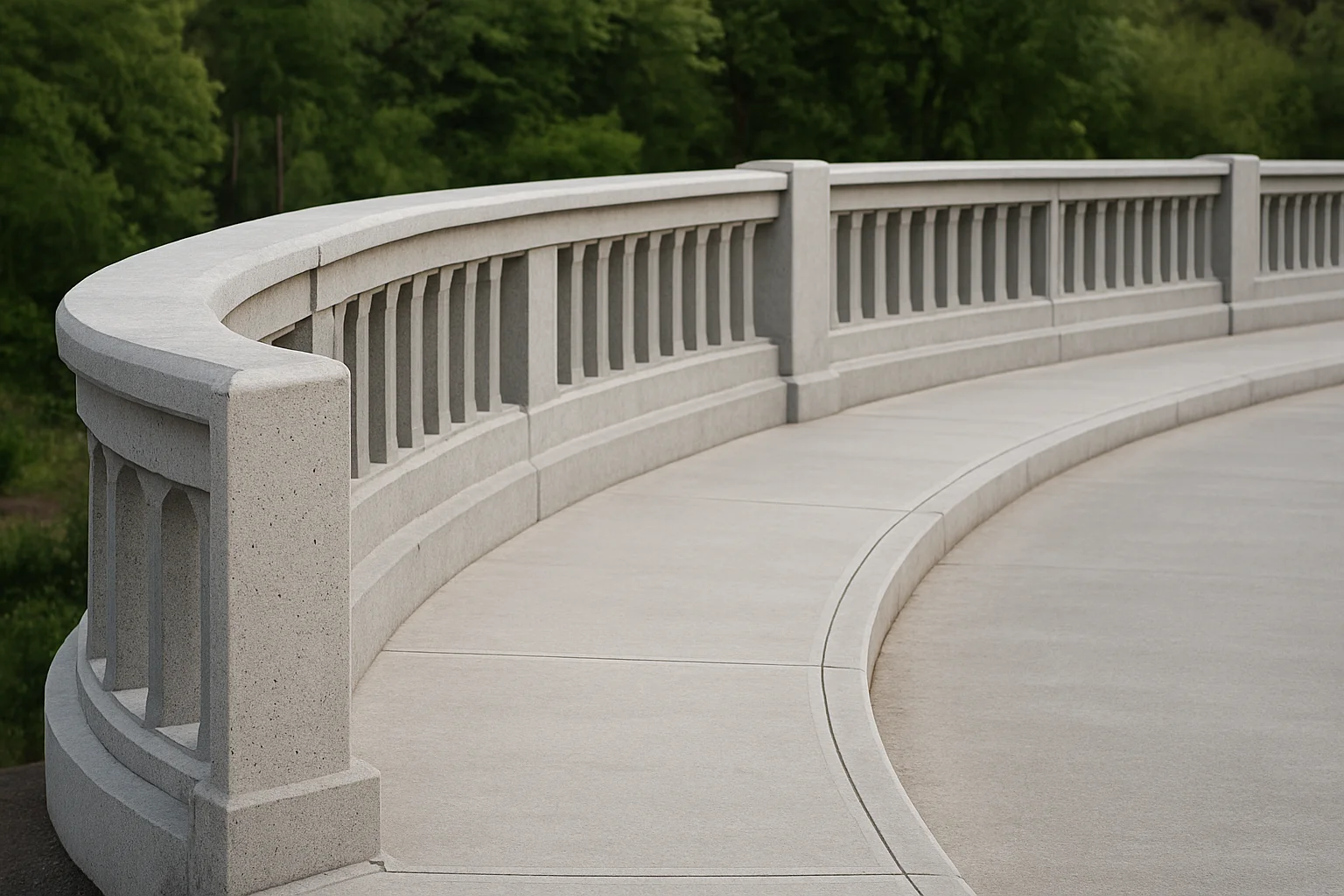
Curves look refined when they are planned early. They look expensive when someone discovers the radius problem after the slab is poured. This is the one category where handed parts can save a project — or stop it cold.
#7 Spiral baluster section, 4′ radius, left/right
Summary: The catalog excerpt offers spiral baluster sections for a 4-foot radius in both left and right versions, each with 6 pieces and a listed price of $273. That is the clearest sign in the source material that curved runs are treated as specific geometric conditions, not generic decorative variants.
- Run type: curved, 4′ radius
- Configuration: left or right, 6 pieces each
- Price in excerpt: $273 each
Best for: curved terraces, rounded balcony edges, and wraparound conditions where the run bends and handed alignment matters.
Why handed radius pieces matter
Left and right are not interchangeable. If you reverse the wrong piece in the field, the curvature and alignment will fight you all the way through the run. The separate left- and right-hand listings in the catalog make that plain.
That is why curved sections must be coordinated with start and stop points, post locations, and direction of travel. A 4-foot-radius left-hand section turning away from a stair can be perfect. The mirror image can be useless.
What to verify before ordering a curved run
Before you place an order, verify the actual radius, the total arc length, and whether the curve turns left or right as you move along the run. Then review spacing, layout, and setting notes before choosing sections and rails. The source material calls out that sequence for a reason.
If the curve ties into straight sections, confirm the transition points too. That detail matters on a hotel terrace, a residential balcony, or any pool surround where the eye catches even small alignment errors.
Curved runs are where handed parts matter; left and right are not interchangeable.
How to choose the right option
By now the shortlist should feel smaller. Good. The last step is turning dimensions and prices into a system decision you can specify without surprises on delivery day or setting day.
Start with layout and code
Local code and fall-protection requirements determine minimum height and whether a guard is required at all. In practice, that means you start with the site condition: porch edge, balcony, stair, terrace, or pool boundary. Then you match that condition to a straight, stair, or curved section.
Many jurisdictions draw hard lines around guard height. A small front stoop and an elevated second-floor balcony do not play by the same rules. If code pushes you toward 42 inches, your real comparison is no longer every section in the catalog — it is the 42-inch options that fit your run.
Compare total system cost, not just the part price
The excerpts make one thing obvious: size changes price. A 3-foot section is listed at $221 in one case, while a 6-foot section is listed at $574. That means the cost conversation should include total coverage, joints, posts, rails, freight, setting materials, and labor — not just the tag on one section.
A longer piece can reduce joints. A shorter piece can reduce awkward leftovers. On an 18-foot balcony, three 6-foot sections may be cleaner. On an 11-foot porch with a return, a mix of 3-foot modules may fit with less waste and less field improvisation.
| Project Condition | Start With | Why |
|---|---|---|
| Short straight porch run | #2 or #3 | Modular 3-foot sections adapt well near corners and returns |
| Taller level guard | #4 | 42-inch height addresses higher-profile guard conditions |
| Outdoor stairs | #5 | Made for the slope rather than a forced straight-run workaround |
| Long uninterrupted balcony | #6 | Longer section can reduce joints and simplify the visual line |
| Curved terrace or wrap | #7 | Radius-specific, handed left/right layout |
| Mixed-use property with repeated details | #1 | Coordinated system approach across several locations |
Use finish choices to narrow the field
Once the geometry works, finish becomes the tie-breaker. The source material mentions Coral (Travertine) and Smooth, and that matters more than many buyers expect. A smooth finish beside a heavily textured façade can feel disconnected. A travertine-like texture near matching columns or pier caps can pull the elevation together.
If you are reviewing options in a showroom — including at Coral Cast — bring photos, dimensions, and adjacent material samples. That is the fastest way to compare a balustrade against nearby pier caps, thin veneer, or stone moldings without relying on memory.
The best pick is the one that fits the run cleanly with the fewest custom compromises.
That principle sounds conservative. It is. It also saves money. Every time you ask a standard section to solve the wrong condition, you trade a neat modular system for extra labor and a higher risk of a result that never looks fully intentional.
Precast concrete railings reward accurate layout first, then careful finish and cost decisions.
Once you know your run, height, slope, and radius, the seven options above become much easier to sort. Which section fits your project cleanly enough that specification day feels routine rather than improvised?
Specify Better With Coral Cast
Architectural precast concrete manufacturing gives homeowners, builders, architects, contractors, and property owners properly cured, maintenance-free, New York-made products with finish options, nationwide shipping, showroom help, and free estimates.