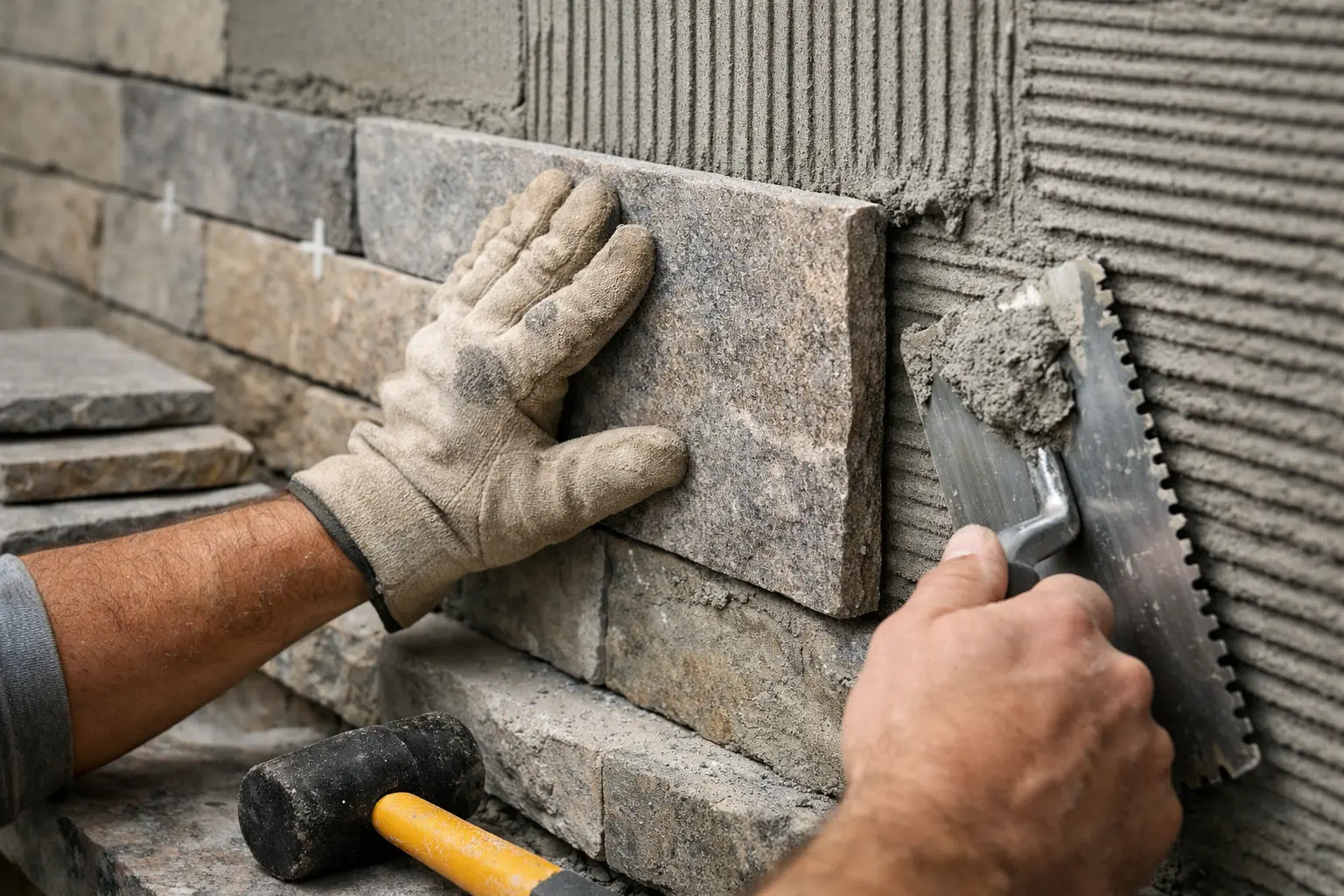

Best Balustrade Railing Systems for 2026
At a half-finished porch, a builder kneels beside a tape measure while the homeowner points from the steps to the view line over the yard. The architect balances a clipboard on a sawhorse and circles two numbers: 96 inches and 36 inches. Everyone can picture the façade. Nobody wants to guess the line that will define it.
That is where balustrade railing systems stop feeling like a catalog choice and start acting like architecture. If you are comparing options for a new build, a replacement, or an upgrade in 2026, you need more than isolated product pages. You need a practical shortlist that respects sightlines, code, climate, installation, and the upkeep you will still be dealing with five winters from now.
The current search results mostly point you toward store pages and category hubs rather than side-by-side guidance. Titles like “Shop Balustrade & Metal Railing Systems,” “Balustrade System,” and “Balustrade Kits” tell you what is sold, not how to choose. One Ekena Millwork navigation menu goes further and lists Balusters, Newel Posts, Rail Kits & Installation, Stair Finials, and Fiberthane Balustrade Kits — a useful reminder that you are rarely buying one object. You are buying a system of parts.
Who this guide is for
Homeowners and property owners
If you are replacing a tired front porch rail, adding a second-floor balcony, or updating a deck built in 1998, you are probably balancing two concerns at once: how the rail looks from the street and how safely it performs every day. That tension is normal. A balustrade can make a house read as crisp, heavy, airy, formal, coastal, or dated in under 10 seconds.
You also live with the maintenance plan. Painted wood that looks charming in April can feel very different after a humid August, a January freeze, and another repaint cycle. If you own a rental, a vacation home, or a mixed-use property, that labor question gets sharper fast.
Builders, architects, and contractors
If you build for a living, you already know the first question is not “Which style is prettiest?” It is “What attaches to what, with which load path, and what is actually included?” A category page can hide that. A client sees a beautiful profile; you see post spacing, slab edge conditions, stair pitch, and the inspector’s next visit.
That is why the component-based nature of these assemblies matters. When Ekena Millwork separates balusters, newel posts, rail kits, installation, and stair finials in its menu, it reflects how these systems are commonly specified and sold across the market. Quotes can look similar on page 1 and differ wildly by page 2 once hardware, posts, caps, and trim are spelled out.
Residential and commercial projects
This comparison is for single-family porches, multifamily balconies, restaurant patios, entry stairs, and commercial exterior runs alike. The styling conversation changes from one setting to another, but the process does not: appearance and safety travel together. A clean deck rail on a backyard overlook asks different questions than a 42-inch commercial guard at a mixed-use entry, yet both deserve the same discipline.
If you have been frustrated by how search results skip from product to product without helping you sort the field, you are not imagining it. The search landscape is heavy on inventory and light on comparison. That gap is exactly where a buyer’s guide earns its keep.
Use this guide to narrow the field before anyone requests quotes or samples.
Selection criteria for balustrade railing systems in 2026
Material and weather exposure
Start with exposure. One top result is literally titled “12″ wide Urethane Balustrade, Large Exterior Railing System,” which tells you something simple and true: exterior use is a primary buying context. Sun, rain, salt air, freeze-thaw cycles, standing snow, irrigation overspray, and cleaning habits matter more than trend forecasts.
A rail that performs well on a covered porch in Charlotte may age very differently on an open roof deck in Chicago or a salt-exposed terrace on Long Island. Search results also show buyers toggling between “Balustrade & Metal Railing Systems” and “Balustrade System,” signaling that you are often comparing not just looks, but material families. Aluminum, stainless steel, glass, urethane, PVC, composite, wood, and ornamental metals each bring their own weather story.
Code, load, and spacing requirements
Then come the rules. Guard height, opening limits, graspability where stairs are involved, and the structural capacity of posts or anchors can change the shortlist immediately. In many jurisdictions, a residential porch guard may land at 36 inches while commercial conditions often push you to 42 inches. Those numbers are common starting points, not final answers. Your local code official gets the final word.
Do not treat infill as decoration. Cable spacing, glass type, baluster gaps, and the stiffness of the whole assembly all affect whether the system works in the real world. A beautiful panel layout that flexes too much, traps water at the base, or cannot be anchored cleanly into existing framing is not a smart choice — no matter how good it looked in a showroom.
Kit format and long-term maintenance
Finally, look at what you are actually buying and what you will have to do later. Because balustrade products are often sold as separate components, you should confirm whether the quote includes posts, rails, balusters or infill, caps, trim, brackets, fasteners, touch-up materials, and stair-specific parts. “Kit” can mean very different things from one supplier to the next.
Maintenance is where cheap decisions announce themselves. Powder-coated aluminum usually asks little. Glass may need frequent cleaning. Wood can demand seasonal attention. A classical profile in a low-upkeep material may cost more at purchase and less over year 10. Exterior rail systems should fit your climate exposure and your tolerance for ongoing chores — not just the mood board pinned on day 1.
| System family | View impact | Typical upkeep | Style fit | Common use case |
|---|---|---|---|---|
| Aluminum | Low to medium | Low | Modern, transitional | Decks, porches, balconies |
| Cable | Very low | Low to medium | Modern, coastal | View-oriented decks and terraces |
| Stainless steel | Low | Low | Contemporary, premium | Coastal or high-finish projects |
| Glass | Very low | Medium | Contemporary, luxury | Balconies, decks, rooftop edges |
| Wrought iron | Medium | Medium to high | Traditional, formal | Stairs, porches, entry façades |
| Urethane/Fiberthane | Medium to high | Low to medium | Classical, traditional | Porches, balconies, entry fronts |
| Composite/PVC | Medium | Low | Traditional, suburban | Retrofits and porch renewals |
| Wood | Medium | High | Historic, custom | Exact matches and carpentry-heavy work |
The right rail is the one that fits the building’s exposure, not just the mood board.
#1–#3 Sleek exteriors and open sightlines
#1 Aluminum railing systems
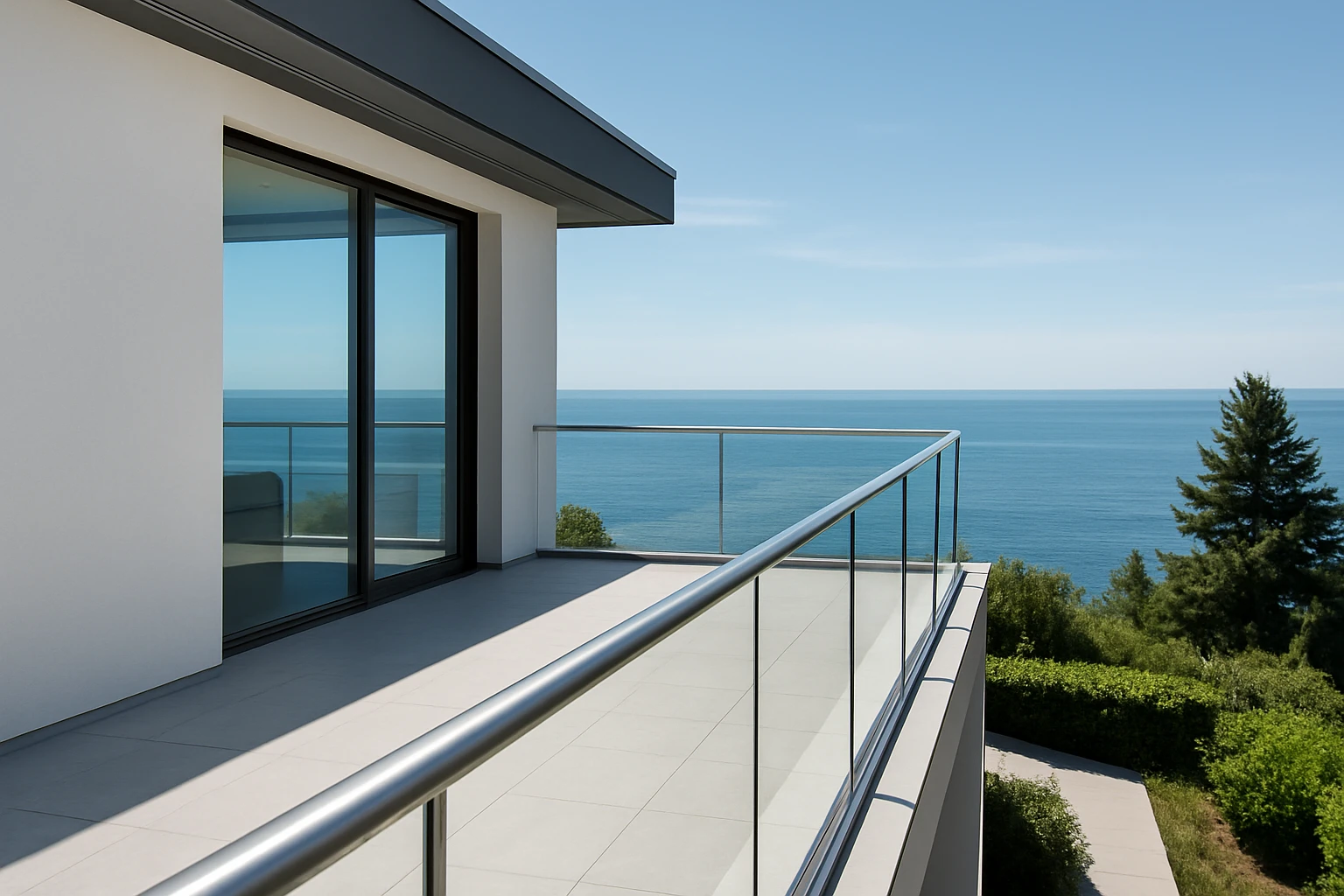
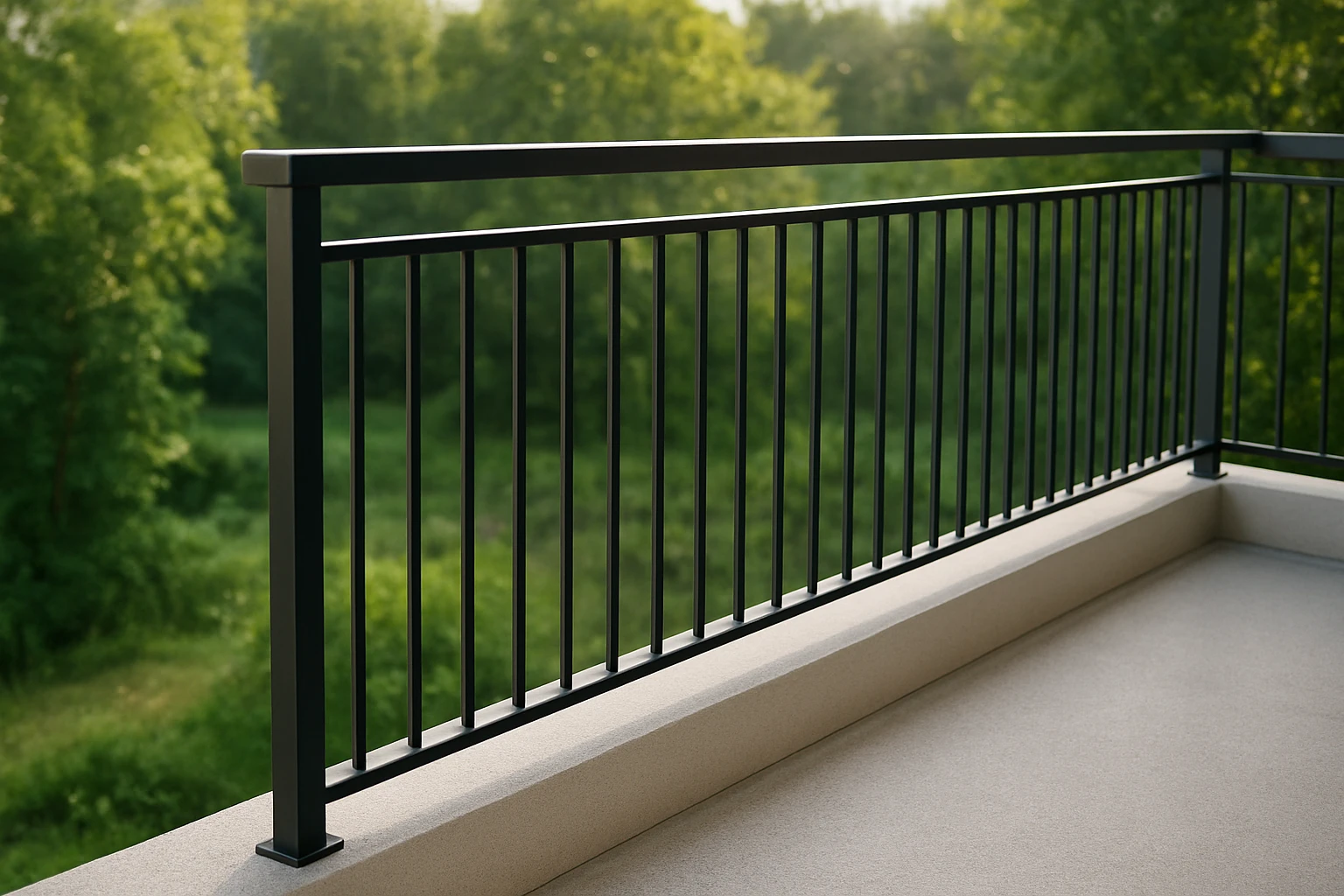
Aluminum remains one of the safest bets for clean-lined exterior work. It is relatively light, widely available, and usually offered in restrained finishes like black, bronze, and white that suit modern and transitional homes without trying too hard. For many deck and porch projects, it hits the sweet spot between durability, visual neatness, and manageable installation.
Best for: homeowners and builders who want a slim profile with low day-to-day upkeep on decks, porches, and balconies. Watch for: thin-gauge budget systems, visibly clunky brackets, and weak attachment details at rim joists or slab edges.
#2 Cable railing systems
Cable railing earns its place whenever the view is the feature. Horizontal cables preserve long sightlines better than most alternatives, which is why you see them on hillside decks, lakefront homes, and rooftop terraces. They feel crisp and contemporary, especially when paired with dark metal posts and simple top rails.
Best for: outdoor spaces where the horizon, water, or backyard deserves center stage. Watch for: post deflection, cable retensioning, and local code scrutiny around spacing and horizontal infill. The cleaner the look, the less forgiving the installation.
#3 Stainless steel railing systems
Stainless steel is the refined cousin in this group. It can be sleek without looking flimsy, and it is a common choice where corrosion resistance matters — especially in coastal or pool-adjacent settings. If you care about finish quality and want the rail to feel engineered rather than ornamental, stainless often moves to the top tier quickly.
Best for: high-end contemporary work and salt-exposed environments. Watch for: the actual stainless grade, finish consistency, and price jumps once custom fittings enter the spec. If you are near salt water, asking whether the system is 304 or 316 stainless is a smart early move.
If the horizon is the selling point, avoid anything that visually chops it up.
#4–#6 Statement-making systems for views and curb appeal
#4 Glass railing systems
Glass railing can nearly disappear, which is exactly the point. On a deck facing woods, a city roof terrace, or a balcony with a strong water view, glass keeps the architecture quiet and lets the setting do the work. It also pairs well with modern façades that already use large openings, dark frames, or minimal trim.
Best for: premium views, wind-buffered edges, and projects where visual openness matters more than decorative detail. Watch for: cleaning frequency, edge protection, the difference between framed and frameless systems, and the glass specification itself. Beautiful transparency comes with specification discipline.
#5 Wrought iron railing systems
Wrought iron still carries weight in the market, even though many products sold under that label today are fabricated steel systems with a wrought-iron look. Either way, this family excels when you want the rail to participate in the architecture instead of disappearing. Scrollwork, spear tops, tight picket rhythms, and darker finishes can give a porch or stair run real formality.
Best for: traditional homes, Mediterranean exteriors, formal entries, and stair-heavy layouts where ornament belongs. Watch for: rust management, finish maintenance, heavier handling, and longer lead times on custom work. A gorgeous pattern does not excuse a weak coating system.
#6 Urethane / Fiberthane balustrade kits
This category deserves special attention because it shows up clearly in current search behavior. Ekena Millwork offers Fiberthane Balustrade Kits in its balustrade line, and another top result highlights a 12-inch-wide urethane balustrade as a large exterior railing system. That tells you these molded, traditional kits are not niche. They are a real option when you want substantial, classical profiles without the weight of masonry.
Best for: porches, balconies, and entry façades where turned balusters and architectural symmetry matter. Watch for: how convincing the scale feels from the street, seam quality, movement across long runs, and exactly which components are included. With these kits, the difference between elegant and toy-like often comes down to proportion and installation detail.
When the architecture is traditional, the rail should read as part of the façade, not an afterthought.
#7–#8 Retrofit-friendly and lower-maintenance options
#7 Composite / PVC balustrade systems
For older homes and fast exterior renovations, composite and PVC-based systems stay popular because they reduce the paint burden while preserving familiar porch language. Many are sold in kit form, and many aim straight at owners who want clean white rails, predictable maintenance, and fewer callbacks than painted wood can bring.
Best for: porch updates, second homes, rental properties, and projects where low routine upkeep matters more than handcrafted character. Watch for: expansion and contraction, long-term color stability, and how post sleeves, brackets, and trim adapt to imperfect existing framing.
#8 Wood balustrade systems
Wood still matters because old houses are rarely perfectly square and because historic trim profiles do not always translate well into manufactured kits. If you need to match a 1920s porch, ease a strange stair angle, or field-adjust around out-of-plumb conditions, wood gives a capable carpenter real freedom. It can also look unmatched when the house genuinely calls for it.
Best for: restoration work, custom carpentry, and projects where exact profile matching outranks maintenance convenience. Watch for: rot at end grain, repaint cycles, species selection, and every place water can sit. Wood is forgiving during installation and demanding afterward.
For a retrofit, the closest profile to the existing house often matters more than the fanciest material.
How to choose the right balustrade railing system
Match the system to the space
Start with the application, not the finish. A front porch wants something different than a view deck. A stair run asks for different geometry than a level balcony. A commercial terrace may need heavier-duty details than a private backyard edge. Because products can be sold as separate balusters, posts, rails, and stair parts, you should confirm what is included before comparing one quote against another.
If you are building a shortlist, divide the job into plain-language buckets first: porch, deck, balcony, stair, rooftop, or commercial entry. That one step cuts noise immediately.
Confirm code and structural requirements
Next, sit down with the drawings and the substrate. What are you fastening into — wood framing, concrete, steel, or a waterproofed edge? What guard height applies? What opening limits govern the infill? Will the inspector want engineering on posts or anchors? These questions are less glamorous than finish samples, but they keep you from choosing a system that only works in the brochure.
Stairs, porches, decks, balconies, and commercial assemblies often require different spacing and attachment decisions. A cable system on a rooftop, for example, may ask more of the posts than a simple aluminum picket rail on a covered porch. Get the load path right before you fall in love with the profile.
Compare upfront cost with lifecycle cost
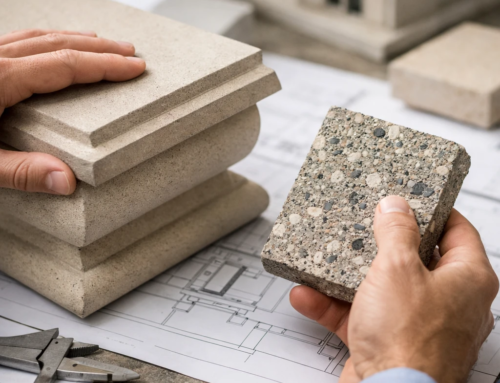
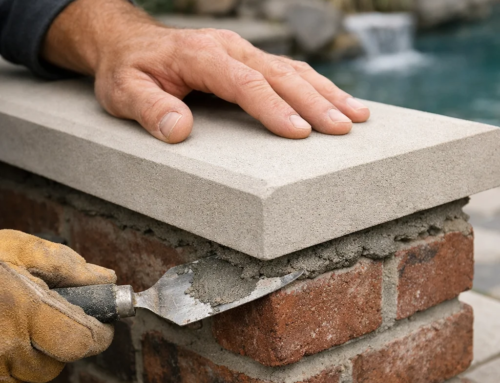
Finally, price the whole life of the assembly. A lower purchase price can be erased by repainting, retensioning, rust repair, seal failure, or early replacement. This is also where material families start to separate in a meaningful way. If your eye keeps drifting toward classical architecture instead of deck hardware, compare those lighter kits against properly cured architectural precast options from suppliers such as Coral Cast so you understand both the aesthetic and the maintenance trade-offs.
Good buying usually looks boring on paper: fewer surprises, clearer inclusions, better durability, and a finish you will still like in year 8. That is a far better outcome than chasing the cheapest line item in March and reworking it in October.
| Space | Usually worth shortlisting first | First question to answer |
|---|---|---|
| Front porch | Urethane/Fiberthane, composite/PVC, wood, wrought iron | Should the rail blend into the façade or stand out as ornament? |
| Backyard deck with view | Cable, glass, aluminum | How much of the view are you willing to interrupt? |
| Balcony | Glass, aluminum, stainless steel | What guard height and anchor condition apply here? |
| Historic retrofit | Wood, wrought iron, composite/PVC | What existing profile or rhythm must be matched? |
| Commercial exterior | Aluminum, stainless steel, glass | What code and maintenance obligations will ownership accept? |
Shortlist by use case first, then by finish, then by price.
The best choices here are the ones that fit the site before they flatter the photo.
If you sort balustrade railing systems by exposure, code path, sightline, and maintenance burden, you can build a sharper shortlist and avoid expensive second guesses.
Which space are you solving first — the porch everyone sees from the street, or the deck where the view deserves the cleanest line?
Coral Cast For Durable Details
Coral Cast offers in-stock balustrade systems and New York-made precast stone for durable, low-upkeep results on residential and commercial projects nationwide.