How Thin Veneer Stone Panels Cut Installation Time in Half
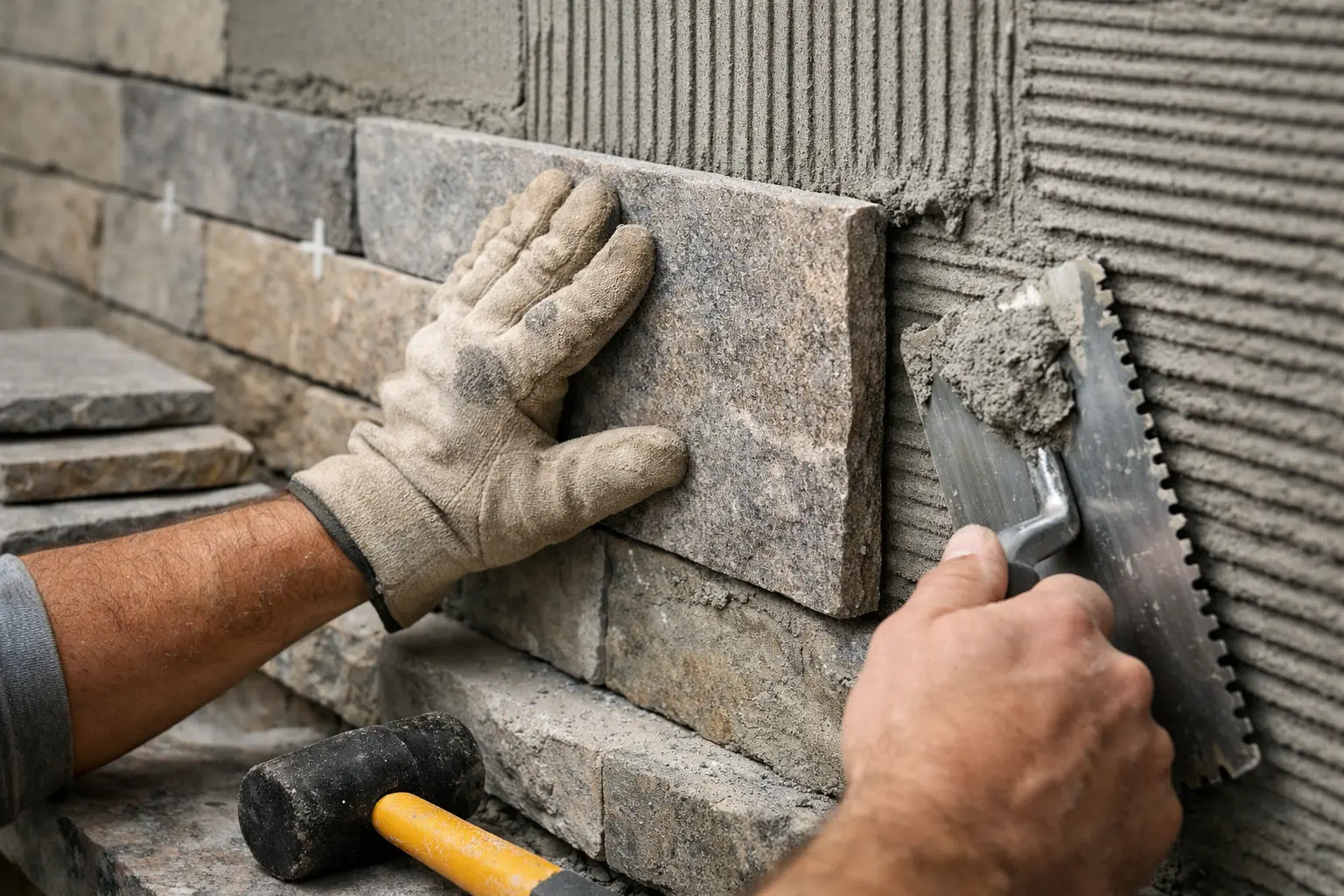
On a second-story exterior wall, a two-person crew lifts lightweight panels from a pallet, checks the first course with a level, and keeps the scaffold moving before lunch. No wrestling with oversized units. No long pause while someone rethinks the corner. Just steady work.
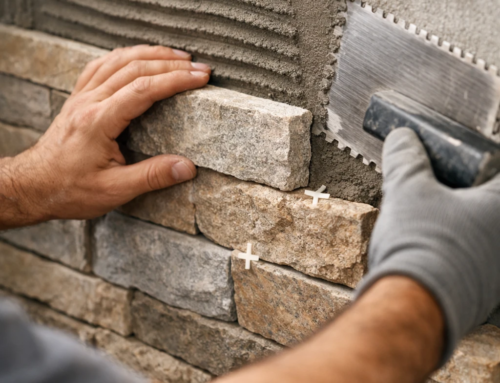
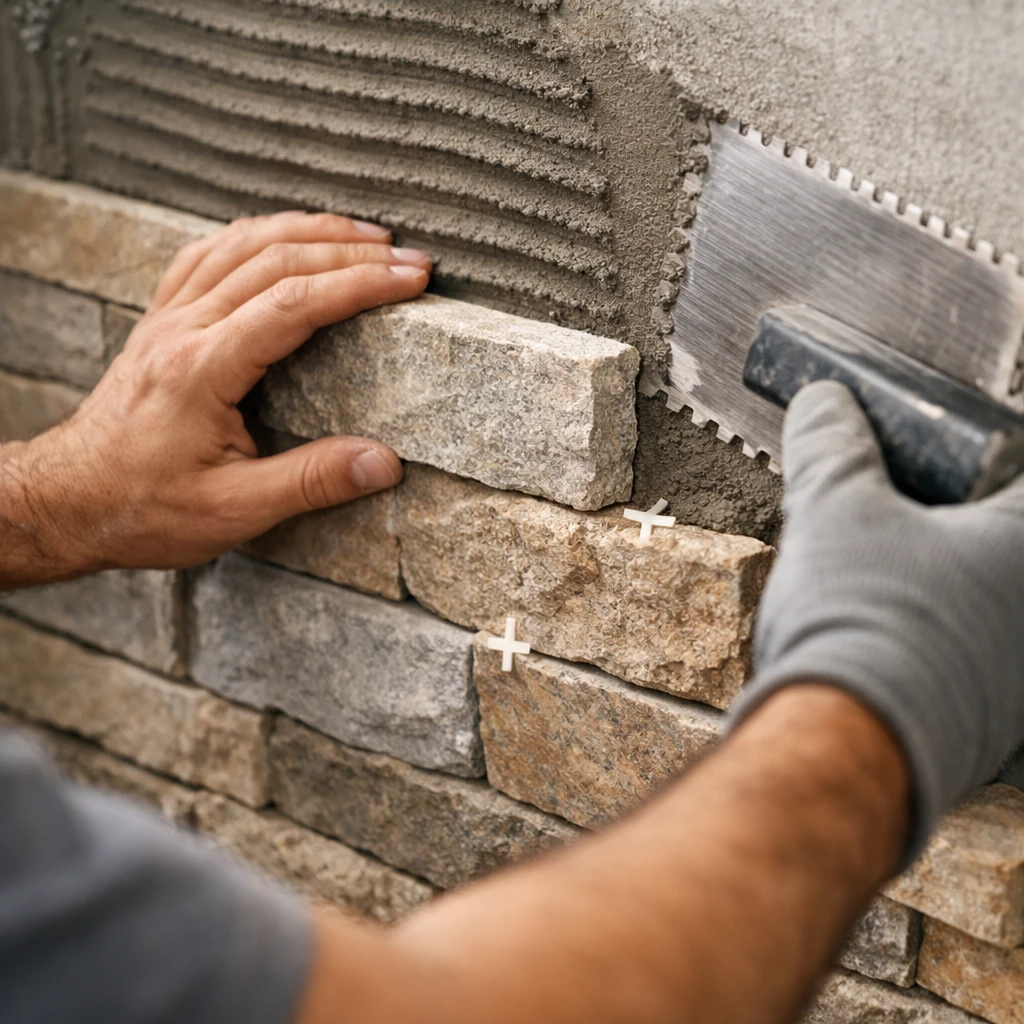
That pace is why Thin Veneer Stone shows up so often on chimneys, entry surrounds, accent walls, and full façades. I would not promise every project finishes in exactly half the time, because walls differ. But when you reduce weight, simplify layout, and remove field decisions, you create the conditions that can make that kind of jump realistic.
Suppliers also treat thin veneer as its own category, separate from full-bed stone, and that distinction matters on site. The faster jobs usually come from seven practical decisions.
#1 Start with a thinner load on the wall
What it is
Thin stone veneer is usually sold as a separate product line from full-bed stone. You can see that in supplier catalogs that break out Thin Veneer from Full Bed, or Thin Stone Veneer from other siding and wall products. That catalog split reflects a jobsite reality: thinner material asks less of the wall assembly and less of the crew carrying it.
Put simply, there is less mass to move. Whether you are staging material at grade or sending it up to a second-level scaffold, lighter units and panels are easier to handle, easier to align, and less tiring over an eight-hour day.
Why it matters
The first time savings often happen before a single piece is set. Lighter stone means less lifting, fewer awkward handoffs, and less effort keeping each unit in place while mortar grabs. On renovation work, it can also reduce the prep and transition headaches that come with a deeper wall buildout around trim, soffits, and existing windows.
The biggest time savings often happen before the first stone is set: less lifting, less prep, and fewer structural headaches.
If you have ever watched a crew lose 45 minutes just shuttling heavy stock to the scaffold, you already know where the day disappears. Thin veneer cuts that dead time down first.
Quick example
On a 200-square-foot gable wall, two installers can keep material flowing when the units are easier to carry and set. One person stages the next stack while the other keeps the bond line straight. That rhythm is much harder to maintain with deeper, heavier stone.
#2 Use flats and corners to cut down on field trimming
What it is
Many suppliers separate thin veneer into flats and corners for a reason. Natural Brick & Stone Depot, for example, lists Thin Veneer Flats by square foot and Corners by linear foot. That separation tells you exactly how the material is meant to be installed: field coverage in one pile, outside returns in another.
Flats handle the broad wall area. Corner pieces wrap the edge and create the visual depth you want without forcing the crew to fabricate every return on site.
Why it matters
Corners are where jobs slow down. Every outside edge asks for alignment, consistent reveals, and clean turns. If you leave all of that to field trimming, the crew spends more time at the saw and less time on the wall. Pre-planned corner stock reduces mitering, lowers waste, and keeps the layout moving in one direction.
Corners are where many crews lose time; if you plan them first, the rest of the wall moves faster.
This is especially true on chimney work and entry columns, where you may have four exposed outside edges in a small footprint. A wall with simple field runs can move fast. A wall with poorly planned corners stalls every few courses.
Quick example
Picture a chimney with 32 linear feet of exposed corners. If those pieces are already pulled, labeled, and stacked beside the scaffold, the crew can establish each edge first and then infill with flats. That beats stopping every 10 minutes to hunt for a matching return or cut a makeshift corner.
#3 Choose modular profiles that cover more wall with fewer pieces
What it is
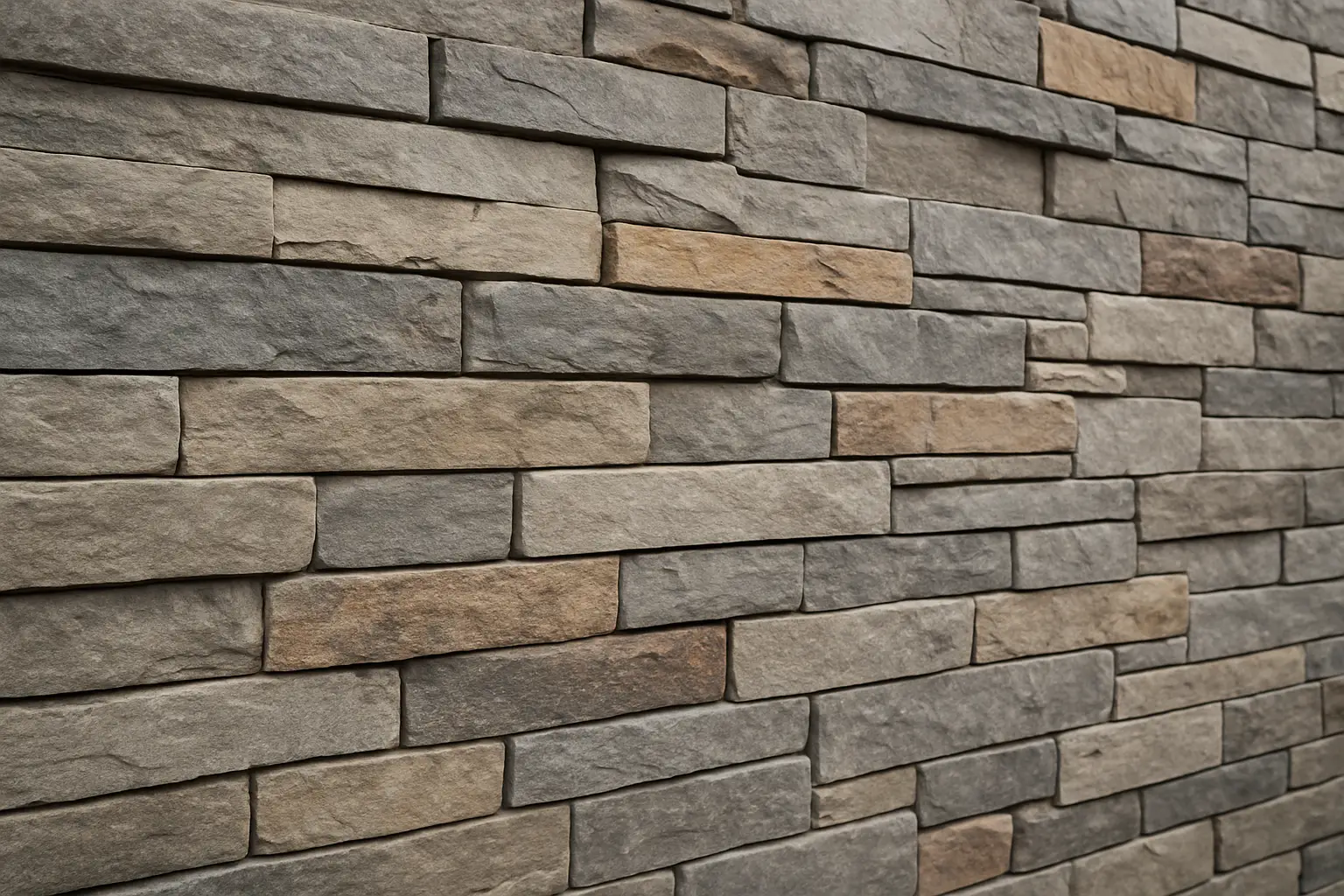
Not every veneer install needs a highly irregular, piece-by-piece pattern. Some jobs move faster with modular formats like ledger panels or stone panels. Brick it® includes ledge panel stone within its Thin Stone offerings, and other suppliers list Ledger Panels and Stone Panels as their own categories alongside natural and manufactured veneer.
Some companies call the category Thin Stone. Others call it Thin Stone Veneer, Stone Panels, or Ledger Panels. The naming shifts a bit from supplier to supplier. The planning logic stays the same.
Why it matters
Fewer pieces on the wall usually means fewer joints to align and fewer decisions at every square foot. That does not just save installation time. It also reduces visual hesitation, because the crew is following a repeatable module rather than composing a puzzle one small stone at a time.
If speed matters more than highly irregular patterning, modular coverage usually wins.
| Format | What the crew handles | Where time usually goes |
| Irregular small pieces | Many individual units | Sorting, trimming, and joint alignment |
| Ledger or stone panels | Larger modular sections | Faster coverage on long, straight runs |
| Dedicated corners | Pre-formed outside returns | Less mitering at exposed edges |
Quick example
On a 24-foot retaining wall face or a long commercial wainscot, a modular panel lets the installer set more visible coverage with each placement. You trade some pattern randomness for speed, which is often the right call on budget-driven or schedule-driven work.
#4 Keep the design palette simple so the crew can stay focused
What it is
Thin veneer comes in a huge range of colors and textures. Natural Brick & Stone Depot groups products into limestone blends, blue granite blends, midnight black blends, and earth tone sandstone blends. Metro Brick & Stone Co shows 13 thin stone veneer options, including Austin Cream Limestone, Champagne Ledge Drystack, and English Cobble.
That variety is useful during design. It can become a drag during installation if too many blends, shapes, or finish expectations stay unresolved when the pallets arrive.
Why it matters
Every extra choice on site creates another pause. Should the darker stones cluster here or spread out? Does this wall need more ledge pieces? Are we mixing two pallets evenly enough? Those are manageable questions on a mockup table. They are expensive questions when the scaffold is rented by the week.
Too many options can slow a project more than the stone itself.
A simpler palette helps the crew focus on line, bond, and pace. It also makes it easier for the owner, architect, or superintendent to approve the look without constant midstream corrections.
Quick example
Take a front elevation that uses one approved blend instead of three similar earth tones. The installer can pull from the pallet, keep distribution consistent, and move. If the project team is still debating whether the wall needs more gray or more tan at 10:30 a.m., the schedule is already slipping.
#5 Do the decision-making before the first pallet arrives
What it is
The fastest veneer jobs are usually decided long before day one. One supplier in the search results offers free samples, a Stone Visualizer, Stone Calculators, Featured Projects, Pricing, an FAQ, a Glossary of Terms, a Contractor’s Hub, Architect Information, and Classes & Education. Brick it® also tells customers to contact design experts for order advice. Those tools exist for a reason.
You can use them to settle the blend, estimate quantities, review corner treatment, and confirm how the stone will look next to siding, stucco, or metal panels before the crew unloads anything.
Why it matters
Rework is the fastest way to waste a day. If the owner changes the blend after 60 square feet are installed, or the architect rejects the corner treatment after the scaffold is in place, you are paying twice for the same wall. A sample board, a screen mockup, and a 20-minute approval meeting can prevent that.
A short approval meeting can save a full day of field corrections.
We have all seen small unanswered questions turn into large demolition bills. Pre-approval is boring compared with the install itself. It is also where schedule protection really starts.
Quick example
Before a mixed-use renovation starts, the contractor lays out four sample boards, opens a visualizer on a laptop, and confirms the final blend with the owner and architect. That half-hour meeting may keep the next three days clean and uninterrupted.
#6 Match the mortar and system to the veneer before work starts
What it is
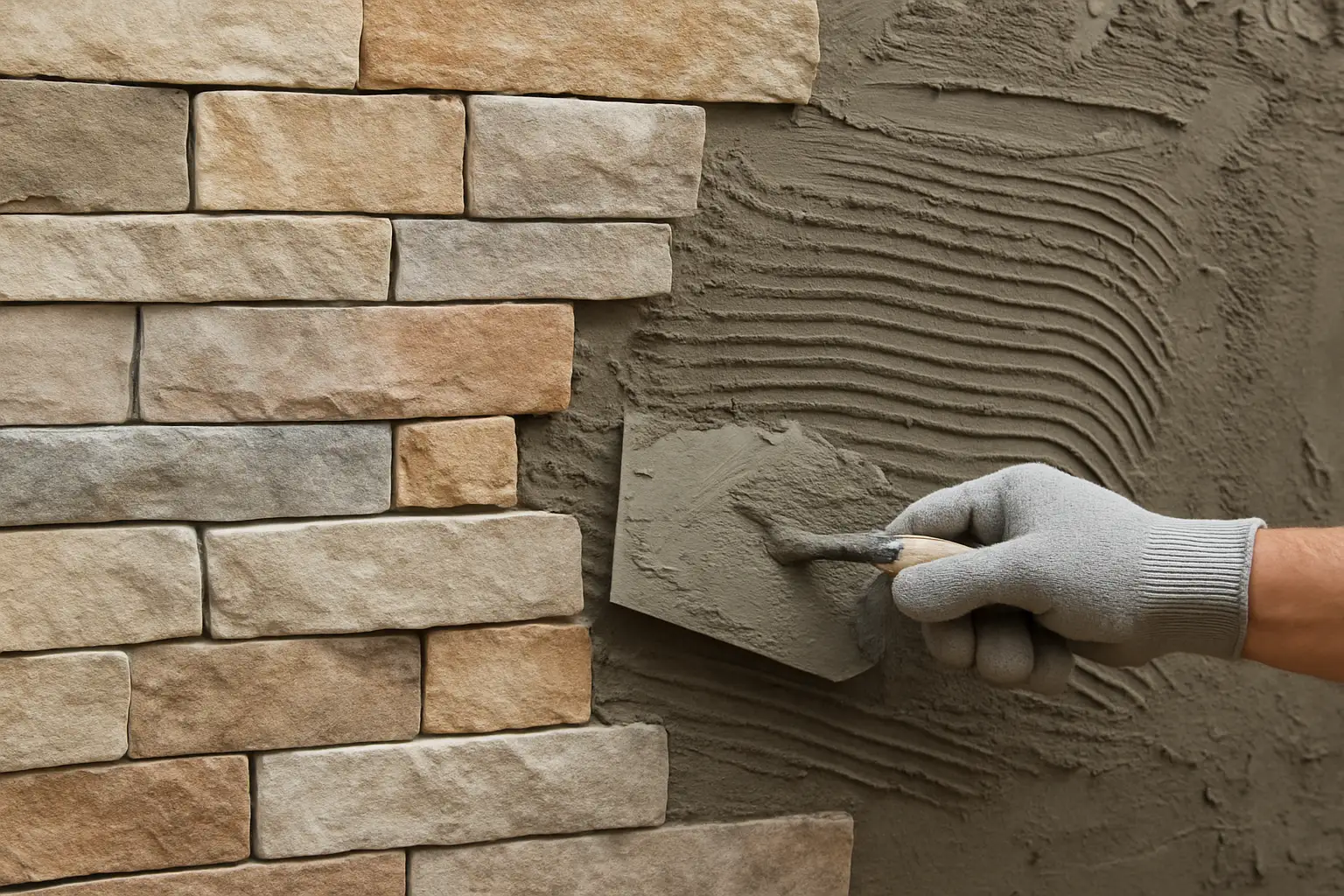
Thin veneer installs go better when the setting materials are chosen upfront instead of improvised in the field. One supplier navigation menu even calls out LATICRETE MVIS Mortar directly and pairs it with installation resources. That is a useful signal: veneer is not just about the stone face. It is about the whole system behind it.
The right mortar, substrate prep, and sequencing depend on where the stone is going — interior fireplace surround, exterior façade, wet area, freeze-thaw exposure, or a vertical commercial surface that will be inspected closely.
Why it matters
Compatibility issues steal time quietly. Mortar that sets too slowly, a substrate that was not prepared correctly, or an installation method the crew has not used before can stop progress cold. Now the day is spent troubleshooting instead of laying stone.
Compatibility beats improvisation when the schedule is tight.
That is one reason seasoned crews like repeatable systems. When the mortar, veneer, substrate prep, and cure expectations are already understood, the install becomes a production task rather than a diagnostic exercise.
Quick example
On a 120-square-foot exterior chimney, the crew confirms the veneer format, mortar, weather window, and staging plan the day before. The next morning they mix once, set consistently, and avoid the late-afternoon slowdown that comes from second-guessing the system.
#7 Source from a supplier that can keep material moving
What it is
Fast installation depends on supply as much as labor. Metro Brick & Stone Co lists showroom locations in Dallas, Tolar, and Ennis, with weekday hours from 8 a.m. to 5 p.m. Natural Brick & Stone Depot advertises 5% off storewide plus additional volume discounts from 3% to 15% off. Those details tell you something practical: availability, access, and pricing transparency matter before the first course goes up.
If your project also needs coordinating pieces such as coping, pier caps, wall caps, columns, or molded trim, using a supplier that covers both veneer and architectural precast can simplify sequencing. For teams handling residential and commercial work across the U.S., Coral Cast is one example of a source that can help keep those related material decisions under one roof.
Why it matters
The cleanest install schedule still falls apart if the wrong pallet arrives, the corner stock is short, or replacement material takes a week to ship. Clear lead times, accurate counts, and dependable delivery windows keep the crew working instead of waiting.
The fastest install starts with the right pallet on site, not a rush order halfway through the job.
Budget clarity matters too. If volume pricing changes the product choice, you want to know that before approvals are finalized, not after 300 square feet are already set.
Quick example
Imagine a storefront renovation with a veneer base, matching sill details, and a tight handoff to the glazing contractor. If the supplier stages complete material by phase and confirms the corner count in advance, the masonry crew can finish on schedule and release the area without a scramble.
How to choose the right Thin Veneer Stone option
Match the format to the project type
Start with the wall, not the catalog. A long, straight garden wall may favor ledger or modular panels. A chimney, column, or entry return often benefits from flats plus dedicated corners. A renovation with many windows, vents, and trim interruptions may move faster with a simpler profile that is easier to cut cleanly around openings.
Reference pages aimed at contractors and architects often include pricing tools, FAQs, quote requests, and “find a pro” resources because format choice affects labor just as much as appearance. The unit breakdown between Flats in square feet and Corners in linear feet is especially useful during takeoff — it helps you order coverage and edges separately instead of guessing.
| Project condition | Usually the simpler choice | Why it helps speed |
| Long, straight wall | Ledger or stone panels | More coverage per placement and fewer joints to manage |
| Chimney or outside returns | Flats plus dedicated corners | Cleaner edges with less field mitering |
| Renovation with many openings | Simple blend in manageable pieces | Easier trimming around windows, doors, and vents |
| Spec-heavy commercial entry | Pre-approved system with support resources | Fewer surprises during inspection and installation |
Balance speed, look, and budget
Not every fast option is the cheapest material, and not every beautiful option is the best use of labor. Metro Brick & Stone Co’s product listings show how profile choices can affect budget early: several thin veneer products appear at $1,024.50 per package, while options such as Champagne Ledge Drystack and Beaver Creek Tumbled are listed at $1,575. The visual style, finish, and format can shift both purchase price and install pace.
If you need a highly hand-laid, irregular look, you may accept a slower install. If the schedule is tight and the wall is large, modular coverage might be smarter. Ask one plain question: where do you want the money to go — into field artistry, faster production, or a balance of both?
Choose the system that removes the most field decisions, not just the one that looks best in a catalog.
Use a final pre-install checklist
Before the first pallet is opened, run a short checklist with the owner, designer, supplier, and installer. It sounds basic. It saves real hours.
- Confirm the approved blend, texture, and layout direction.
- Verify quantities for flats by square foot and corners by linear foot.
- Match the mortar and installation system to the substrate and exposure.
- Check delivery sequence, especially for corners and any accessory pieces.
- Establish the first-course datum line and mockup approval location.
- Make sure everyone knows who signs off on field changes.
That last point matters more than most teams expect. When a superintendent, architect, and owner all assume someone else will make the call, crews stop and wait. Clear authority keeps the wall moving.
Thin Veneer Stone saves real time when the material, layout, and sourcing are planned as one system.
That is how crews spend more hours setting stone and fewer hours lifting, cutting, correcting, or waiting for the next pallet. You may not see a 50 percent gain on every wall, but these are the conditions that make that kind of jump possible.
Before your next façade, chimney, or entry, which field decision can you eliminate before the scaffold goes up?
Find Faster Exterior Finishes With Coral Cast
Coral Cast offers a large selection of architectural stone products, properly cured and shipped nationwide from New York, with showroom help and free estimates for residential and commercial projects.