
Precast Stair Treads: Strength, Safety, and Style in Every Step
Before sunrise, a crew lifts a single gray step into a stair opening while one person checks the tape measure and another marks the riser height on the formwork. Nobody is debating color yet. They are watching the fit, the bearing points, and whether that first piece lands exactly where the drawing said it would.
That moment explains the appeal of Precast Stair Treads. You are not starting with a wet pour and hoping field conditions stay perfect. You are setting a factory-made concrete component that was prepared for a specific stair layout, with support, connection, and finish decisions already thought through.
If you are planning a front entry, replacing worn steps, or detailing a commercial stair, the real questions are practical ones: How will it span? How will it handle traction and code requirements? Can it solve odd geometry without looking patched together? That is where precast earns its keep.
#1 What precast stair treads are
What it is
Precast stair treads are factory-made concrete stair components produced to fit a planned stair run rather than cast in place on the jobsite. Depending on the project, they can be standard sizes or made to order. That makes the product tied to how the stair will actually be built, with dimensions and details selected to suit the opening.
Precast is less about pouring on site and more about delivering a step that is already engineered for the opening.
Why it matters
That factory control helps you manage repeatability. Each tread can arrive with the same dimensions, edge condition, finish, and connection strategy, which reduces the small field variations that often turn into uneven risers or sloppy nosings.
Quick example
Picture a six-step exterior stair at a multifamily entry in Queens. If the steel stringers are already set and the clear opening is known, a precast tread package lets your team install to that geometry instead of building each step from scratch. For a repair job, you might lean toward a simple, straightforward connection. For new steel, a project-specific attachment detail may make more sense.
#2 Why strength starts with the structure
What it is
Stair strength is not a magic property that appears because the material is concrete. It comes from section thickness, reinforcement, support condition, and connection details working together. Structural performance starts with the assembly, not the sales sheet.
| Structural factor | What you verify | Why it affects strength |
|---|---|---|
| Thickness | Section depth and support type | Deeper sections handle span demands better than thin decorative pieces. |
| Rebar | Presence, layout, and cover | Reinforcement helps control cracking and supports long-term durability. |
| Support | Stringer-to-stringer or full bearing | The load path changes completely depending on how the tread is carried. |
| Connection | Project-specific attachment detail | The connection determines how forces move into the stair frame or structure. |
Why it matters
On site, I have seen buyers focus on surface color before they confirm bearing length. That is backwards. A tread that looks substantial can still be wrong for the span. A unit between steel stringers behaves differently from a fully supported tread laid onto a concrete base, and the wrong assumption there will cost you time fast.
Quick example
Take an exterior stair with steel stringers on each side and no full concrete support under the tread. In that case, you need to verify the clear span and the section thickness early. The right mindset is to confirm the structural needs before the finish goes in place.
#3 How precast stair treads improve safety
What it is
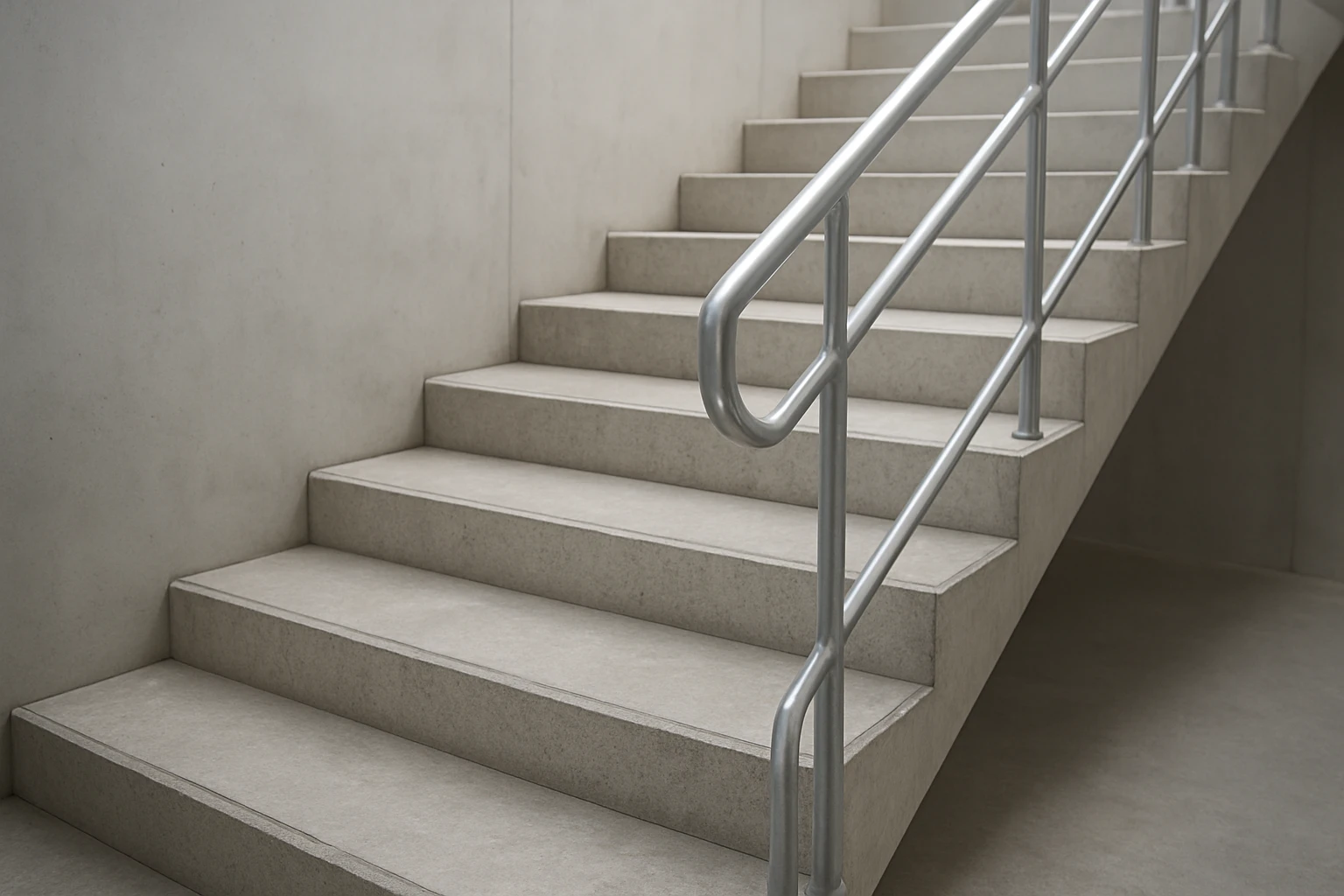
Safety in stair design usually comes down to three things: traction, consistency, and compliance. That means the tread is not just a slab with a nice face — it is a place where dimensions and surface choices carry real consequences.
If the tread surface is slippery or the riser layout is inconsistent, the step fails before the finish ever gets noticed.
Why it matters
Most stair accidents do not happen because the concrete “looks weak.” They happen because the front edge is hard to read, the surface gets slick in rain, or one riser is just enough off to break a person’s rhythm. Safety strips can be cast into the concrete or added separately. That is a practical design choice, especially on exterior stairs, public entries, or any job where you expect wet shoes, leaves, grit, or winter conditions.
Quick example
Think about a small office entry with five exterior steps in Boston. If you hold the risers consistent, choose a finish with reliable traction, and define the nosing with a safety strip, you are designing for actual use rather than showroom photos. On a residential replacement, that same logic matters just as much — especially when old framing or settlement wants to create one oddball step.
#4 The customization options that solve awkward stair runs
What it is
Not every stair is a straight run between two simple stringers. Precast works well because it can be shaped to the stair instead of forcing the stair to conform to stock dimensions. Treads can be radial or straight and can have tapered ends per the design. Adjustable sizes also open the door to a lot of problem-solving.
The best tread is often the one that solves an odd stair geometry without forcing the rest of the project to change.
Why it matters
Old stoops, landscape stairs, curved hotel entries, and rehab work almost never give you textbook conditions. You may have an existing landing that is out of square, a grade change that forces a fan layout, or a floor elevation that leaves one riser too tight. In those situations, field-cutting generic pieces usually looks exactly like what it is — a compromise. A purpose-made tread can preserve the intended geometry and keep the stair readable.
Quick example
A curved garden stair is the easy example. Radial treads with tapered ends produce a clean fan pattern around a circular landing. The more common example is less glamorous: a rowhouse repair where existing elevations vary just enough that adjustable riser configurations save the installer from rebuilding half the entry. That is where custom precast stops being a luxury and starts acting like a tool.
#5 The style choices that make steps look intentional
What it is
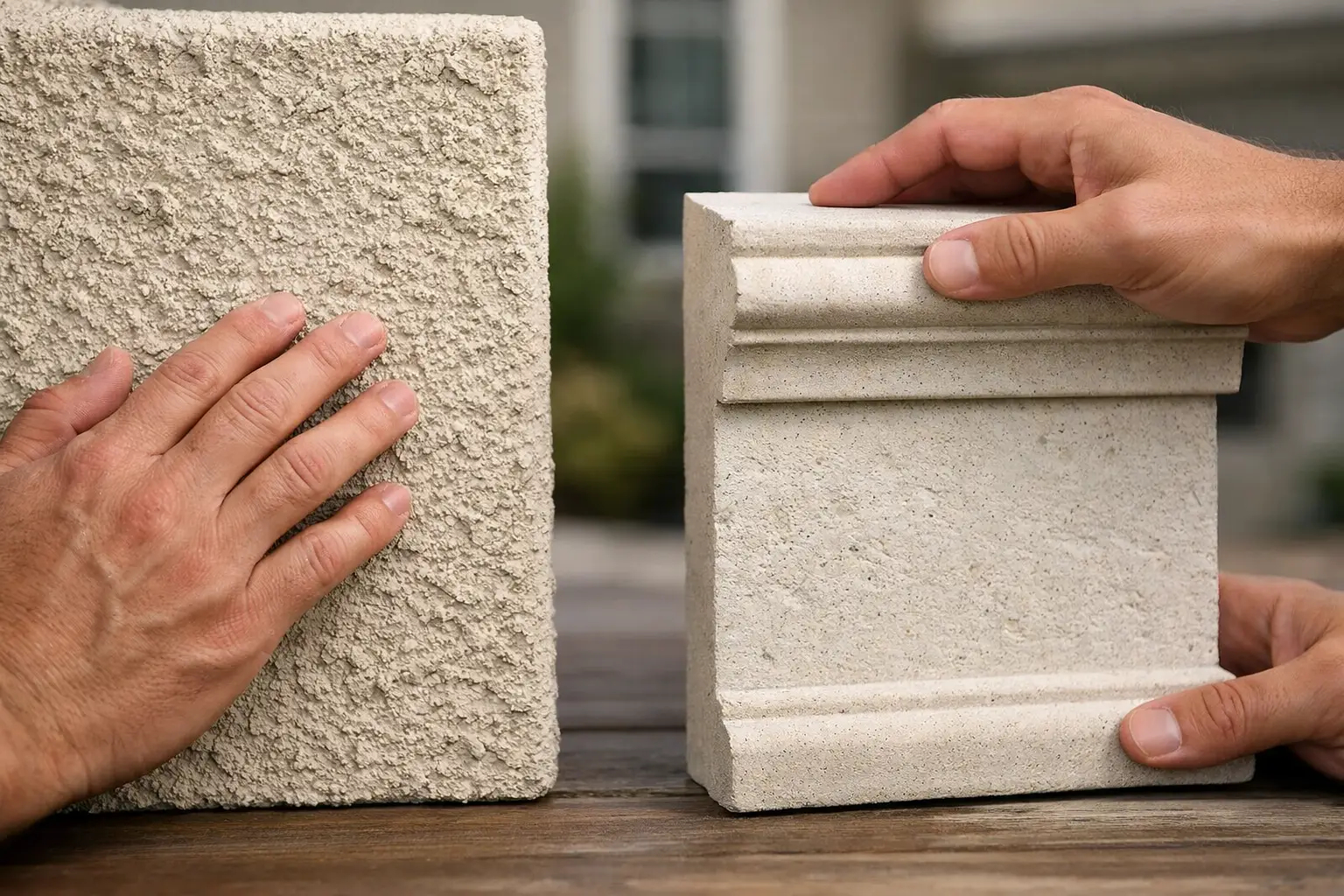
A stair tread has a structural job, but it also sits right at eye level. Finish, color, profile, and edge detail decide whether it blends into the architecture or looks like a late substitution. Treads are available with numerous options for colors, profile, finish, and connections. Broad color families can also help you coordinate the stair with the rest of the project.
A good tread can either blend quietly into the building or become a deliberate visual accent.
Why it matters
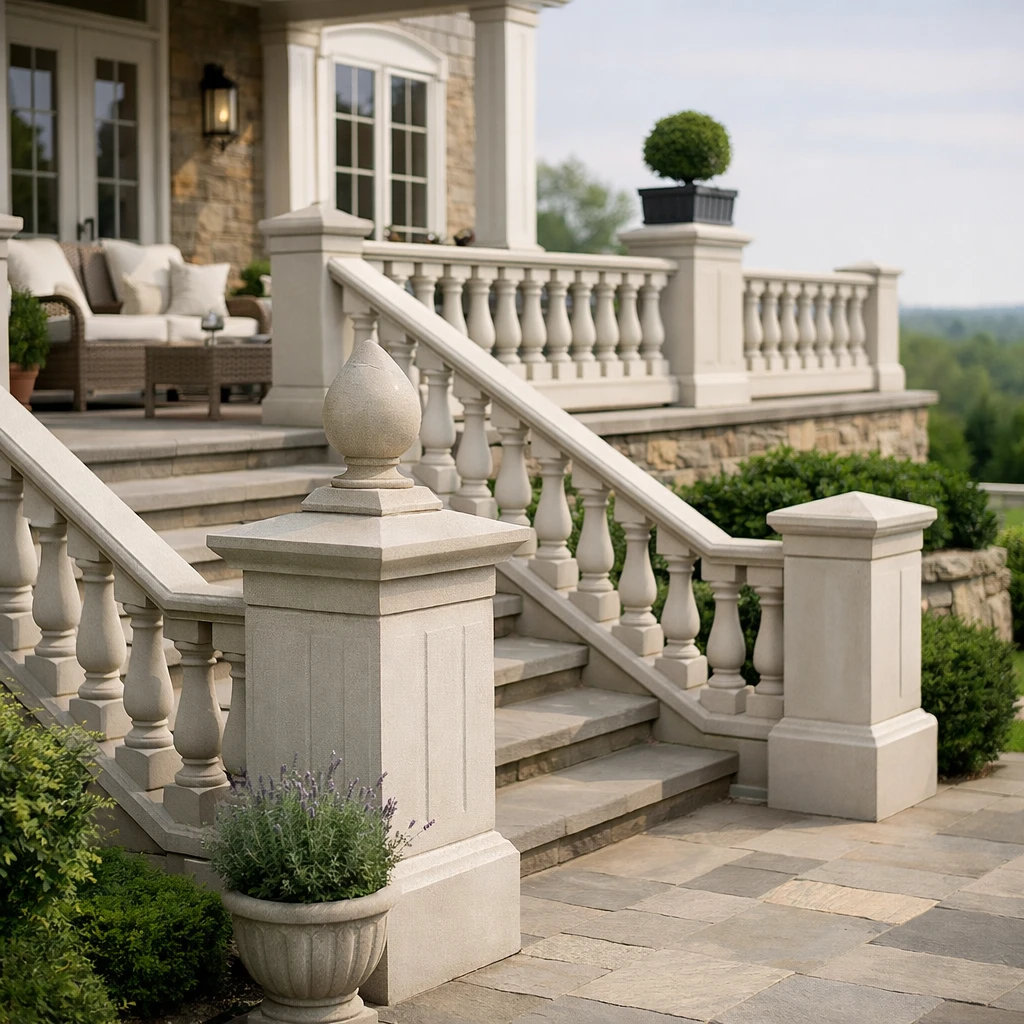
At a front entry, the stair is often the first surface your eye reads after the facade. On a commercial project, it can set the tone before anyone reaches the door. When you coordinate stair treads with nearby pavers, coping, wall caps, balustrade, thin veneer, columns, or stone moldings, the whole composition feels resolved. When you do not, even a structurally sound stair can look borrowed from another job.
| Design choice | Visual effect | Common use |
|---|---|---|
| Neutral gray or buff | Quiet, architectural background | Traditional porches, multifamily entries, civic stairs |
| Charcoal or Night | Sharper contrast and stronger edge definition | Contemporary entries, retail, hospitality |
| Pronounced profile or finished nosing | More formal appearance | Homes with columns, balustrades, or decorative stone trim |
| Simple profile | Cleaner, utilitarian look | Commercial back-of-house or restrained modern work |
Quick example
For a suburban front porch, a buff tread paired with matching wall caps and light stone veneer can soften the stair and tie it back to the facade. For a downtown office entry, a gray or charcoal tread with crisp edges may work better against darker pavers and metal railings. Either choice can be right. The point is to make it a choice.
#6 Where precast stair treads fit best
What it is
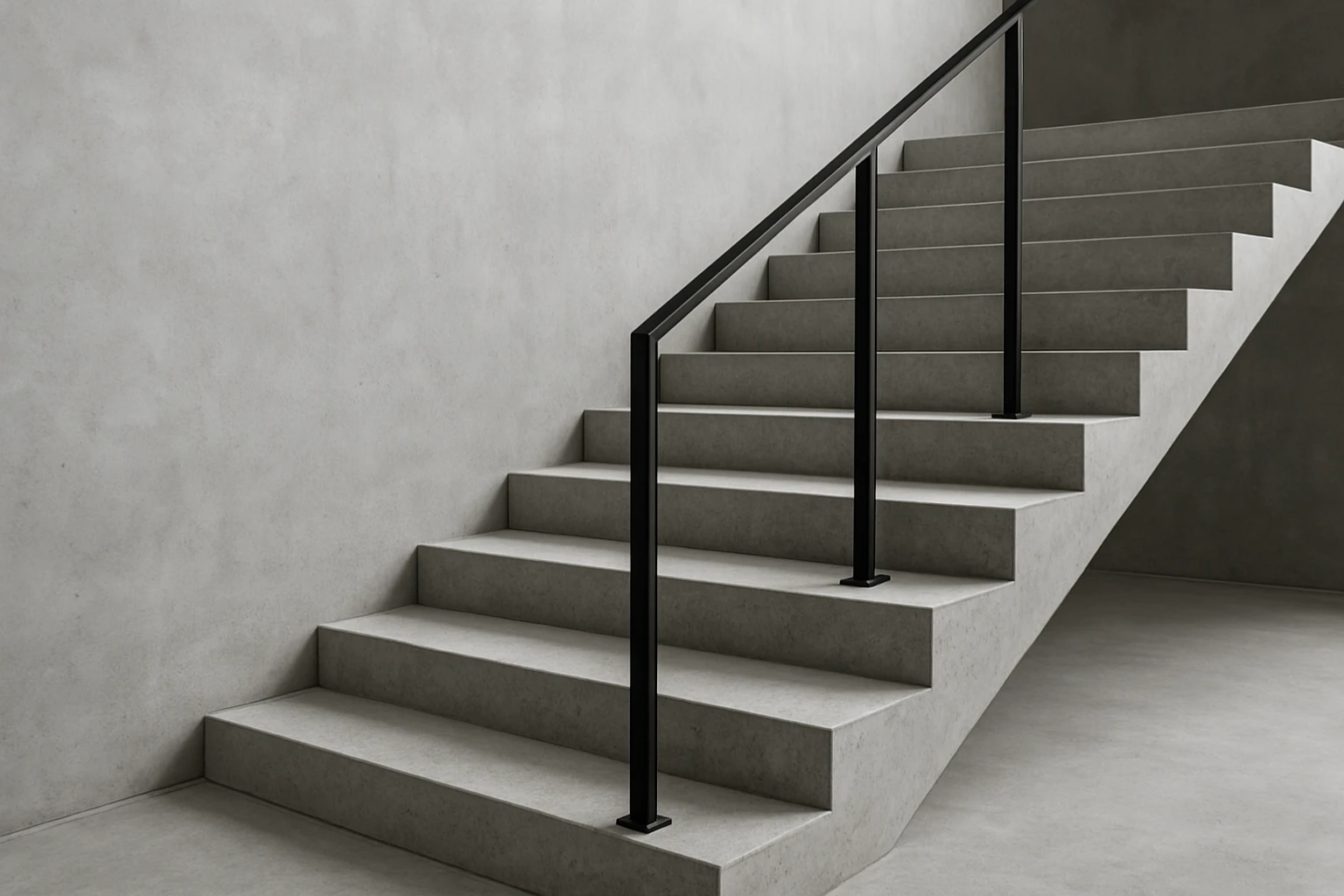
Precast stair treads fit anywhere you need durable, repeatable stair components with clear support logic and code-aware detailing. Solutions can serve both residential and commercial applications, and that range matches what we see in the field: front steps, multifamily walk-ups, landscape stairs, terrace connections, school entries, and small commercial storefronts all show up on the same shortlist.
Why it matters
You get the most value from precast when the stair needs to go in cleanly and perform for years. On new construction, that can mean quicker coordination between the stair fabricator and the finish package. On replacement work, it often means keeping a project from turning into custom forming, patching, and finish matching on site.
Quick example
Compare two jobs. One is a residential porch where the owner wants a durable set of steps that will not feel temporary two winters later. The other is a commercial entry where traffic, visibility, and uniformity matter every day. Different scale, same logic: if you want a stair surface that is repeatable, durable, and tailored to the opening, precast belongs on the table.
- New residential front entries
- Replacement stoops and walk-up stairs
- Commercial and mixed-use entrances
- Projects with repetitive stair layouts
- Designs that coordinate with pavers, coping, or architectural stone details
#7 What maintenance and longevity really look like
What it is
Longevity is a chain of decisions, not a label. Material strength matters, but so do handling, storage, installation, drainage, and routine inspection. Reinforcement and proper fabrication help support durability and longevity in each step. Separate guidance pages for care and maintenance and for efflorescence and hairline cracking are useful because they remind you that long-term performance deserves its own plan.
The smartest maintenance plan is the one that treats the tread like a structural asset, not just a surface.
Why it matters
Owners sometimes expect a stair to be “done forever” the day it is installed. Real life is messier. Units can be chipped during handling. Water can linger where pitch or drainage is wrong. Surface changes such as efflorescence or fine hairline cracking may need evaluation so you can separate cosmetic issues from conditions that deserve repair. None of that is dramatic, but ignoring it is how a good stair becomes an expensive callback.
Quick example
A property manager doing a spring walkthrough should check more than appearance. Look at the nosing for spalls, confirm that connections are still sound, watch how water moves off the tread, and note whether any movement is affecting riser consistency. On a house, the same inspection takes minutes. On a commercial property, it can save a claim.
- Inspect edges and nosings after winter or heavy use.
- Keep drainage paths clear so water does not sit on the stair.
- Address chips and joint issues before they grow.
- Review unusual cracking or movement with the supplier, installer, or engineer.
#8 How to choose the right precast stair tread
Check the support and span
Start with the load path. Is the tread self-supporting between stringers, or is it fully supported along its underside? What is the clear span? Where are the bearing points? If you answer those questions first, thickness and connection choices become much easier to narrow down.
Start with structure, then safety, then style.
Match the safety and code requirements
Once support is clear, confirm the safety rules for your project. You want consistent rise and run, a surface that suits the location, and the right edge treatment for visibility and traction. Ask whether cast-in or separate safety strips make sense. If the project is a commercial entry, school, or multifamily stair, be extra careful about uniformity. Those stairs get tested by use every single day.
Balance finish, budget, and lead time
Now you can talk aesthetics and schedule without getting lost. Multiple connection options are a good reminder that custom geometry, custom finishes, and custom attachments can affect both cost and lead time. If you are matching nearby pavers, coping, wall caps, or decorative stone, gather those samples at the same time so you are approving the stair as part of the whole project.
| Decision step | Question to ask | What the answer drives |
|---|---|---|
| Support | Self-supporting or fully supported? | Section thickness, reinforcement, and connection type |
| Span | What is the clear distance between supports? | Engineering review and tread configuration |
| Safety | Do you need added traction or stricter code detailing? | Surface texture, safety strips, and riser coordination |
| Geometry | Straight, radial, tapered, or variable? | Standard sizing versus custom fabrication |
| Finish | Match the building or create contrast? | Color family, profile, and visible edge treatment |
| Installation | Project-specific attachment or mortar set? | Shop details, field labor, and schedule sequencing |
If you keep the sequence disciplined, you will make better decisions faster. Measure first. Confirm code conditions second. Then choose the finish that serves the architecture rather than distracting from it.
Precast Stair Treads work best when you expect more than a pretty face from a stair.
They give you a practical blend of structure, safety, and design — with room for custom geometry, cleaner installation, and a finish that belongs to the building instead of fighting it.
When you look at your next porch, entry, or commercial run, which matters most to you: span, traction, custom fit, or the way the stair ties into the rest of the facade?
Shape Better Steps With Coral Cast
Coral Cast’s Architectural precast concrete manufacturing provides properly cured, maintenance-free stair and stone products from New York, with nationwide shipping, showroom guidance, and free estimates for residential or commercial work.
Generated on SEOPro AI