Cast Stone or Precast? How to Choose the Right Material for Your Project
At 8:15 on a cold Tuesday, the crew is leaning over facade drawings while sample chips slide across the table. The owner points at the entry surround and asks a fair question: should this trim look razor-sharp from two feet away, or just survive the next 30 winters without drama?
That is usually where the Cast Stone or Precast debate begins. It is also where bad decisions start if nobody defines the job first. A sill at eye level, a coping run on a parapet, a balustrade on a terrace, and a large facade panel do not ask the same things from a material.
If you slow the conversation down, the choice gets easier. Start with visibility, exposure, budget, and schedule. Then verify how the product is made, what standard governs it, and what the mockup actually shows in daylight. That sequence works whether you are choosing columns for a front porch, wall caps for a retail center, or stone moldings for a restoration.
Pre-work checklist: define the job before you compare materials
Start with the building, not the sales sheet.
Identify where the piece will sit: trim, panel, column, or small decorative element
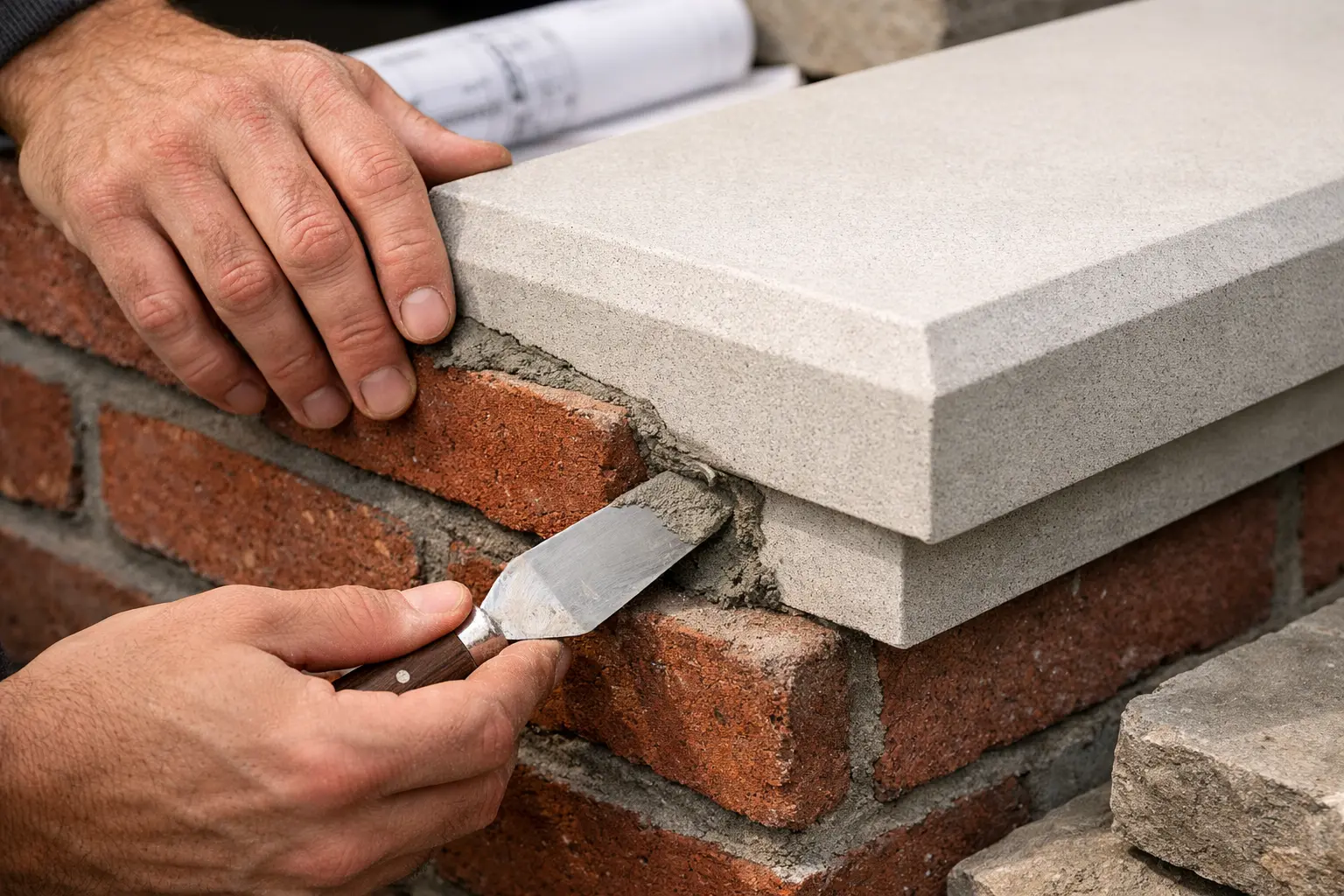
Architectural precast concrete stone is commonly used in facades, cladding, and other architectural applications. That matters because scale changes everything. A pier cap at a garden wall, a set of entry columns, and a repetitive cladding band on a four-story elevation may all look “stone-like,” but they face different structural, visual, and handling demands.
Make the team say the part name out loud. Is it coping, thin veneer, a window surround, a balustrade system, pavers, wall caps, decorative stone, or a larger panelized piece? When you define the unit clearly, you stop people from comparing materials that are solving different problems.
| Project element | What matters first | Why it changes the decision |
|---|---|---|
| Door surround or window trim | Edge detail and realism | People see it from a few feet away |
| Facade panel or cladding band | Repeatability and scale | Large runs magnify production and installation issues |
| Balustrade, column, pier cap | Profile accuracy and handling | Decorative shapes expose mold quality fast |
| Coping, wall cap, paver | Exposure and wear | Water, foot traffic, and impact can drive performance needs |
Decide how close viewers will be and how perfect the stone match needs to look
One source in the SERP describes cast stone as a material used to simulate natural-cut stone and mimic limestone, brownstone, sandstone, granite, and more. That is the right starting point for close-view work. If you are matching a brownstone-style stoop in Brooklyn or refining the entry of a custom home, the finish cannot just be acceptable from the curb. It has to read well up close.
Checklist rule: If the project will be seen up close, appearance usually matters more than raw material cost.
Use two viewing distances when you assess samples: arm’s length and street distance. I like 2 feet and 20 feet because they reveal different truths. At 2 feet, you notice sharp arrises, texture, pinholes, and color depth. At 20 feet, massing and proportion take over. If the piece sits high above grade, you may not need the same level of refinement you would demand at a front door.
Set the budget, schedule, and durability expectations up front
A 4specs discussion says precast concrete may be preferred for applications that are not viewed closely or where cost is the primary concern. Read that carefully. It does not mean one category is automatically better and the other automatically cheaper. It means visibility and cost pressure can shift what “right” looks like for the job.
Write down the non-negotiables before you compare quotes. Include the budget ceiling, installation date, replacement tolerance, and exposure conditions. For a school project opening in August, schedule can outweigh minor visual gains. For a church renovation with a highly visible entry, the reverse may be true. Freeze-thaw, runoff, foot traffic, and impact zones should all be on the table before anyone argues about aesthetics.
Execution checklist for Cast Stone or Precast: verify how each option is made and specified

Now verify what you are actually buying.
Confirm whether the piece is cast stone or architectural precast concrete
Teams often use these terms loosely, and that creates trouble. A SERP source explains that cast stone is crafted rather than quarried. Another explains that architectural precast concrete stone is made by casting concrete into molds to create stone-like elements for facades, cladding, and related uses. Both descriptions involve molds. Both can deliver good results. That overlap is exactly why you need precise language in the spec and submittals.
Ask every supplier to identify each item by product category and use case. Do not accept a proposal that simply says “stone trim” for a package that includes coping, cornices, columns, and veneer. That wording is too soft. The tighter the description, the fewer surprises you get when shop drawings, anchors, and delivery pieces start moving.
Review the mix, mold process, and finish-control method
One cast stone source describes a mix of cement, sands, carefully selected aggregates such as crushed stone or gravel, and mineral color. That recipe helps explain why cast stone can imitate natural-cut stone so convincingly. Architectural precast sources emphasize casting in a controlled factory environment, because batching, molds, curing, and inspection all influence the final look.
Ask direct questions:
- What aggregates are used, and how do they affect surface character?
- How is color introduced and controlled from unit to unit?
- What mold material and mold maintenance process keep profiles crisp?
- How is the finish approved — sample chip, larger control sample, or jobsite mockup?
- How are corners, returns, and delicate profiles protected during handling and shipping?
You will learn a lot from the answers. A tight quirk on a cornice, a repeated baluster profile, or a thin veneer corner return exposes poor mold control faster than a flat rectangular piece ever will.
Ask for the governing standard, submittals, and mockup requirements
Documentation separates a safe decision from a hopeful one. In a 4specs discussion, a contributor states that cast stone must comply with ASTM C1364. Use that as a prompt to confirm the governing standard in your own project documents. Do not treat a forum comment as a substitute for your specification — but do use it to ask better questions.
Practical rule: If the submittal package is vague about mix, finish, or standard, treat that as a red flag.
| Submittal item | Why it matters | What to verify |
|---|---|---|
| Shop drawings | Confirms dimensions and interfaces | Profiles, joints, returns, anchorage zones |
| Finish sample | Sets visual expectation | Texture, edge sharpness, color range |
| Mockup requirement | Tests real-world appearance | Review in site light, beside adjacent materials |
| Handling and repair notes | Limits jobsite surprises | Storage, lifting points, touch-up procedures |
| Standard reference | Defines minimum expectations | Correct material category and applicable criteria |
If a supplier cannot show you how quality is controlled, you do not have enough information yet. Keep asking.
Validation checklist: compare appearance, performance, and durability side by side
This is where brochure language has to survive daylight.
Compare realism and edge detail against the natural stone look you want
A 4specs discussion says cast stone provides a more convincing replication of natural dimension stone. That lines up with many close-view applications: keystones, decorative bands, columns, entry surrounds, and stone moldings that people study from the sidewalk. If the design intent is a convincing limestone, brownstone, or sandstone look, examine the sample like a skeptical owner would.
Check arrises, corners, texture breaks, and color depth. Then put the sample beside the actual wall assembly. Brick, stucco, metal trim, and existing masonry can all change how a piece reads. A sample that looked rich on a conference table can fall flat once it sits next to red brick in harsh afternoon light.
Check durability expectations for weather, wear, and exposure
Durability claims need context. The same 4specs discussion says cast stone is more resistant to deterioration. Architectural precast sources, on the other hand, stress the structural integrity and durability of concrete along with the benefit of controlled manufacturing. Those statements are not identical, and that is useful. They remind you to judge the real exposure, not the marketing category.
Ask what happens in year 10. Will the coping hold standing water? Will the paver see deicing salts? Does the column base sit in a splash zone? Will a wall cap take ladder impact during maintenance? A beautiful finish does not rescue a bad detail. Water management, support, movement, and installation matter just as much as the product family.
Contrarian take: The better-looking option on paper is not always the better-performing option in the field.
Balance the visual payoff against long-term maintenance needs
Look past the first walk-through. Ask how easy it will be to clean the surface, replace a damaged unit, or match the color later. Larger runs of facade trim may benefit from repeatable production and simpler replacement logic. A front entry with highly visible decorative stone may justify more refinement because every visitor sees it from 18 inches away.
This is also where the project team should be honest about priorities. If appearance and durability pull in different directions, write down which side wins. If you do not, price will decide by default.
| Decision factor | What often favors cast stone | What often favors precast concrete |
|---|---|---|
| Up-close realism | Stronger natural stone imitation | Acceptable where fine detail matters less |
| Large-scale facade use | Possible, depending on design intent | Often a practical fit for broader architectural applications |
| Cost sensitivity | Can be harder to justify if visibility is low | Often considered when budget drives the choice |
| Exposure and wear | Needs correct detailing and specification | Needs correct detailing and specification |
Common misses checklist: avoid the mistakes that cause rework

Most expensive mistakes start small.
Do not treat cast stone and precast as interchangeable labels
Cast stone is described in the SERP as a refined building material used to simulate natural-cut stone. Architectural precast stone is described as being manufactured in a controlled factory environment for precise quality control. Those ideas overlap, which is why teams blur them. But overlap is not sameness.
When one person says “stone,” another may picture a refined trim profile, while the fabricator is pricing a broader precast approach. Force the conversation into specifics: unit size, finish, profile tolerance, backing, reinforcement, anchors, and expected look from 10 feet away. Labels do not install the product. Details do.
Do not skip close-up review of finish, texture, and color variation
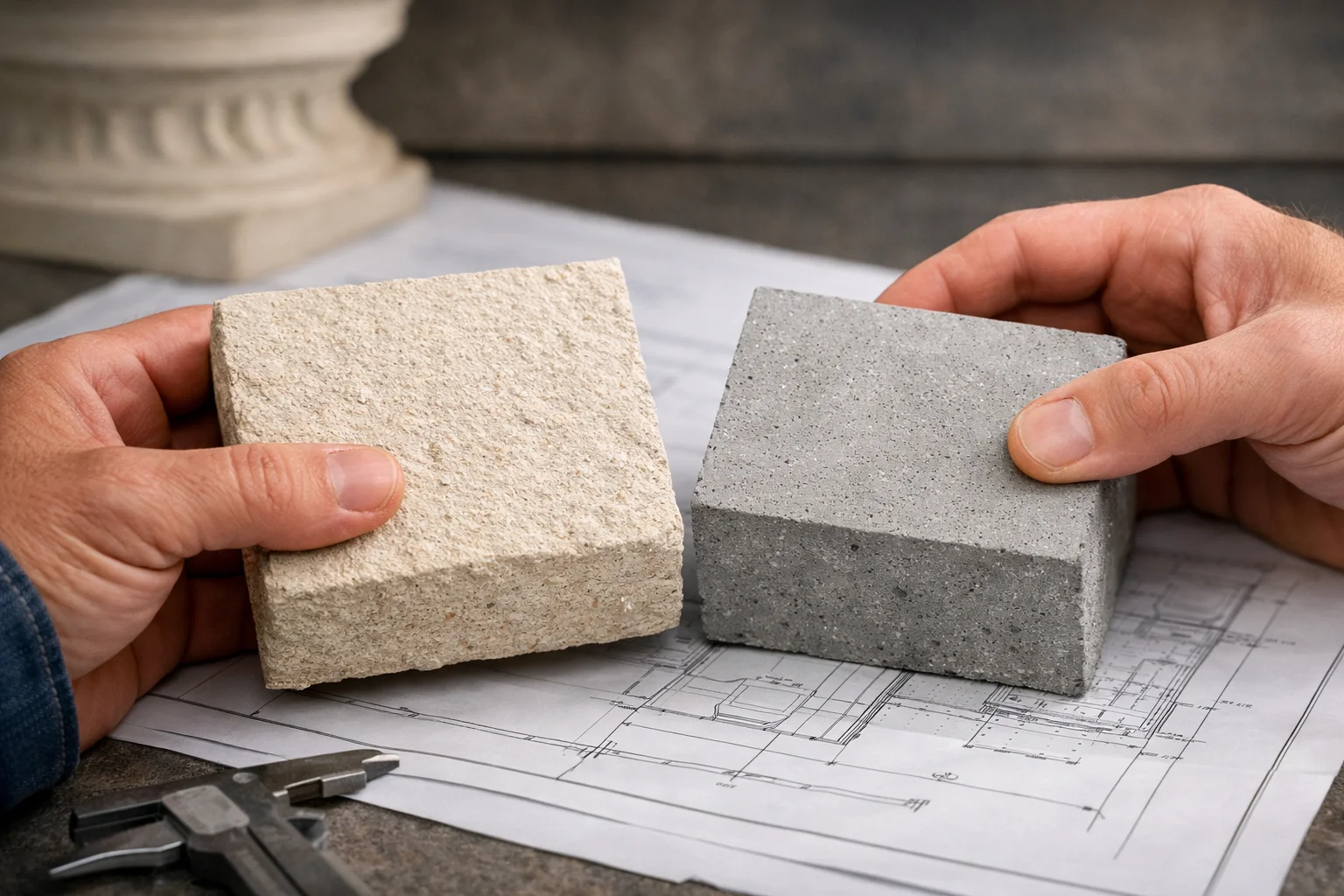
Bring samples outside. Hold them next to the actual wall. View them in morning and late-day light. On a brownstone-style residence or a limestone-look civic project, a small color miss can feel enormous at the entry even when it looked acceptable under office LEDs.
- Review corners and cut ends, not just the best face.
- Compare approved samples against both new adjacent materials and aged existing ones.
- Check repeated profiles like balusters or moldings for consistency from piece to piece.
- Do not approve a tiny chip when a full-profile sample would reveal far more.
For renovation work, compare the new unit to the oldest neighboring material, not the cleanest one. That one habit saves arguments later.
Do not ignore installation access, shipping, and repair implications
Cost-only comparisons miss jobsite reality. A long coping run on an occupied property may need staging, protected storage, sequencing with waterproofing, and room to swap damaged pieces without tearing up adjacent work. A decorative column arriving late can hold up a porch. A broken pier cap can turn a near-finished punch list into another month of calls.
Warning: The cheapest option can become the most expensive if it does not fit the project’s visibility or performance needs.
Ask the installer how the units will be unloaded, stored, set, and repaired. Ask the supplier how replacement pieces are identified and re-ordered. Those are not back-end questions. They shape the right material choice at the front end.
Decision checklist: choose the material that fits the project outcome
Make the call only after the project conditions, samples, and paperwork line up.
Choose cast stone when refined appearance and closer visual match matter most
The 4specs discussion says appearance and durability are the primary considerations, and one contributor describes cast stone as denser and more refined than precast from that contributor’s experience. That makes cast stone a strong candidate when you need a closer visual match to natural-cut stone or you expect people to study the detail up close.
Think front entry surrounds, cornices, keystones, balustrades, columns, visible coping edges, and other decorative stone details that live at eye level. If the design intent depends on crisp profiles and a convincing natural-stone character, start here and validate with a real sample.
Choose precast concrete when the project is less visible or cost efficiency drives the decision
The same discussion says precast concrete may be preferred when the application is not viewed closely or when cost is a primary driver. Architectural precast concrete stone is also used to create stone-like elements for facades and cladding while retaining concrete’s structural benefits. That combination can make sense for larger architectural applications, repetitive trim zones, some wall caps, pavers, or long elevations read mostly from a distance.
This is not a “settling” decision by default. It is a scope decision. If the piece sits 30 feet above grade and the budget is tight, the smarter move may be the option that gives you dependable production, a controlled finish, and the right performance for the exposure.
Document the decision in the spec so installers and reviewers are aligned
Once you decide, lock it down. Write the approved material category, governing standard, finish description, allowed color variation, dimensions, anchorage or setting notes, sample approval reference, and repair procedures into the project documents. “Stone to match” is not a specification. It is an argument waiting to happen.
Final rule: Choose the material that best supports the finished look, the exposure conditions, and the maintenance plan.
| If your priority is… | Usually points toward cast stone | Usually points toward precast |
|---|---|---|
| Close-up realism at an entry | Yes | Sometimes |
| Large-scale facade or cladding application | Sometimes | Often |
| Tight first-cost pressure | Sometimes harder to justify | Often considered |
| Decorative profiles with visual scrutiny | Often a strong fit | Depends on finish expectations |
| Simple specification and field alignment | Only if fully documented | Only if fully documented |
Whether you are choosing thin veneer for a residence, wall caps for a property line, coping for a parapet, or columns for a porch, the right answer comes from the job itself — not from whichever label sounds more premium in a meeting.
Define the job, verify the spec, test the sample, then choose the material that fits the wall in front of you.
That order keeps you from overpaying for refinement nobody will ever see — or underbuying a piece that disappoints every time someone walks through the front door. Cast Stone or Precast gets easier when visibility, exposure, and maintenance are written down before the first purchase order.
When your team looks at those sample chips again, what matters most on this project: close-up realism, long-term toughness, or first-cost savings?
Choose Smarter Materials With Coral Cast
Coral Cast manufactures properly cured, maintenance-free architectural precast and stone in New York, offering many styles, secure U.S. shipping, showroom guidance, and free estimates for residential or commercial teams.