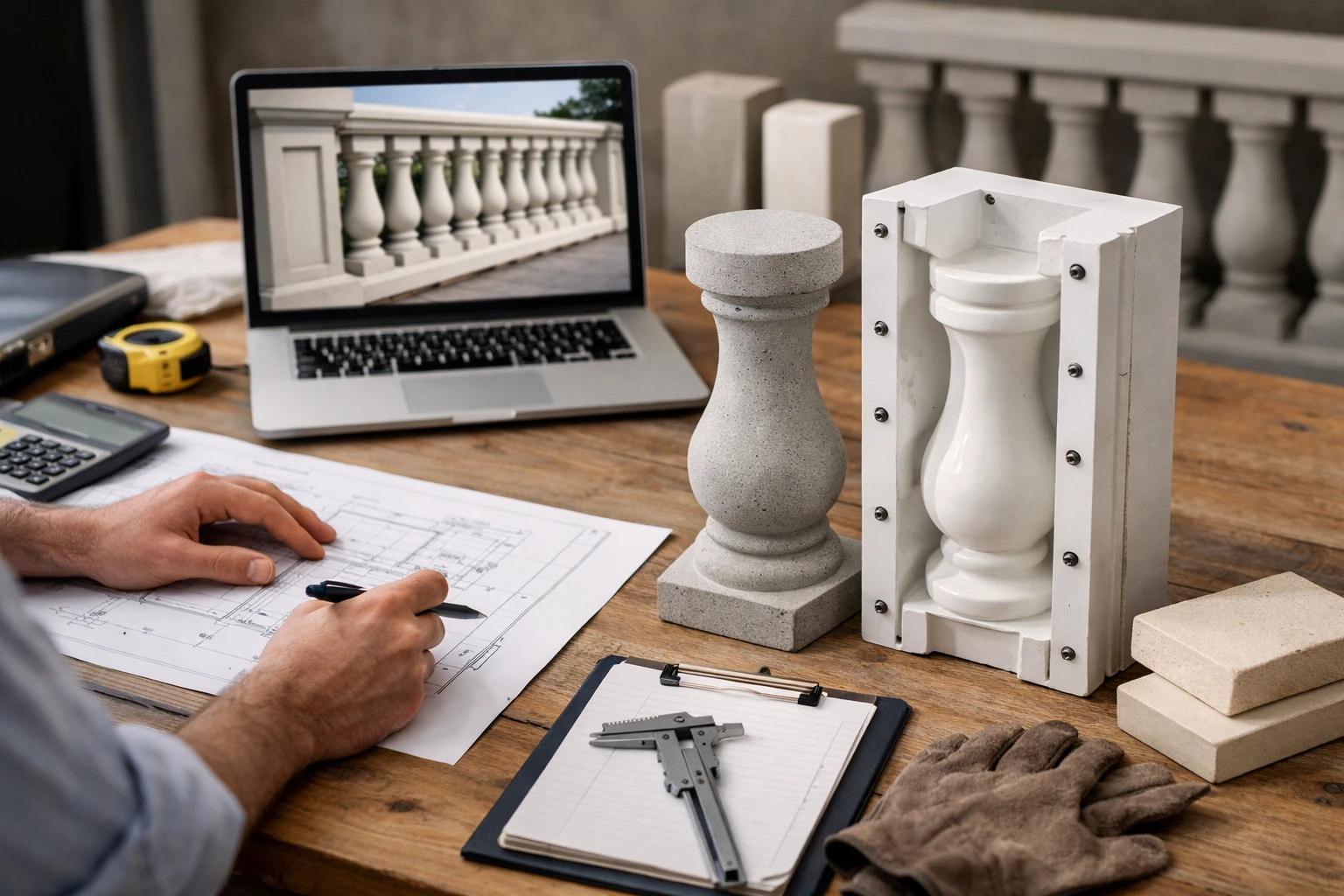
Best 7 Concrete Balustrade Molds for Sale in 2026
At 6:30 a.m., the shop is already loud. A fin of gray slurry curls off the bench, gloves slap dust from yesterday’s pour, and one freshly stripped piece tells you whether the day will be easy or expensive. Crisp edges mean you breathe. Ragged seams mean rework before breakfast.
If you’re shopping concrete balustrade molds for sale, that scene matters more than any glossy catalog shot. A mold is not just a shape. It affects release, cleanup, repeatability, storage, labor, and whether your finished balustrade looks sharp on a front porch in Buffalo or tired before it even gets installed.
This guide is for homeowners restoring a few missing balusters, builders pricing repeated runs, architects detailing a stair rail, contractors managing a courtyard build, and property owners deciding whether to cast in-house or buy finished pieces. We’re looking at seven mold types that show up again and again in real projects.
Not every project needs shop tooling.
Still, if you’re comparing options seriously, you need a concrete look at concrete balustrade molds for sale: what the term really means, how the casting process works, and which mold category fits your job instead of fighting it.
Selection Criteria for Concrete Balustrade Molds for Sale
Definition
When sellers advertise concrete balustrade molds for sale, they can mean a few different things. Sometimes it is a single baluster mold only. Sometimes it is a matched set for the full assembly — baluster, top rail, bottom rail, base, and newel or post components. That distinction matters.
For a homeowner replacing six broken pieces on a porch, a single baluster mold may be enough. For a contractor building a 40-foot terrace rail in New Jersey, the baluster alone is only one part of the system. If the rails and bases do not match the profile and spacing, the install starts to look improvised.
Why It Matters
Good mold selection saves labor in places buyers often ignore: stripping, trimming flash, patching pinholes, aligning pieces, and matching repeated pours. Bad selection shows up later — uneven lines, chipped edges, slow cycle times, and stacks of parts that almost fit.
I always look at three things first: how cleanly the mold releases, how stiff it stays under repeated filling and vibration, and whether the seller can show a completed cast rather than just a cavity. A pretty cavity is easy. A consistent finished part is the real test.
Buy the mold that gives you the same baluster on pour 50 that it gives you on pour 1.
Core Process
The mechanics are straightforward, but the details separate a smooth run from a frustrating one. In most shops, the workflow looks like this:
- Prep the mold and apply the correct release agent.
- Close or clamp the mold, then place reinforcement or inserts if the design calls for them.
- Fill with a consistent concrete or precast mix, usually in lifts.
- Vibrate or consolidate enough to push out trapped air without blowing the mix apart.
- Strike off, cure properly, demold on schedule, trim flash, and support the piece until it gains strength.
Some molds tolerate sloppy handling. Most do not. A fiberglass mold may want bracing. A silicone-lined mold may need gentler cleanup. A multi-cavity steel setup may speed production, but only if your crew can keep pace with mixing, vibration, and curing.
| Type | Detail Quality | Production Pace | Upfront Cost | Best Use |
|---|---|---|---|---|
| Single-baluster plastic | Moderate | Slow | Low | Repairs, small runs, testing |
| Silicone-lined rigid mold | High | Slow | Medium | Ornate profiles, short custom work |
| Fiberglass production mold | High | Medium | Medium | Small precast shops |
| Steel-framed multi-cavity | Good to high | Fast | High | Repeated production runs |
| Split stair or radius mold | Good | Medium | Medium to high | Stairs, curves, special geometry |
| Full-system mold set | High | Medium | High | Coordinated balustrade packages |
| Custom master-based urethane mold | Very high | Slow to medium | Highest | Restoration and signature work |
#1 Single-Baluster ABS or Polypropylene Mold
Summary
This is the entry point for many buyers. A single-baluster plastic mold is light, easy to move, and usually the least expensive path into casting. You see it often in small repair jobs, garden projects, and test pours where the goal is to make a handful of matching pieces rather than build a production line.
Strengths And Trade-Offs
- Low cost and simple storage.
- Easy to replace if you damage one cavity.
- Useful for proving out a mix before bigger purchases.
- More prone to flex, seam wear, and dimensional drift than heavier systems.
- Usually slower because you are casting one piece at a time.
If you are patching a porch in Cleveland and need eight matching spindles, this kind of mold can be perfectly sensible. If you need 180 pieces, it becomes a patience test.
Best For
Homeowners, maintenance teams, and small contractors handling low-volume replacement work or trial runs.
#2 Silicone-Lined Rigid Mold
Summary
A rigid shell with a flexible silicone liner gives you better release on decorative shapes, especially when the baluster has deeper grooves, rings, or more classical ornament. You get cleaner stripping and less edge damage on refined profiles.
Strengths And Trade-Offs
- Excellent release characteristics on ornate designs.
- Cleaner surface finish with less chipping at demold.
- Helpful when you want visual detail without aggressive prying.
- The liner is a wear item and needs careful cleaning.
- Cycle times can be slower, and cost is usually higher than plain plastic.
On a Mediterranean-style terrace in Scottsdale, where decorative profile matters as much as throughput, this category often makes more sense than a bargain plastic mold.
Best For
Short custom runs, decorative residential work, and restoration projects where profile detail matters more than speed.
#3 Fiberglass Production Mold
Summary
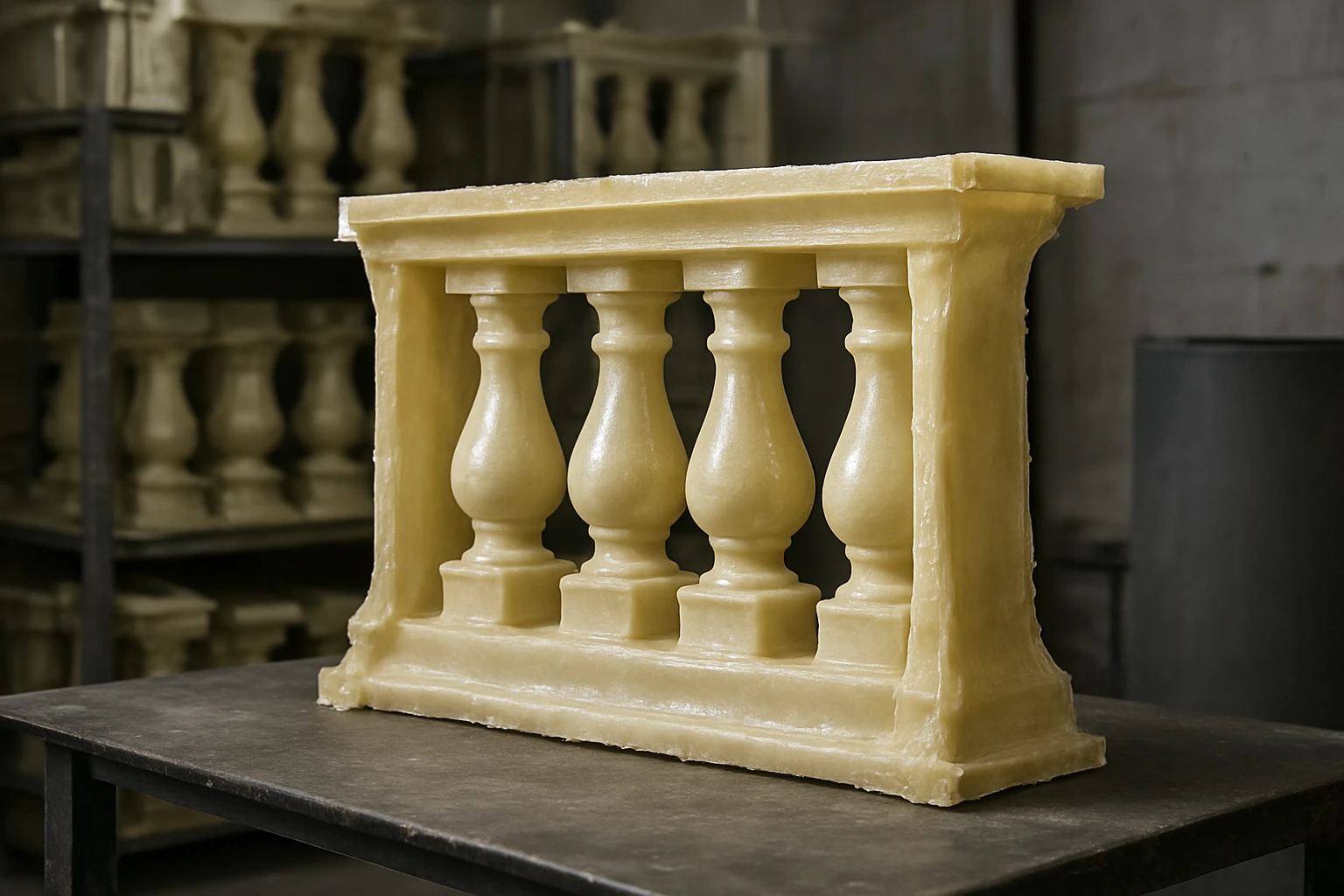
Fiberglass is a workhorse material in small and mid-size precast operations. It is stiffer than thin plastic, capable of crisp detail, and usually durable enough for repeated casting if the mold is properly framed and handled well.
Strengths And Trade-Offs
- Good balance of detail, rigidity, and manageable weight.
- Well-suited to repeated use in a small shop.
- Can offer cleaner repeatability than entry-level plastic.
- Needs proper support to avoid warping or stress cracks.
- Repairs are possible, but careless handling shortens life fast.
This is the kind of mold a regional precast crew might choose for a townhouse development in Atlanta — enough repeatability to stay efficient, without the jump to heavier steel tooling.
Best For
Contractors, fabricators, and small plants producing steady mid-volume runs with a need for consistent geometry.
#4 Steel-Framed Multi-Cavity Mold
Summary
If your project lives on repetition, multi-cavity steel-framed molds start to earn their keep. Instead of pouring one baluster at a time, you cast several identical units in one setup. That improves throughput and can tighten consistency across a big order.
Strengths And Trade-Offs
- Higher output per cycle.
- Better repeatability across larger runs.
- More stable setup for shops with established workflow.
- Heavier, more expensive, and less forgiving to move or store.
- Only makes sense if the rest of your operation can keep up.
The cheapest mold often produces the most expensive balustrade — because you pay for it again in grinding, patching, and rejects.
A steel multi-cavity unit is not magical. If your batching, consolidation, or curing is inconsistent, you simply make more inconsistent parts at once.
Best For
Commercial fabricators, builders with repeated community work, and shops producing large residential or hospitality orders.
#5 Split Mold for Stair or Radius Work
Summary
Stairs and curved runs complicate casting. A split mold designed for those conditions can make demolding easier and help you keep complex geometry under control. This category is less about raw speed and more about avoiding awkward stripping and field improvisation later.
Strengths And Trade-Offs
- Useful where straight-run molds create demolding headaches.
- Can reduce field cutting and correction on stair or radius jobs.
- Better fit for nonstandard layouts.
- More setup steps than basic single-piece molds.
- Not worth the complexity if all your runs are straight and simple.
Think brownstone stoops in Brooklyn, curved balcony returns on a hotel, or elevated pool decks where geometry is unforgiving and visual alignment matters from every angle.
Best For
Architects and contractors detailing stairs, landings, curved terraces, and custom site conditions.
#6 Full-System Mold Set: Baluster, Rail, Base, And Newel
Summary
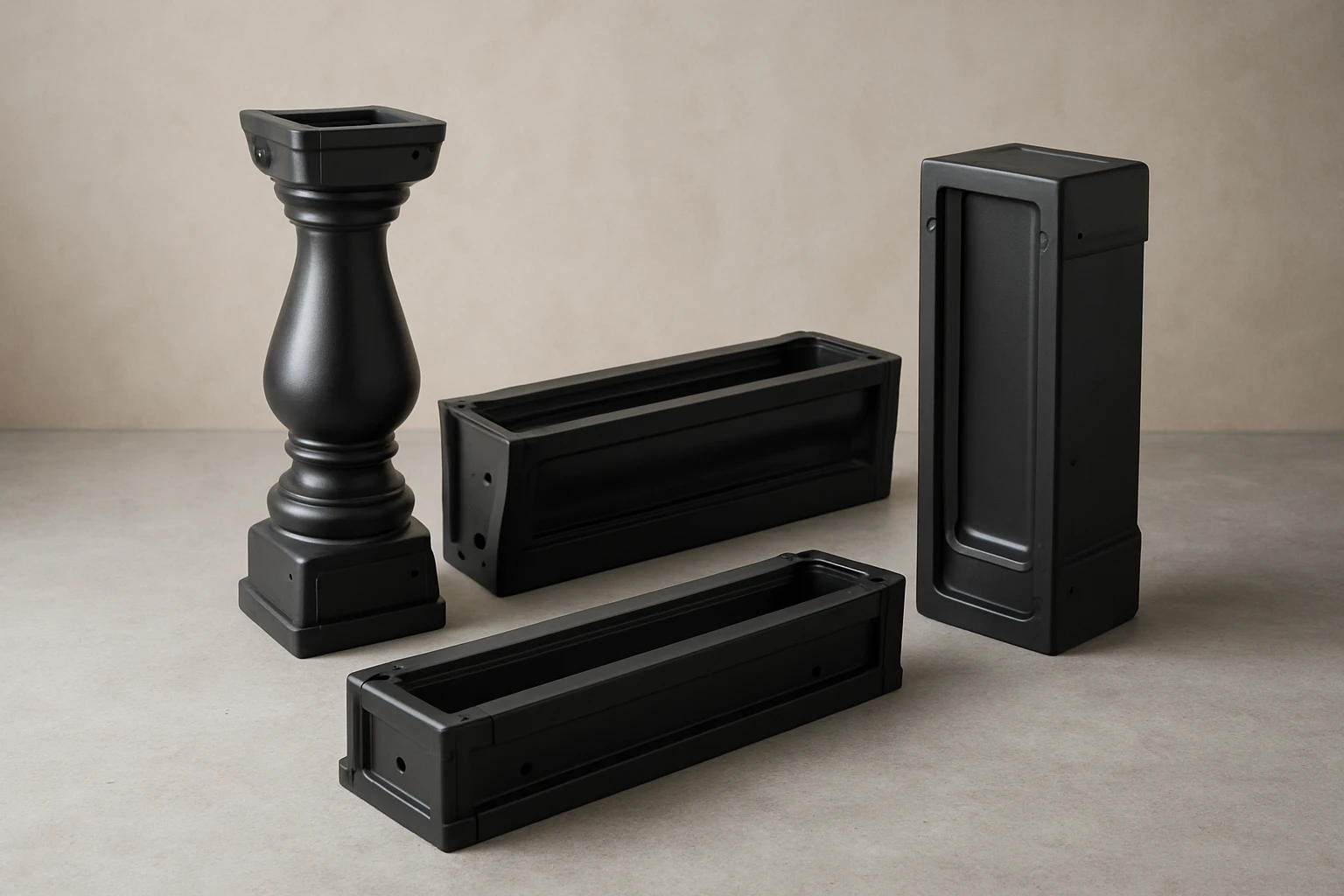
This is the category many buyers actually need, even when they start by searching for a baluster mold alone. A full-system set gives you coordinated pieces: balusters, top rail, bottom rail or shoe, and the posts or newel components that visually tie the whole assembly together.
Strengths And Trade-Offs
- Reduces mismatch between separate pieces bought from different sources.
- Creates a more intentional finished look.
- Simplifies estimating because the system is designed as a family.
- Higher upfront investment and bigger storage footprint.
- Requires closer attention to layout, spacing, and local guard requirements.
A complete system is often the smarter buy for a long porch, raised patio, church stair, or multifamily entrance. You are not just casting shapes. You are building an assembly people will read as one line.
Best For
Whole-property balustrade installations, repeated coordinated work, and buyers who care as much about fit-up as they do about the baluster profile itself.
#7 Custom Master-Based Urethane Mold
Summary
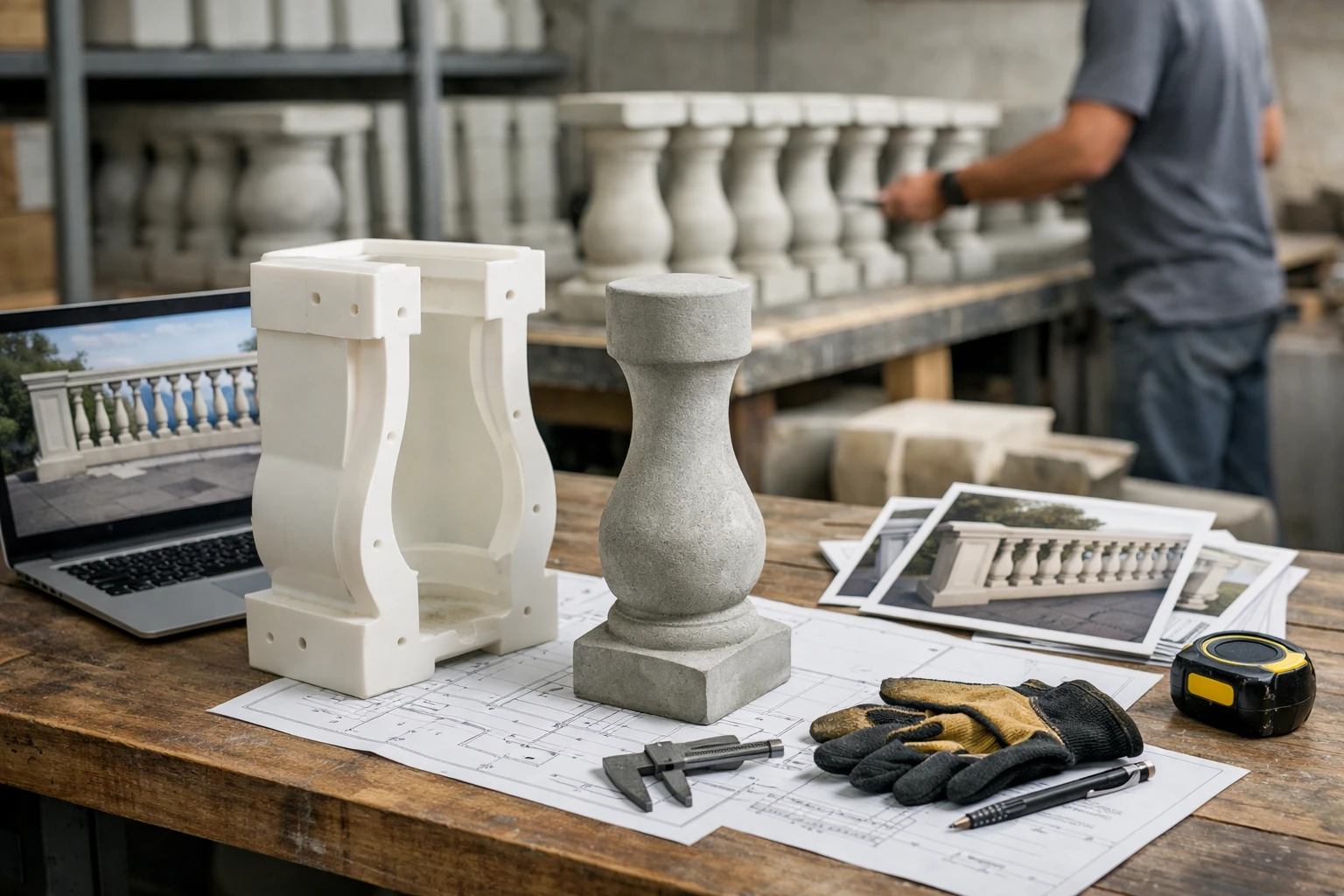
When stock profiles miss the mark, custom urethane molds built from a master pattern or CNC-created model step in. This route gives you the most control over shape, proportion, and historical match, but it adds lead time, approvals, and cost.
Strengths And Trade-Offs
- Best path for exact profile matching.
- Strong option for signature homes, civic work, and historic restoration.
- Can reproduce unusual geometry that stock molds cannot.
- Longer setup timeline because a master must be designed and approved.
- Higher cost makes little sense for a tiny, noncritical repair.
If you are matching a legacy profile on a historic façade in Philadelphia, this is often the right answer. Stock molds may get close. Custom tooling gets you intentional.
Best For
Preservation work, architect-led custom builds, branded commercial properties, and anyone who needs a precise visual match rather than a generic lookalike.
How to Choose the Right Option
Key Components
Before you compare prices, ask what is actually included. A serious balustrade mold package may involve much more than one cavity. Look for these components and questions:
- Baluster mold count and cavity layout.
- Rail, base, and post molds if you need a full system.
- Material thickness, frame support, and seam design.
- Draft angles that make demolding realistic.
- Compatibility with your vibration table or consolidation method.
- Replacement liner or repair options.
- Sample cast photos or, better yet, a demolding video.
- Guidance on release agent, stripping time, and storage.
| If Your Project Looks Like This | Usually Smartest Direction | Why |
|---|---|---|
| One porch or a few replacements | Single-baluster mold or finished precast pieces | Low volume rarely justifies complex tooling |
| Repeated residential or hospitality runs | Fiberglass or steel multi-cavity | Better balance of consistency and output |
| Curved or stair work | Split stair or radius mold | Handles geometry more cleanly |
| Whole coordinated balustrade system | Full-system mold set | Reduces mismatched rails and bases |
| Historic match or signature profile | Custom urethane mold | Delivers the closest visual control |
Getting Started
Start with the finished condition, not the mold listing. Sketch the full rail run. Count corners, landings, end conditions, and transitions. Decide whether you need only balusters or the entire balustrade family.
- Confirm your target profile and overall quantity.
- Check local code requirements for guard height, spacing, and attachment. In many U.S. jurisdictions, the familiar 4-inch sphere rule comes into play, but verify your local standard.
- Ask for a sample cast or a detailed close-up of a stripped piece.
- Do one full mock-up before committing to the entire run.
- Plan curing, storage, and protected transport before the first pour.
That last point gets skipped all the time. A perfect casting day means little if green pieces are stacked badly and chipped before they reach the site.
Common Pitfalls
The first trap is buying by shape alone. The second is ignoring the workflow behind the mold. You can love the profile and still hate the production reality if stripping is difficult, cleanup is slow, or the system is incomplete.
The third trap is more basic: buying tooling when you really need finished architectural precast. For a homeowner doing one porch, or a property owner updating a single entry, a properly cured, maintenance-free balustrade system from a manufacturer such as Coral Cast may be more practical than buying molds, mix tools, curing space, and labor headaches.
If you only need one porch, owning the mold may be the wrong win.
Also watch for vague listings. If a seller will not show the mold closed, the seam detail, and a finished cast from that exact tooling, slow down. That hesitation usually tells you something useful.
Better choices, cleaner casts, fewer surprises — that’s what this shortlist is meant to deliver.
The right pick depends on volume, profile detail, geometry, and whether you need shop tooling or a finished system. If you’re still weighing concrete balustrade molds for sale, are you buying for long-term production or simply searching for the fastest path to one durable, good-looking balustrade?
Build Lasting Detail With Coral Cast
Coral Cast pairs architectural precast concrete manufacturing with New York-made, properly cured stone and balustrade systems, broad style choices, nationwide delivery, showroom guidance, and free estimates.