
Best 7 Concrete Balustrades for Sale in 2026
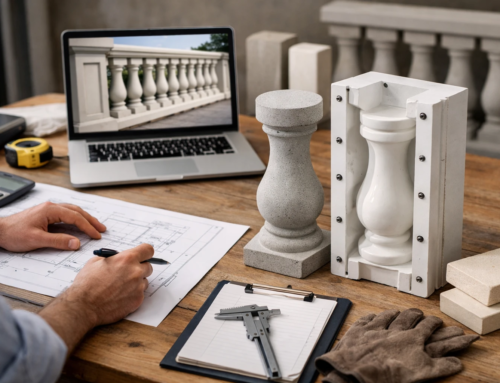
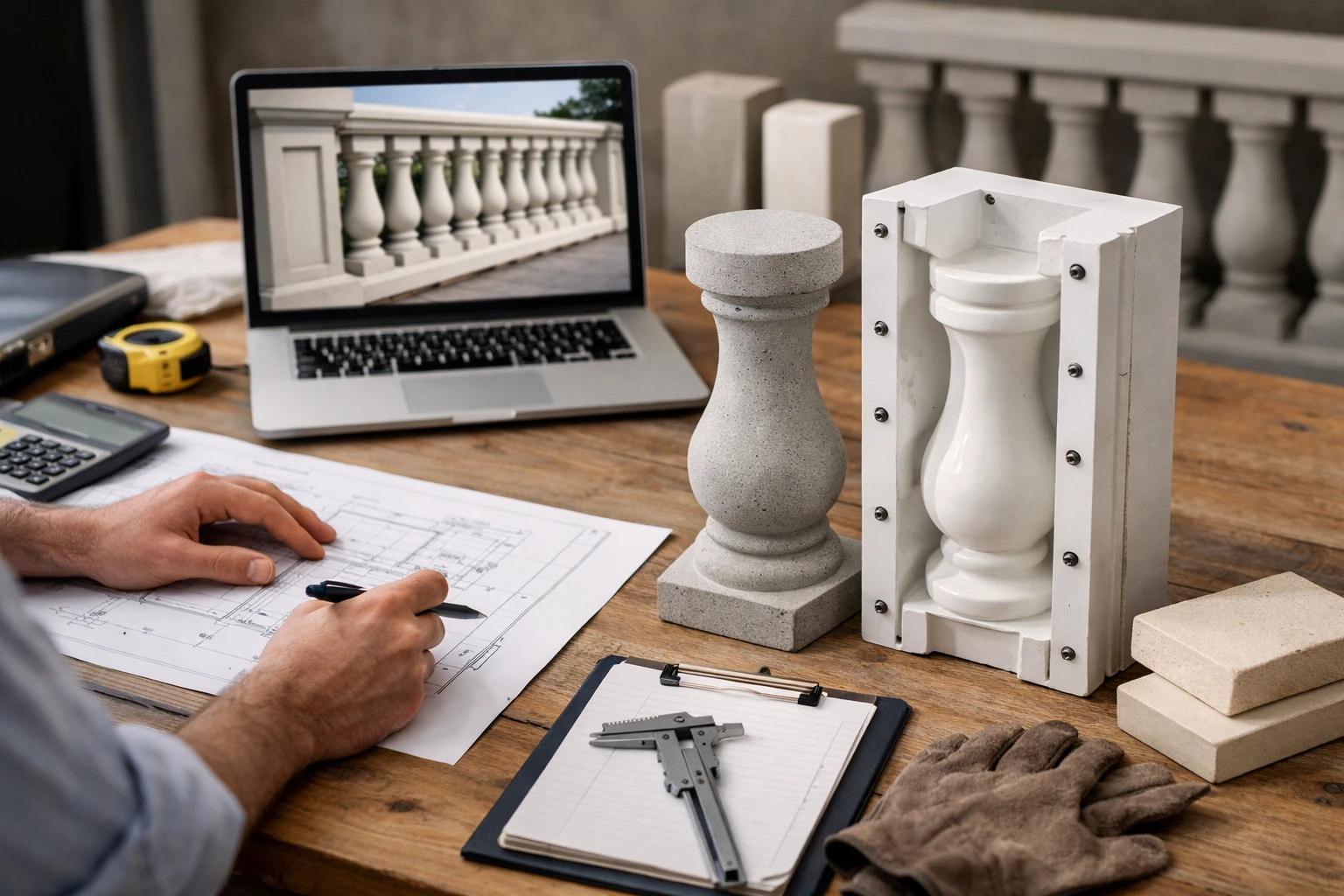
Imagine standing on your porch with a tape measure, comparing the existing railing with a pencil sketch of its replacement. The proportions look promising. But between that drawing and a finished installation sit several decisions: profile, height, finish, connections, and exactly what arrives on the delivery truck.
If you are searching for a concrete balustrade for sale, consider seven design directions: plain, carved, fluted, square, contemporary, short, and classic. These are general comparison categories, not a verified list of Coral Cast products. Ask Coral Cast which profiles are available or can be custom fabricated for your project; the order here does not represent performance rankings or verified 2026 inventory.
For homeowners, builders, architects, contractors, and commercial property owners, the best choice combines a suitable appearance with a properly specified assembly. A decorative spindle alone cannot answer every project question.
Selection criteria for a concrete balustrade for sale in 2026
Compare profile, project setting, finish, and compatible components
A baluster is an individual upright; a balustrade is the assembled railing. Coral Cast offers precast systems with balusters, handrails, bottom rails, newel posts, bases, and caps. That distinction should guide your comparison from the beginning.
Consider the surrounding architecture before choosing a silhouette. A porch beside detailed columns presents a different visual problem from a terrace with broad, unadorned walls. Compare finish samples alongside those surfaces. Coral Cast offers coral or travertine, smooth limestone-look, and acid-washed sand finishes, but you should confirm the available profile-and-finish combinations for your project.
A baluster profile is not necessarily a complete railing system; confirm what the quote includes.
Check dimensions, installation requirements, code compliance, and the complete quote
Ask for component drawings rather than estimating dimensions from photographs. Your installer or design professional should review the finished height, openings, connections, supporting construction, and requirements applicable to the location.
Separate appearance from function. A stair installation may need different components or handrail provisions from a level porch. Neither a familiar shape nor a supplier’s installation illustration establishes compliance for your particular project.
Verify current availability: the excerpts do not establish 2026 stock or prices
The available information does not establish dependable current prices, delivery schedules, or stock quantities. Confirm those directly before committing. Request a dated quotation that distinguishes materials, freight, unloading arrangements, installation, and any project-specific fabrication.
Compare equivalent scopes. An attractive component price tells you little if another quotation includes rails, posts, connectors, and delivery.
#1 Plain baluster profile
Summary and best for: a restrained design
A plain baluster is a sensible design direction to explore when you want a less decorative treatment. Ask Coral Cast about available or custom options and review their precise shapes before choosing.
Best for: projects where you want the railing to support the architecture rather than become its main ornament. Compare it with nearby window trim, columns, and entry details before deciding whether “plain” provides the right amount of visual restraint.
In a hypothetical porch renovation with elaborate doorway moldings, a simpler baluster could keep the composition from becoming crowded. Review an actual elevation or sample to judge that relationship.
Before ordering: confirm compatible rails and posts
Ask which top rail, bottom rail, and posts belong with the selected profile. Confirm how corners and ends are resolved, too. A restrained baluster paired with disproportionately large posts may create a different effect from the one you intended.
Request a drawing of one complete bay. It makes component relationships easier to evaluate than isolated product photographs.
#2 Carved baluster profile
Summary and best for: an ornamental scheme

A carved-looking baluster is a design direction to consider when decorative detailing is part of your brief. Ask Coral Cast whether a suitable profile is available or can be custom fabricated, and review its detailing before ordering.
Best for: entrances, porches, or terraces where you want the railing to contribute visible ornament. The right choice should relate to the building’s existing details rather than simply introduce another pattern.
For a hypothetical entrance with decorative column capitals, compare the baluster’s detailing with those capitals. Related shapes may work together; several unrelated motifs may compete.
Before ordering: inspect the detail and finish samples
Ask for close-up images and, where available, a physical sample. Examine the detail at close range and from the distance at which people will normally see the railing.
Also confirm which surfaces carry the detailing and whether the available finish changes its appearance. A catalog label cannot show how a repeated pattern will read across an entire frontage.
#3 Fluted baluster profile
Summary and best for: a textured architectural look
A fluted baluster is another design direction to investigate if you are interested in visible linear detailing. Confirm whether Coral Cast offers or can custom fabricate a suitable option.
Best for: schemes in which repeated lines or related column details form part of the architecture. Check the actual profile drawing for the number, depth, and arrangement of any flutes.
Look beyond the individual piece. A detail that appears subtle on one sample may become visually prominent when repeated across several railing bays.
Before ordering: compare the profile with neighboring trim
Place the sample beside your proposed column, molding, or wall finish. You are checking relationships, not trying to make every surface identical.
Ask for photographs of the selected profile in the intended finish, preferably showing a complete installation. If the existing building already has strong linear decoration, decide whether repeating it strengthens the design or makes the elevation feel overly busy.
#4 Square baluster profile
Summary and best for: a geometric scheme
A square baluster is a useful design direction when your project calls for a more geometric appearance. Ask Coral Cast about available or custom options, and confirm the exact section and proportions from drawings.
Best for: projects where the proposed railing needs to relate to rectilinear posts, openings, or facade details. Do not assume the name means that every surface is flat or that the complete system has a minimal appearance.
A hypothetical terrace beside rectangular masonry piers would be a logical setting for comparing this option with a more shaped profile.
Before ordering: check dimensions and the complete assembly
Review baluster width, spacing, rail proportions, and post size together. These relationships determine how solid or open the finished railing looks.
Compare the assembled railing dimensions, not just the shape of one baluster.
Have the proposed layout checked for applicable opening and height requirements. Visual regularity is not a substitute for a compliant, properly supported installation.
#5 Contemporary baluster profile
Summary and best for: a contemporary design brief
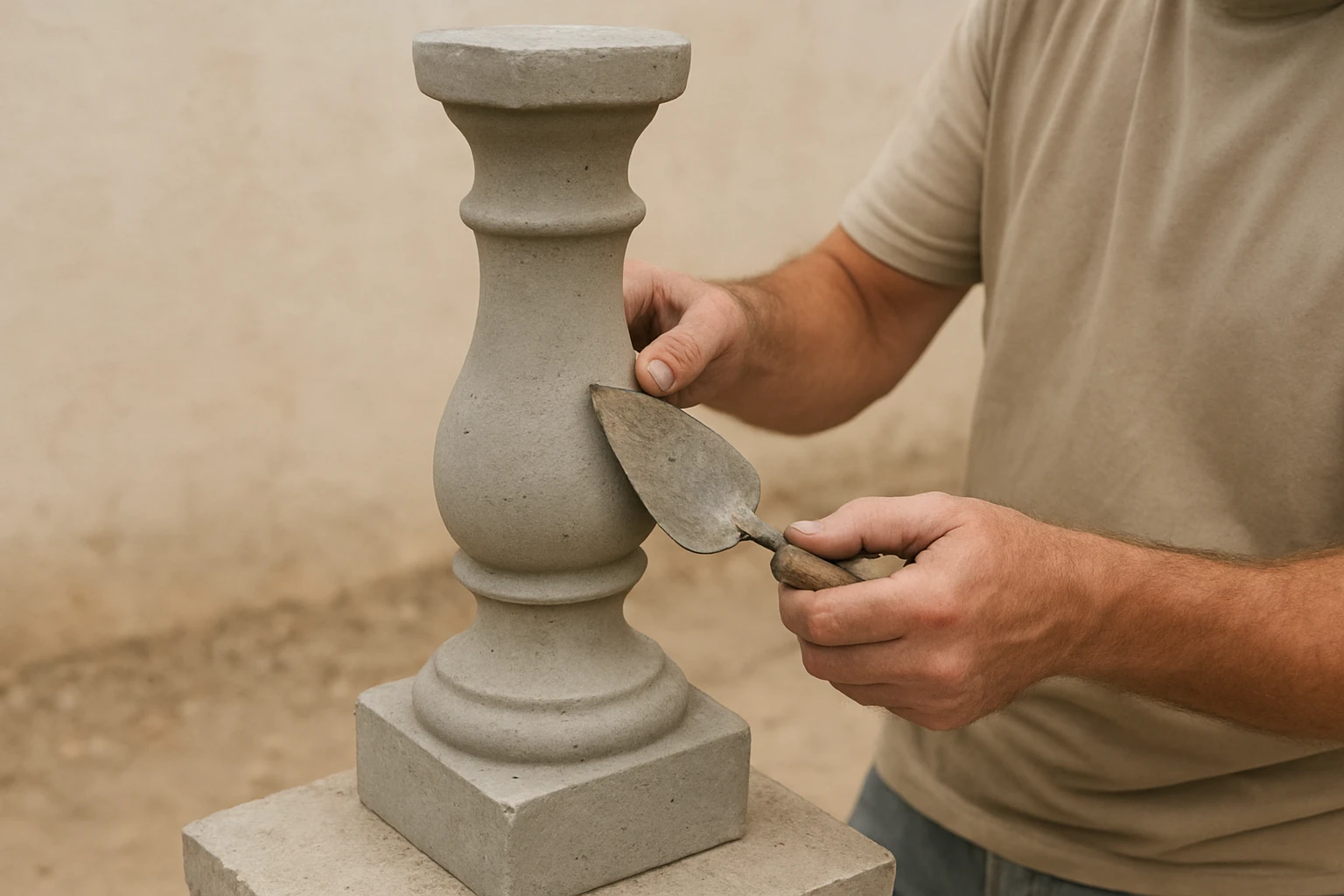
A contemporary baluster is a starting point for comparison, but the designation is not a standardized specification. Ask Coral Cast which available or custom designs suit your project.
Best for: buyers working from a contemporary design brief who want to see whether a proposed profile suits their building. Avoid assuming that the label guarantees slim proportions, smooth surfaces, or concealed connections.
Judge the actual geometry. A profile can appear contemporary in isolation yet feel mismatched when placed between heavier posts or beneath a strongly shaped rail.
Before ordering: review the actual profile and available finishes
Request a dimensioned elevation, a section drawing, and finish samples. Compare them with the building elevation rather than relying exclusively on a close-up product image.
Ask how ends, corners, and stair transitions are handled. Those junctions can determine whether the installed system looks coordinated. Confirm the desired finish for every component, not only the balusters, before approving the order.
#6 Short baluster profile
Summary and best for: buyers exploring a shorter profile
A short baluster is a way to explore different proportions, not a specification for a particular height or permitted application. Ask Coral Cast about available dimensions or custom options.
Best for: buyers comparing different component proportions within a professionally reviewed design. It is not automatically the right choice for a balcony, stair, or raised terrace simply because a lower-looking railing is preferred.
Distinguish the height of the individual baluster from the height of the complete assembly. Rails, bases, and installation conditions all belong in that assessment.
Before ordering: verify finished height and applicable requirements
Ask for the installed assembly dimensions and have the proposed use reviewed against local requirements. Where the railing serves as fall protection, appearance cannot take priority over the required protective function.
Do not assume a short baluster makes a compliant finished railing; check the full assembly.
If you are replacing existing components, measure more than the old spindle. Confirm the surrounding rails, connection points, and supporting structure before assuming a shorter profile can be substituted.
#7 Classic baluster profile and how to choose
Summary and best for: a classic design brief
A classic baluster is a design direction to consider when you want a traditionally oriented appearance. Ask Coral Cast about suitable available or custom profiles, and reserve judgment until you see the actual silhouette.
Best for: projects whose design brief calls for a classic appearance and coordinated architectural details. Confirm exact proportions, ornament, and compatibility with other components.
Compare this direction with plainer and more ornamental profiles. Those labels may suggest different approaches, but photographs, samples, and complete-system drawings will reveal the meaningful differences.
Compare profiles against the setting, finish samples, and required components
Use the following questions to narrow your shortlist. They identify what to investigate, not verified Coral Cast profiles or differences in product performance.
| Profile | Design starting point | Question to resolve |
|---|---|---|
| Plain | Restrained detailing | Do the rails and posts maintain that restraint? |
| Carved | Visible ornament | Does the detailing suit nearby architectural features? |
| Fluted | Linear texture | How does the repeated pattern look across a full bay? |
| Square | Geometric form | Are the section and assembly proportions appropriate? |
| Contemporary | Contemporary design brief | Does the actual geometry match your intended appearance? |
| Short | Alternative component proportions | Does the complete assembly meet applicable requirements? |
| Classic | Traditional design brief | Does the silhouette complement the building? |
Shortlist two or three candidates, then compare them in the same finish and at a consistent drawing scale. This keeps color or photography from disguising differences in proportion.
Request current quotes and confirm installation and code requirements
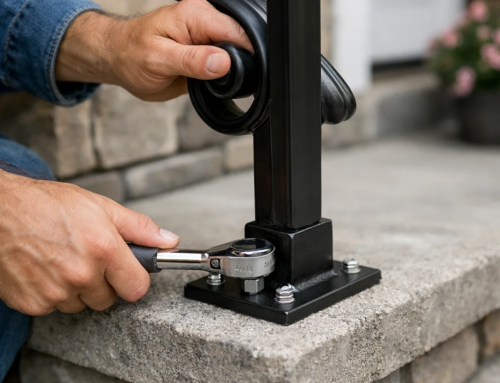
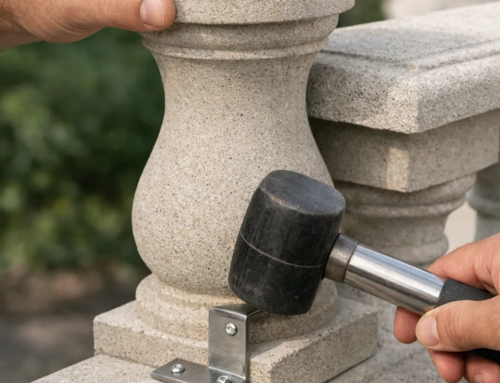
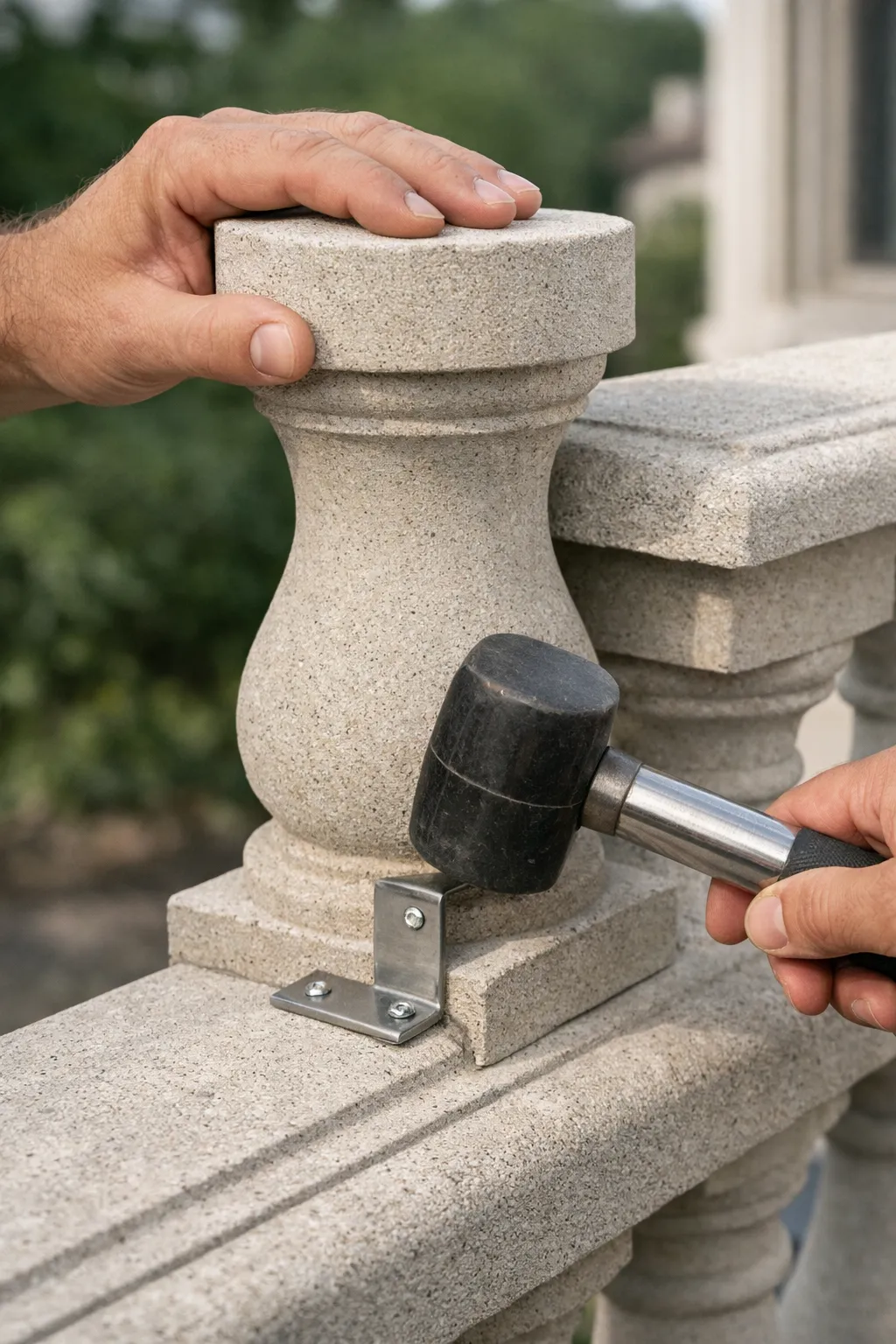
Coral Cast provides installation guidance for balustrade components and offers finish samples. Ask for the documents relevant to your chosen system, then have your installer identify anything requiring project-specific design.
Ask for a quote covering the complete system and delivery, and confirm the installation scope before comparing options.
Before paying a deposit, confirm these details in writing:
- The profile, finish, quantities, and all compatible components.
- Current availability, production requirements, and expected delivery arrangements.
- Responsibility for unloading, storage, installation, and connection materials.
- Required structural review, permits, and local compliance checks.
For existing porches or balconies, have a qualified professional assess the support and attachment conditions. Do not assume an old railing’s footprint establishes suitability for a new concrete assembly.
The best balustrade is the profile that fits your building and a complete system that fits your project.
When comparing a concrete balustrade for sale, move from silhouette to samples, then from samples to drawings and a current, project-specific quote. Confirm availability and installation requirements before the order becomes difficult to change.
Standing back from your porch sketch, what should the finished railing contribute to the building — quiet definition, deliberate ornament, or a stronger geometric frame?
Plan Your Project With Coral Cast
Coral Cast manufactures architectural precast concrete in New York and cures its products indoors. Explore finishes and colors, showroom support, nationwide shipping, and complimentary estimates for residential or commercial projects.