What Are the Best Railings for Concrete Steps?
After a rainstorm, you stand at the front stoop with a tape measure in one hand and damp grit on your shoes, checking the first tread, the slab edge, and a hairline crack that suddenly matters a lot more than it did yesterday. That is where good railings for concrete steps start — not with color charts, and not with a pretty catalog photo.
When we start with the concrete itself, the rest of the decision gets clearer. If the slab is weak, too thin at the edge, or already spalling, the wrong anchor can turn a small defect into a real failure. A railing only works when the stair can hold it.
A covered two-step porch in Phoenix and an exposed six-riser stoop in Buffalo do not want the same answer. Your climate, the number of users, and the local code shape the choice just as much as style. Start with the stair condition, then the setting, then the railing.
What should you know before choosing railings for concrete steps?
You should know three things first: whether the concrete is new or existing, what the railing needs to do, and what the local code expects for that property type.
Is this a new pour or an existing set of steps?
A new pour gives you options. You can plan anchor locations early, coordinate clearances, and avoid awkward base plates landing too close to a nosing or corner. Existing steps are less forgiving. You inherit the tread depth, the landing size, old patch repairs, and every crack the weather has opened over time.
On an existing stoop, measure before you shop:
- Total rise and number of risers
- Tread depth and landing width
- Distance from likely post locations to slab edges
- Visible cracks, patched areas, and spalling
- Whether the concrete feels solid or chalky at the surface
Concrete steps can crack or spall if they are drilled or anchored without checking the slab condition first. I have seen installers set a nice welded rail into a 40-year-old patch on a Brooklyn stoop, tighten the hardware, and pop the repair loose the same afternoon.
What problem is the railing solving: safety, access, or both?
This sounds obvious, but it changes the whole decision. If the goal is basic fall protection on a short residential run, your layout may stay simple. If the goal is daily support for an older parent, a tenant with limited balance, or customers entering a clinic, grip comfort and continuity move to the top of the list.
Many people say “railing” as a catchall word. On stairs, the part you can actually grab matters most. Decorative infill, balusters, and panels can shape the look, but they do not replace a stable handhold.
Setting matters too. Residential and commercial projects can follow different local code requirements, so the same five-step run may be treated differently at a single-family entry than at a storefront in Denver.
Why does concrete need a different approach than wood?
Wood usually gives you framing cavities, screws into lumber, and simpler repairs when you miss a location. Concrete does not forgive that way. You are fastening into a hard, brittle material that can hide voids, weak patches, or damage near an edge.
Exterior railings need to stand up to moisture, freeze-thaw cycles, and repeated use. A stair in Syracuse sees different stress than a sheltered porch in San Diego, but the rule is the same: the connection has to work after rain, snow, and years of foot traffic.
On concrete, the attachment method matters as much as the railing style.
What makes the best railing for concrete steps?
The best railing is the one that is easy to grip, compliant with local rules, durable outdoors, and appropriate for how the stair is actually used.
How important is hand comfort and grip?
Very. People do not reach for a stair rail in perfect conditions. They grab it with wet hands, winter gloves, grocery bags, or a sore knee. A good rail should provide a continuous, stable handhold rather than decorative support only.
In practical terms, that means a shape your hand can wrap around easily, a smooth finish, and no awkward breaks where you need support most. Fancy scrolls and oversized caps can look impressive in a photo, but they often fail the simplest real-world test: do you feel steady the moment you touch it?
- Smoother profiles are easier to trust
- Continuous runs feel safer on longer stairs
- Rigid posts matter as much as the top rail
- Wet-weather grip should beat ornament every time
What does code compliance usually affect?
Usually height, placement, continuity, and clearance. A commonly used handrail height range is about 34 to 38 inches above the stair nosing, depending on local code. That number is familiar, but it is not the only detail that matters. Local rules can also affect where rails begin and end, whether both sides are needed, and how the rail interacts with landings or walls.
Because local amendments vary, treat online hardware kits as starting points, not final answers. A simple residential porch may be straightforward. A multifamily building, church, school, or retail entry usually deserves a closer code read before metal gets ordered.
| Checkpoint | What Good Practice Looks Like | Why It Matters |
|---|---|---|
| Handrail height | About 34 to 38 inches above nosings | Keeps the rail within a familiar, usable range |
| Grip | Smooth, graspable profile | Makes support feel immediate and reliable |
| Continuity | Few interruptions along the run | Reduces the chance of losing support mid-stair |
| Layout | Posts placed on sound concrete with safe edge distance | Protects the slab and improves stability |
| Finish | Exterior-rated, corrosion-resistant material | Extends service life outdoors |
How do durability and maintenance change the choice?
They change it fast. A coated metal rail that looks great on day one may become a maintenance problem if the finish chips, traps moisture, or rusts where the base meets the slab. Outdoor railings should be selected with corrosion resistance and long-term maintenance in mind.
If you want less upkeep, start by asking what the stair sees in January, not what it looks like in June. De-icing salts, splashback, lawn irrigation, and coastal air all punish weak finishes.
The best railing is the one that feels secure every time someone reaches for it, not just the one that looks good in a photo.
Which materials work best for railings for concrete steps?
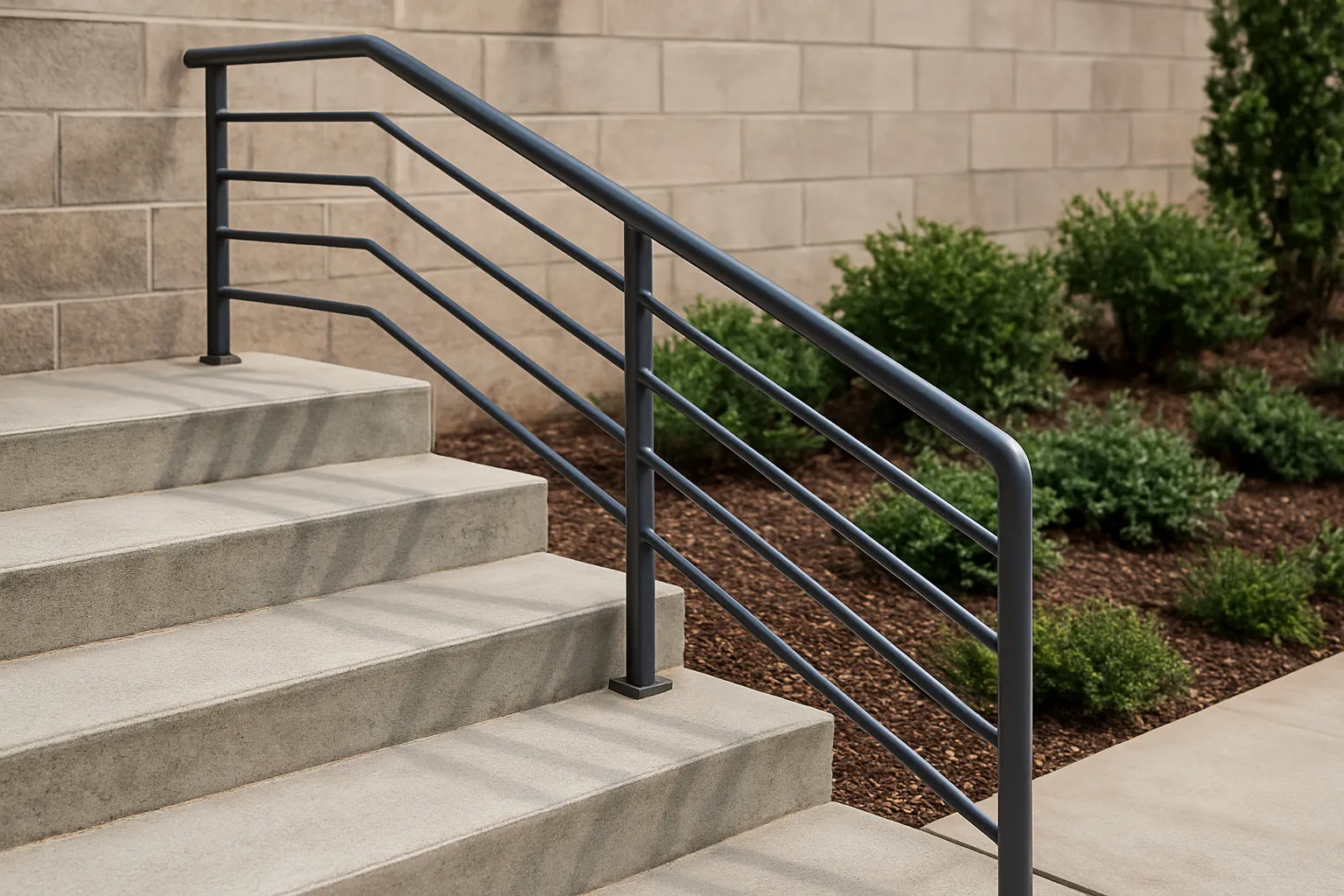
The best material depends on exposure, maintenance expectations, budget, and the architectural style around the stair.
Why are aluminum and steel so common?
Aluminum is common because it is lightweight and naturally resistant to corrosion. That makes it a strong option for exterior retrofits, especially on residential entries where you want a clean install and less upkeep. Powder-coated aluminum also comes in many standard finishes, which helps when you are matching trim or door hardware.
Steel is common because it feels solid and handles heavier-duty use well. Galvanized steel and stainless steel are used because they are strong and durable in outdoor conditions, and powder-coated steel can work beautifully on traditional stoops or commercial stairs. The tradeoff is simple: once a protective coating is damaged, ordinary steel needs attention faster than aluminum or stainless.
When does stainless steel make sense?
Stainless steel makes sense when corrosion pressure is high or the design calls for a crisp, modern look. Think coastal properties, pool areas, projects that see regular de-icing salts, or busy commercial entries where long-term appearance matters. In Miami or along the Jersey Shore, stainless often earns its higher price.
It is not automatic. On a sheltered residential stoop in Albuquerque, stainless may be more than you need. But when the environment is harsh, replacing cheaper metal later can cost more than choosing better material at the start.
Is wood ever the right choice outdoors?
Yes, but with caveats. Wood can look right on a historic porch, a Craftsman entry, or a covered veranda where warm texture matters. It is also easy to mill into custom shapes. Still, wood railings usually require more sealing and maintenance than metal options outdoors.
If rain hits the rail directly, or if the post base traps water where wood meets concrete, maintenance becomes a schedule, not an option. Paint peels. End grain drinks moisture. Joints move with the seasons. For uncovered exterior stairs, metal usually asks less of you.
| Material | Best Use | Main Strengths | Main Tradeoffs |
|---|---|---|---|
| Powder-Coated Aluminum | Residential entries, retrofits, low-upkeep projects | Lightweight, corrosion resistant, widely available | Can feel lighter-duty if the section is too small |
| Galvanized or Powder-Coated Steel | High-use stairs, custom fabricated work | Strong, rigid, traditional or commercial look | Coating damage can lead to rust over time |
| Stainless Steel | Coastal, salt-exposed, premium modern projects | Excellent corrosion resistance, clean appearance | Higher cost |
| Wood | Covered porches, historic homes, warm traditional style | Natural look, easy to shape | Higher sealing, painting, and moisture upkeep |
For exposed exterior steps, corrosion resistance usually matters more than ornament.
How are railings attached to concrete steps?
They are usually attached with a mounting system chosen for the stair layout and secured with masonry anchors or epoxy-set anchors into sound concrete.
What is a surface-mounted base plate?
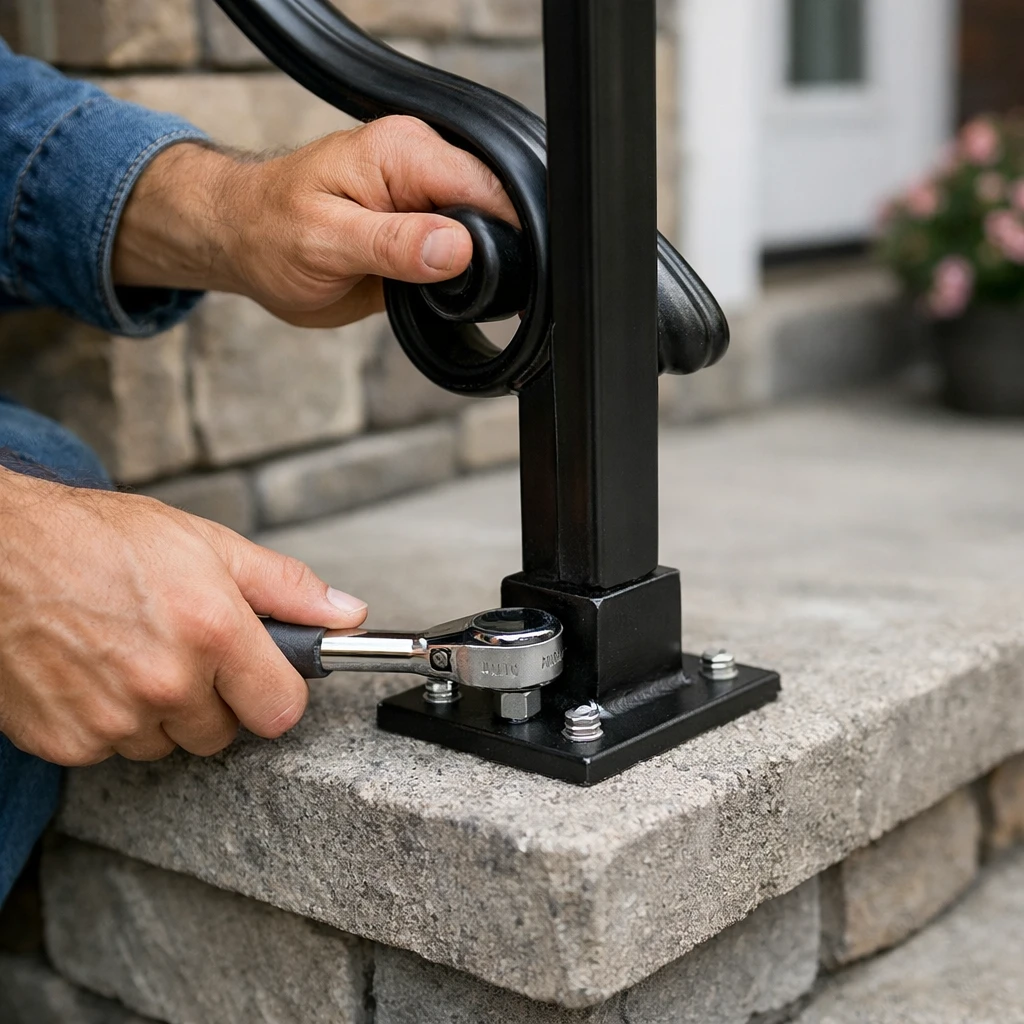
A surface-mounted base plate is a metal plate that sits on top of the tread or landing and is fastened down with anchors. It is one of the most common retrofit methods because it is direct, fast to lay out, and widely supported by stock railing systems.
It also asks a lot from the concrete. You need enough room for the plate, enough slab thickness below, and enough distance from the stair edge so drilling does not break out the corner. On narrow treads, that can get tight quickly.
When are side mounts or core drilling used?
Side mounts fasten to the side face of the stair or landing instead of the walking surface. They are useful when you want to keep the tread clear, when the top landing is shallow, or when the stair geometry gives you a better structural location at the side.
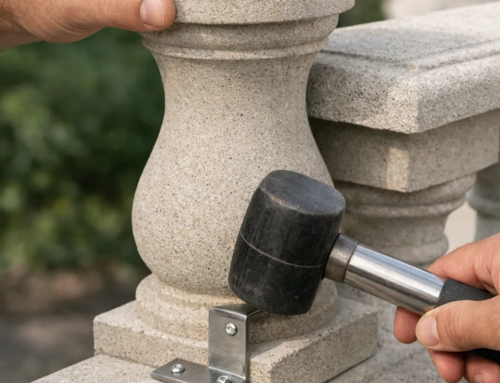
Core drilling is different. Instead of a plate on top, the installer drills a hole and sets the post into it, often with grout or epoxy around the shaft. Done well, it looks clean and strong. It also demands good layout, enough concrete mass, and careful evaluation of hidden damage before anyone starts drilling.
| Attachment Method | Where It Fits Best | Advantages | Watchouts |
|---|---|---|---|
| Surface-Mounted Base Plate | Existing landings and tread-top retrofits | Common, direct, easy to service | Needs sound concrete and safe edge distance |
| Side Mount | Stairs with limited tread space | Keeps walking surface cleaner | Needs a strong side face and careful alignment |
| Core-Drilled Post | Thicker slabs, cleaner visual detail | Minimal plate visibility | Less forgiving if concrete is weak or voided |
Why do anchors and concrete condition matter so much?
Because the anchor is only as good as the concrete holding it. Installing anchors into damaged or crumbling concrete can worsen the problem and reduce holding strength. Existing cracks, voids, or spalling should be assessed before drilling or fastening into the steps.
This is where a lot of bad installs are born. I have seen fresh hardware cinched down over loose patch material on a Midwest porch, and the wobble showed up before the dust was even swept. If the slab is deteriorated, repair or replacement may need to come before the railing.
- Inspect all likely post locations before drilling
- Avoid weak edges, broken corners, and soft patch repairs
- Match the anchor type to the concrete condition and loading
- Stop if drilling reveals damage you did not expect
If the slab is weak, the nicest railing system still fails.
What common questions come up about railings for concrete steps?
Most people want to know whether a railing is required, whether old steps can take one, and when it is time to bring in a pro.
Do all concrete steps need a railing?
No. Whether a railing is required can depend on step height, riser count, occupancy type, and local jurisdiction. A short residential stoop may not trigger the same rules as a taller exterior stair at a store or office.
That said, “not required” does not always mean “not useful.” If the stair gets icy in Hartford, if grandparents use the front entry daily, or if tenants carry packages up narrow steps, a well-placed rail can make the stair safer long before code forces the issue.
Can existing steps be retrofitted?
Yes, many existing concrete steps can be retrofitted with a properly anchored railing. Retrofit work is common on older homes, apartment buildings, and small commercial entries. The main questions are whether the concrete is sound, whether the landing gives you enough room, and whether the proposed rail can meet local requirements without awkward compromises.
Sometimes the answer is simple. Sometimes it means shifting the mount to the side, repairing damaged concrete first, or rebuilding the stair if the substrate is too far gone. The stair sets the terms.
When should a contractor or inspector be involved?
Bring in a contractor when the concrete is cracked, patched, or uncertain; when the railing has to carry heavier public use; or when you are not confident about layout and anchoring. Bring in an inspector or plan reviewer early when the property is commercial, multifamily, or tied to accessibility review.
Before that conversation, gather the basics:
- Number of risers and total rise
- Widths of treads and landings
- Photos of cracks, spalls, or earlier repairs
- Notes about weather exposure, salts, and drainage
- The property type: single-family, rental, retail, office, or other public use
When in doubt, measure first and confirm the local code before buying hardware.
How do you choose between residential and commercial railings for concrete steps?
You choose by designing for traffic, accessibility, and oversight — then letting appearance fit inside those limits.
How much daily traffic will the railing handle?
A home entry might see a dozen uses on a quiet day. A medical office, school, or convenience store may see hundreds. That difference affects almost everything: post rigidity, finish durability, connection design, and how forgiving the system can be after years of grabs, bumps, and weather.
Commercial railings typically face more traffic and harsher wear than residential railings. If the stair is public-facing, assume harder use than the calmest day suggests. Design for the busiest day, the wettest day, and the user with the least balance.
What accessibility requirements might apply?
Accessibility considerations can affect railing height, continuity, and clearances. On public or regulated projects, those details are not decoration. They drive the layout.
This is one of the sharpest differences between residential and commercial work. A homeowner may reasonably prioritize style once safety is covered. A commercial project often needs closer code review, cleaner documentation, and fewer assumptions at every step.
Where should aesthetics give way to durability?
On a public stair, sooner than most owners expect. Thin profiles, delicate ornament, and tricky coatings lose their charm when they wobble, scratch, or trap corrosion. Choose the simplest detail that still suits the building.
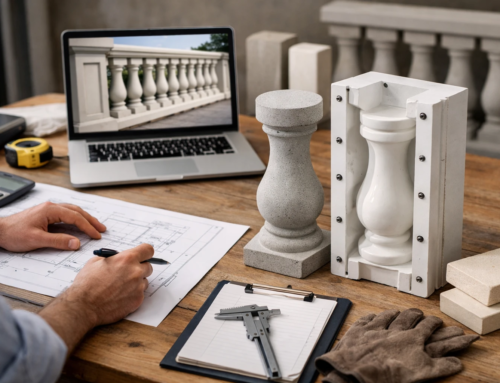
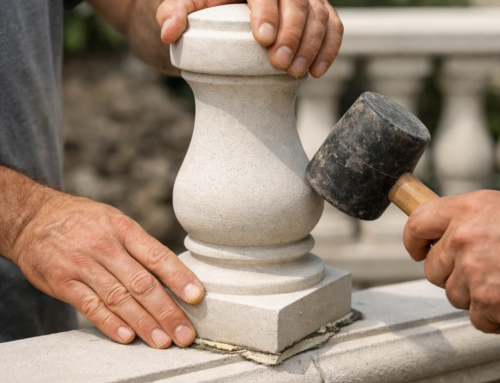
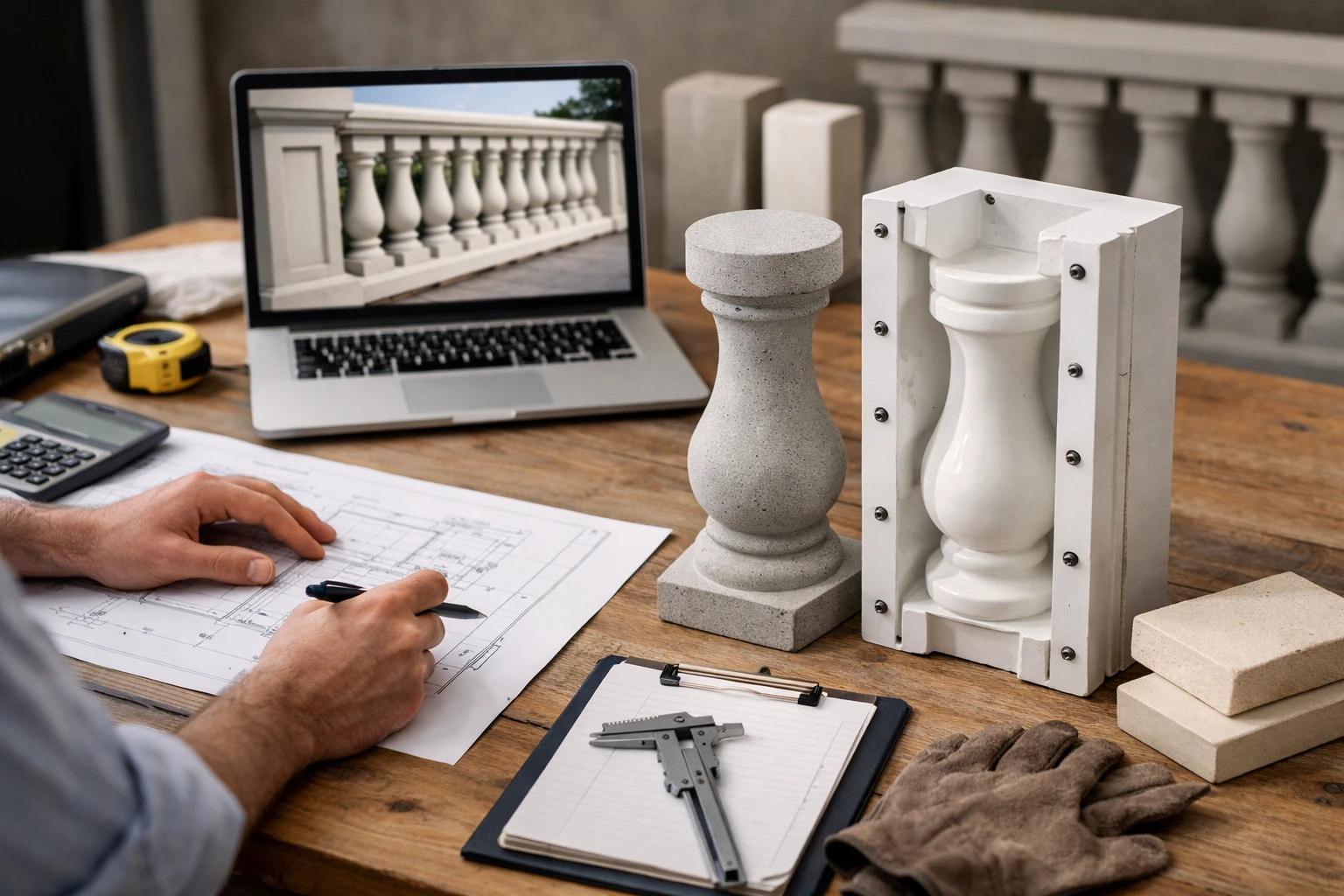
Residential work gives you more freedom, but it still has to be safe and code-aware. If you are coordinating the entry with balustrade, coping, thin veneer, stone moldings, columns, pavers, pier caps, wall caps, or decorative stone, let those elements carry the visual weight. The actual handrail should stay graspable and tough. Manufacturers such as Coral Cast can help shape the surrounding architectural language, but the part your hand grabs still has one job: feel secure.
| Factor | Residential Stair | Commercial Stair |
|---|---|---|
| Traffic | Lower and more predictable | Higher and harder on finishes and joints |
| Code review | Often simpler, still local and binding | Usually closer scrutiny and documentation |
| Accessibility pressure | May be limited by use and jurisdiction | Often central to layout and detailing |
| Aesthetic freedom | More room for style choices | Durability usually outranks ornament |
| Best mindset | Safe first, style second | Compliance and rugged performance first |
Choose for the harshest user and the busiest day, not the quietest one.
The best railings for concrete steps are the ones that meet local code, grip well, and anchor into sound concrete without guesswork.
Start with the stair condition. Then match the material and mount to your weather, traffic, and users. Good-looking metal cannot rescue crumbling treads or a bad layout.
Before you order railings for concrete steps, what do your steps, your climate, and your local inspector say the stair really needs?
Plan Entry Details With Coral Cast
Coral Cast’s architectural precast concrete manufacturing supplies properly cured, maintenance-free balustrades, coping, and stone products from New York, with nationwide delivery, showroom support, and free estimates.