Thin Veneer Stone Tiles: Fast Installation, Timeless Appeal
At sunrise, a crew snaps chalk lines across a fireplace wall, checks the laser, and starts sorting pieces across the floor while the room is still full of sawdust and coffee cups. By midmorning, the face of the wall has changed completely. You can read the rhythm of the joints from the doorway.
That speed is a big reason Thin Veneer Stone Tiles keep showing up on so many jobs now — remodel fireplaces, exterior facades, chimney chases, fire pits, outdoor kitchens, and commercial feature walls. You get the look of stone without committing the wall assembly, schedule, and handling demands that usually come with full-bed masonry.
But fast does not mean forgiving. When you choose the right profile, plan corners early, and match the installation method to the substrate, thin veneer looks permanent and architectural. When you skip those steps, the wall looks applied. This guide walks you through the parts that actually matter on site: flats, corners, patterns, systems, and details.
What Thin Veneer Stone Tiles Are
Thin veneer vs. full-bed stone
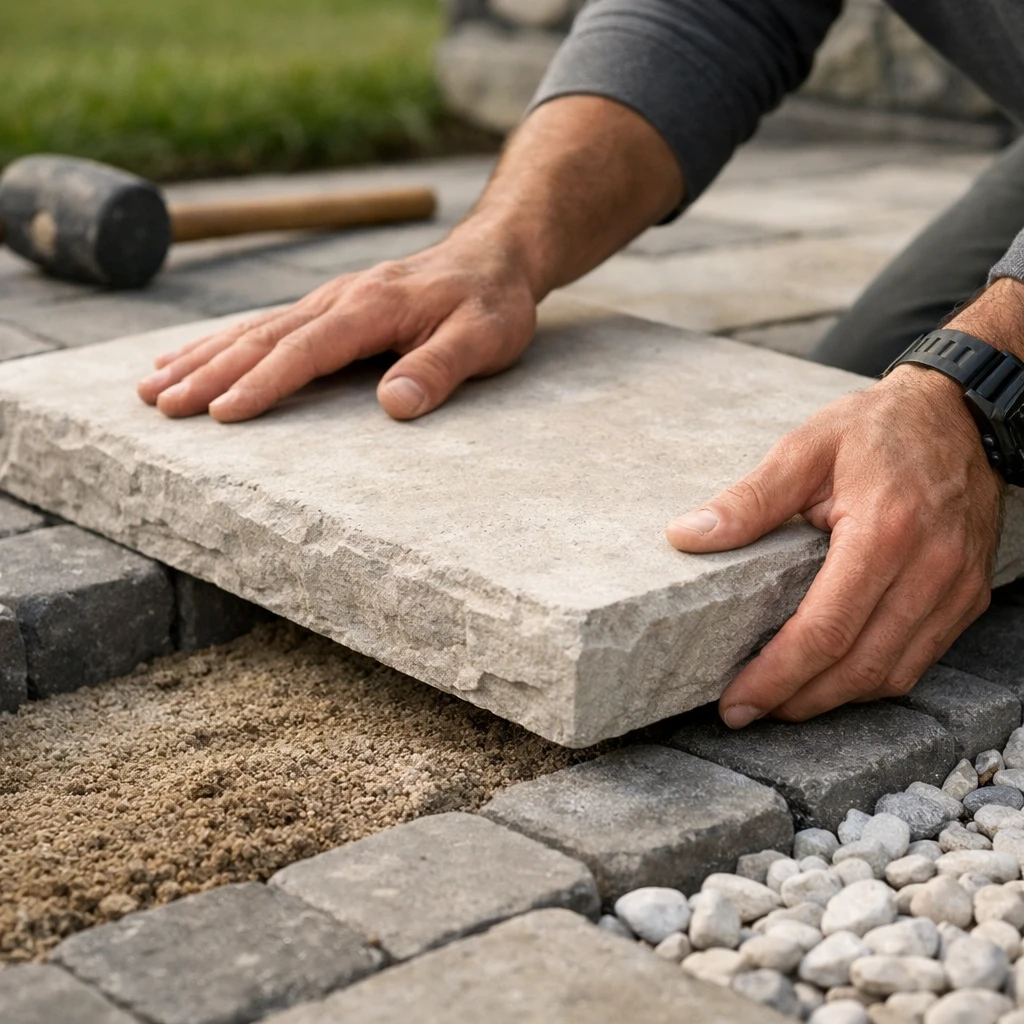
Start with the basic distinction. Thin veneer is precast or natural stone formed to a shallower profile than full-bed masonry, so it takes up less depth and places less demand on the wall behind it. Full-bed stone has its own place, especially when the structure is designed around that mass. Thin veneer earns its keep when you want the stone look on an existing wall, a framed chimney, a fireplace surround, or a facade where added depth matters.
Coral Cast, like other architectural precast stone sources, makes the separation easy to see in its product lines: thin veneer, corners, and full-depth architectural pieces each sit in their own category. That tells you two practical things right away. First, thin veneer is estimated differently. Second, corners are not an afterthought; they are a separate part of the order.
Thin veneer changes the weight and installation profile, not the visual language of real stone.
| Category | How Suppliers Commonly Sell It | What Changes on Your Project | Typical Use |
|---|---|---|---|
| Thin veneer flats | PSF, or per square foot | Shallower build-up, easier handling, separate corner takeoff | Wall fields, fireplaces, facades, chimney faces |
| Thin veneer corners | PLF, or per linear foot | Creates believable depth at returns and outside edges | Corners, jamb returns, column wraps, hearth ends |
| Full-bed stone | Usually its own category, with supplier-specific takeoff methods | More depth, more structure, different detailing | New construction and assemblies designed for thicker masonry |
| Specialty panels or boards | By sheet, panel, or board | System-specific installation, faster coverage in some cases | Feature walls, lightweight applications, specialty designs |
Natural stone, architectural stone, and specialty panels
One reason buyers get confused: “thin veneer” is an umbrella term, not a single product. Some products are natural stone, while others are architectural precast stone or thin stone collections designed for consistency and repeatability. Those are very different materials to design with, even if they all land in the same broad category.
Natural stone gives you real geological variation — the reason two boxes never look identical. Precast or architectural stone aims for a more controlled repeat and can help when consistency matters. Specialty panels and sheets often speed up coverage or solve specific design problems, like backlighting or acoustics. The lesson is simple: do not buy by category name alone. Read the product sheet, the substrate requirements, and the approved use conditions.
Common shapes and finishes
Pattern drives perception. Thin stone collections often include wall stone, fireplace surrounds, chimney applications, and more, and their range can include ashlar, rounds, mosaic, ledgestone, and square + rectangle. Each one changes the mood of the wall. Ashlar feels orderly. Mosaic reads more rustic. Ledgestone pushes the eye horizontally. Square and rectangle can look crisp and contemporary.
You also need to think in parts, not just color. Flats cover the field. Corners create depth. Sills, coping, or trim pieces handle transitions where a plain cut edge would look unfinished. On a fireplace wall, for example, the face may only be 60 square feet, but the corner returns and hearth edge details determine whether the whole assembly looks built or dressed up.
- Ashlar: structured courses and a more formal rhythm
- Rounds: softer, fieldstone-like character
- Mosaic: irregular, busy, and often more rustic
- Ledgestone: linear shadow lines and stacked movement
- Square + rectangle: cleaner geometry for modern or transitional work
How Thin Veneer Stone Installation Works
Plan the layout before setting stone
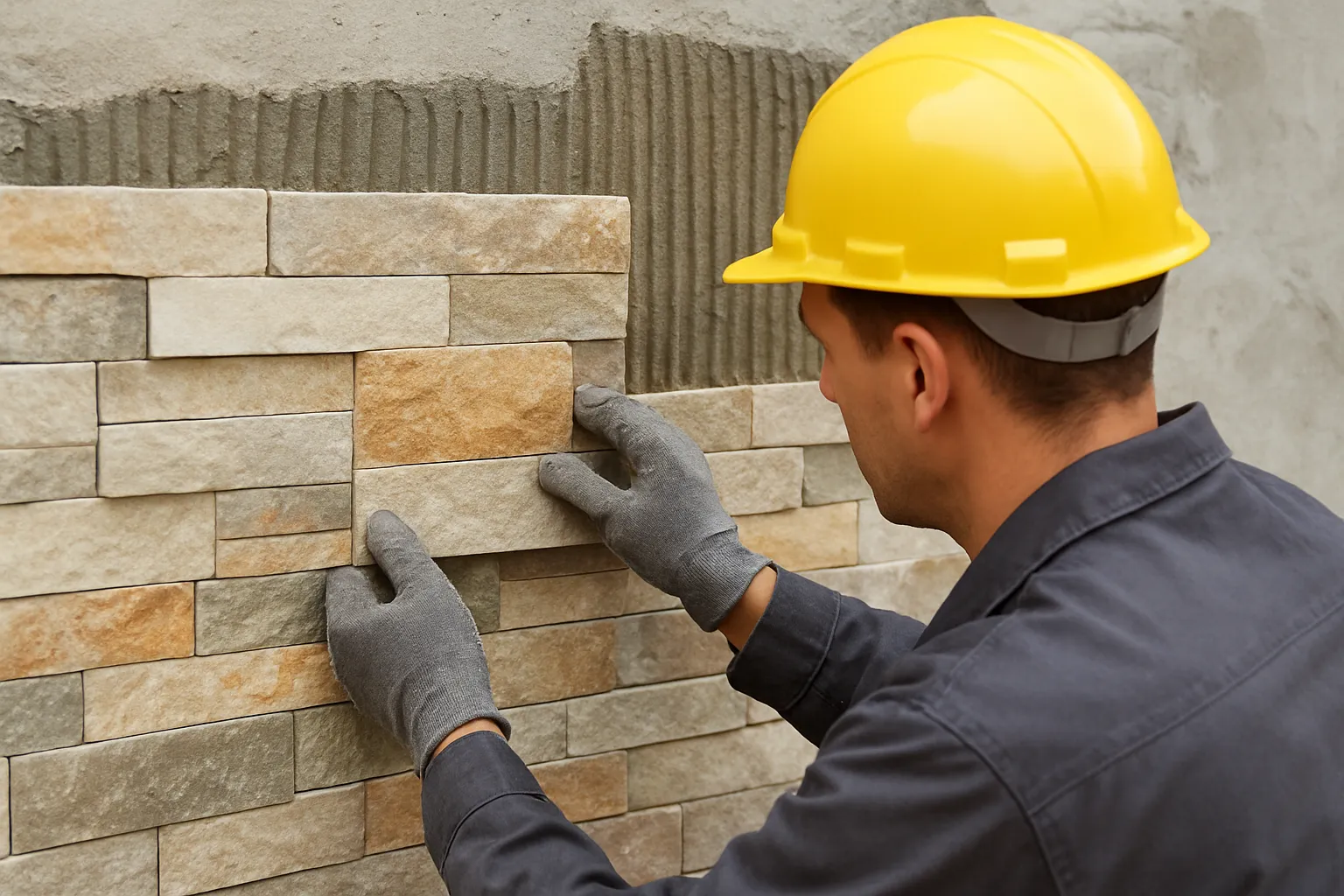
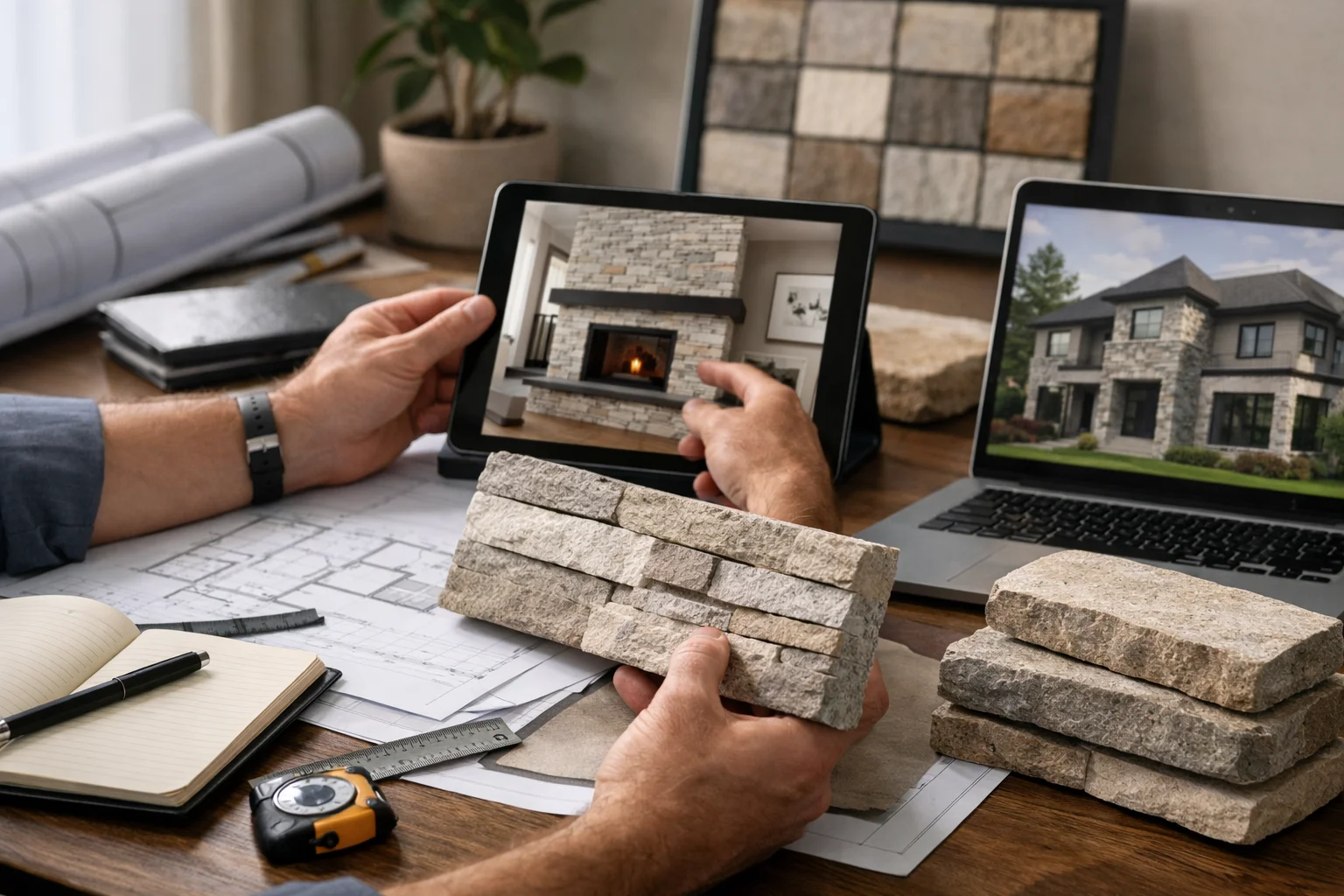
The fastest install on the job still starts before the trowel. You need an elevation, even if it is just a clean sketch with dimensions, openings, outlet locations, and focal lines. On a fireplace, that means mantel height, hearth thickness, TV location, and where you want cuts to disappear. On an exterior wall, it means grade line, window heads, corners, and termination points.
We usually dry-lay a portion on the floor or a sheet of plywood first. That step catches pattern problems early. If you are using a supplier format with mirrored structures, you need to label sequence before adhesive comes out. A mirrored pair installed in the wrong order will look off from across the room.
The fastest installs still depend on the same rule: plan the wall on paper before you touch the trowel.
- Measure net wall area and every outside return.
- Mark focal lines, terminations, and places where cuts can hide.
- Sort materials into corners, flats, and distinctive accent pieces.
- Dry-lay a starter section and photograph it before you commit.
Set corners, flats, and pattern pieces in the right order
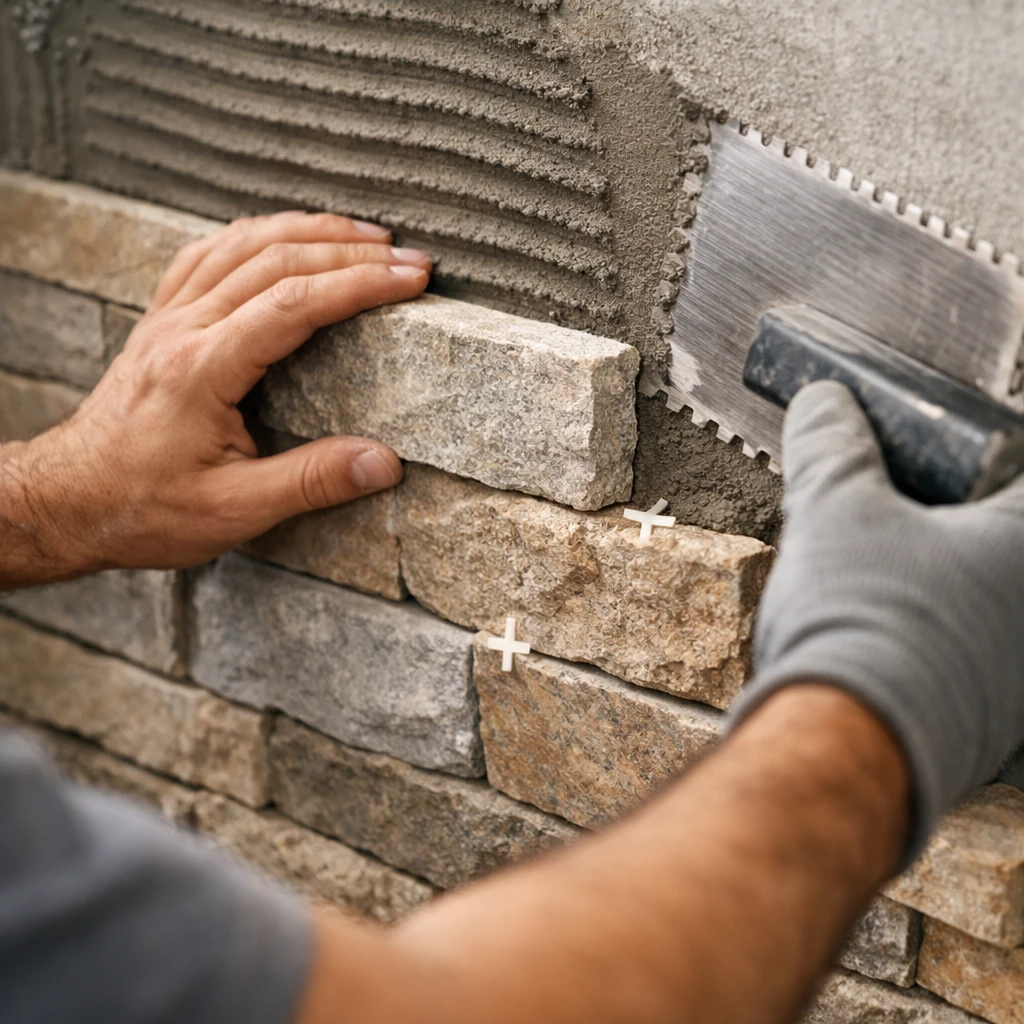
Set corners first whenever the system calls for them. They establish the illusion of depth and give the wall a believable edge. After that, work into the field with flats, pulling from multiple boxes or pallets so one tone does not bunch up. Separate corner and flat listings are a clue here: the takeoff and install sequence are linked.
Once the corners are in, build the field so the joints stagger naturally. Avoid long unbroken vertical seams. Step back often — 10 feet is enough to reveal a repeating pattern that looked fine at arm’s length. For mortar-set systems, use the manufacturer-approved setting material and follow the wall prep requirements. On exterior work, that can include a weather-resistive barrier, lath, drainage components, or a scratch coat, depending on the system and local code.
When prefabricated systems make sense
Not every wall needs hand-composed stone. Ready-made installation patterns and self-adhered veneer systems push the speed idea even further. That is a useful signal: the stone and the install method belong in the same conversation.
Prefabricated systems make a lot of sense on clean interior substrates, repetitive commercial walls, or tight schedules where labor time is the biggest pressure point. They make less sense when the wall is irregular, the exposure is harsh, or the detailing is highly custom. You can install a wall faster with panels or sheets, but you still need the right substrate, the right adhesive or mechanical method, and a clear plan for edges, heat, and moisture.
Best Practices for a Clean, Durable Finish
Choose the right profile for the location
A profile that looks great in a dry living room may be the wrong call on a chimney shoulder or a fire pit. Thin veneer is used on walls, chimneys, fire pits, fireplaces, and more, which is a reminder that one category spans very different conditions. Interior feature walls care about sightlines and clean edges. Exterior facades care about water, freeze-thaw movement, and believable terminations. Fireplaces and fire pits add heat exposure to the list.
Before you order, ask a few plain questions:
- Is the installation interior or exterior?
- Will the surface see heat, water, or both?
- Do you need true corner returns and trim pieces?
- Will the wall be viewed up close, from the street, or both?
A narrow ledgestone can sharpen a contemporary lobby wall. The same profile on a broad exterior base may feel too busy. A chunky irregular look can bring warmth to a fireplace, but on a tight commercial corridor it may crowd the space. The stone should fit the wall, not just the sample board.
Match stone type and pattern to the architecture
Good stone work looks intentional because the pattern, color family, and building style all point in the same direction. Thin veneer collections can be organized around ashlar, rounds, mosaic, ledgestone, and square + rectangle. Precast stone and architectural stone lines can also be selected in limestone, coral/travertine, smooth, acid-wash, sand finish, and other complementary finishes. That is not catalog trivia. It is the visual vocabulary of the project.
Ashlar and square + rectangle usually read quieter on formal elevations. Rounds and mosaic often suit rustic fireplaces, garden walls, or lodge-style outdoor living areas. Earth tone blends can warm up clapboard and stucco. Darker blends can sharpen contemporary lines. Regional character matters more than many buyers expect — especially on older Northeast homes where familiar tones already feel at home.
Order corners, sills, and trim pieces early
Most thin veneer disappointments are not color problems. They are detail problems. If your corner return is wrong, the whole wall looks thin. If your sill depth is improvised, the window looks unresolved. If your coping arrives after the veneer crew leaves, you end up forcing a transition in the field.
Separate corners from flats for a reason. They are distinct materials in both takeoff and installation. Order them together. Do the same with sills, caps, and any trim pieces that affect shadow lines or water shed. On a commercial entry or a large residence, these small decisions are what make the difference between “decorative” and “architectural.”
If the corner return doesn’t match the field stone, the wall reads as patched instead of built.
Common Mistakes That Undermine the Result
Skipping corners and edge planning
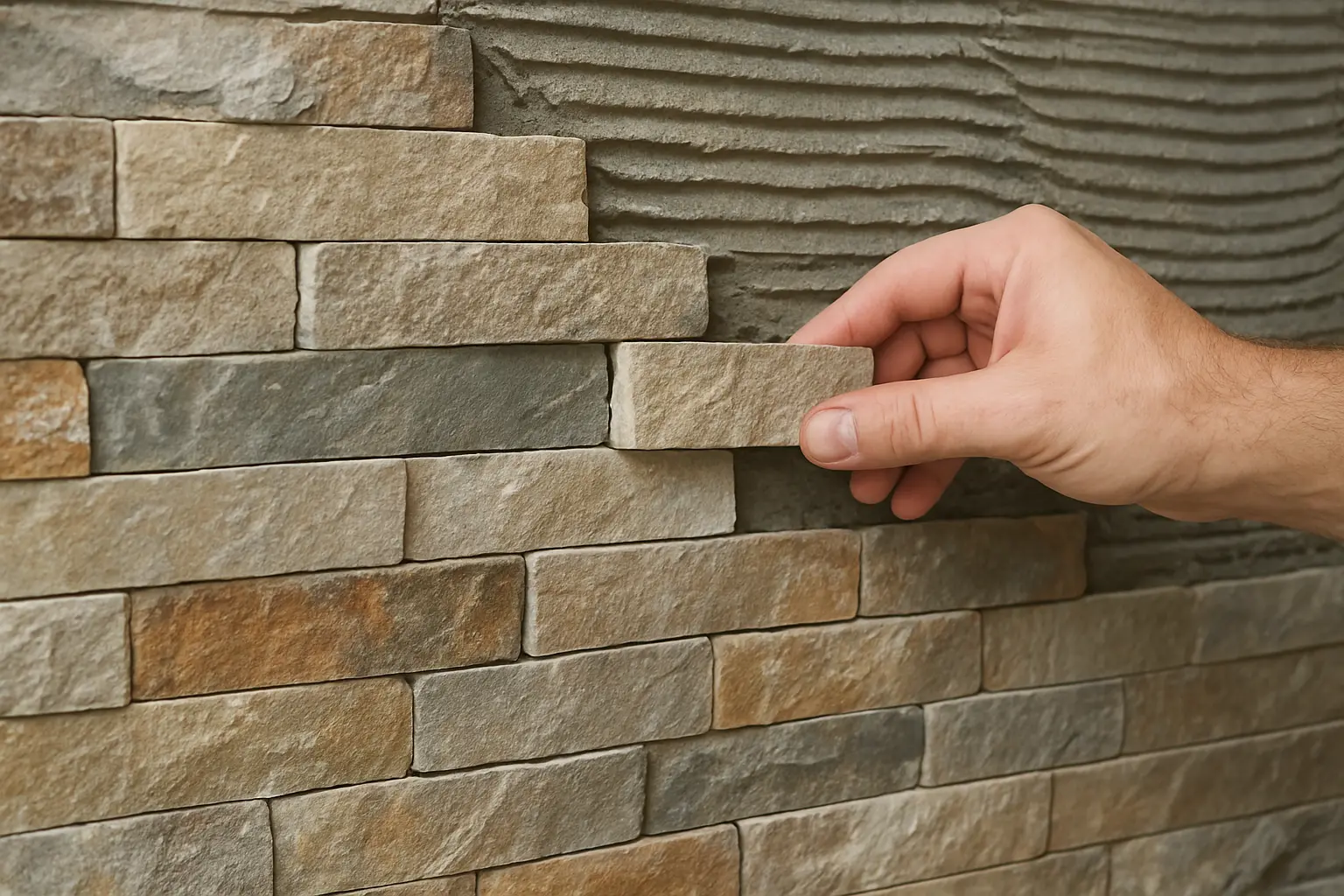
Nothing exposes a rushed order faster than a wall with no proper returns. A fireplace face may look fine head-on, then fall apart the second you see the side. Thin veneer catalogs separate flats from corners because corner planning is its own job. You need linear footage, not guesswork.
Plan every visible edge: outside corners, window jambs, wainscot ends, stair transitions, pier caps, and column wraps. If you skip that step, installers start inventing answers with cut flats and forced miters. Sometimes the patch works for a week. It rarely looks convincing for a decade.
Mixing patterns without a layout strategy
“Random” does not mean “no plan.” Good irregular stone work is edited. Without a layout strategy, you get stacked joints, repeated shapes, and obvious pattern breaks. On an 8-foot fireplace, one awkward vertical seam at eye level can pull all the attention for the wrong reason.
Keep yourself out of trouble with a few jobsite habits:
- Blend from several boxes or pallets at once.
- Break up long vertical seams before they build.
- Save unusual feature pieces for focal areas instead of letting them cluster.
- Stop every few courses and read the wall from 10 to 15 feet away.
This matters across very different settings — walls, chimneys, fire pits, fireplaces — because scale changes how repetition shows up. What looks pleasantly varied on a big exterior facade can feel chaotic on a tight interior surround.
Choosing a veneer type that doesn’t fit the use case
Thin veneer is not one generic finish. Specialized products exist because different walls ask for different performance. A backlit lobby feature, a sound-sensitive interior, a fireplace surround, and a wet exterior are not the same problem wearing different clothes.
The same caution applies to self-adhesive systems, hand-set natural pieces, precast units, and ledge panels. If the substrate is uneven, the exposure is severe, or the wall sits near heat, get design support before you order. Coral Cast and similar architectural precast sources can help with selection guidance and matching the stone to the rest of the exterior layout. That kind of guidance can keep you from specifying the right look with the wrong assembly.
One of the biggest mistakes is treating thin veneer like paint: the wall needs a system, not just a finish.
Tools, Supplier Resources, and Pre-Project Planning
Core tools and consumables to have on site
You do not need a circus of equipment, but you do need the basics ready before the pallet lands. The smoothest crews work from a staged table: layout drawing, labeled corners, clean water, sharp blade, and the approved setting materials already on site.
- Tape measure, chalk line, laser or 4-foot level
- Margin trowel, notched trowel, and any jointing tools required by the look
- Mixing drill, paddle, buckets, and clean water
- Wet saw with a diamond blade and a grinder for controlled cuts
- Shims or spacers when the system calls for them
- Brushes, sponges, and rags for cleanup as you go
- Manufacturer-approved mortar, adhesive, lath, WRB, or accessories for the system
- Gloves, eye protection, hearing protection, and a respirator for cutting dust
Supplier pages, FAQs, and design support
Do not judge a supplier by gallery photos alone. Check what happens after the order leaves the warehouse. Good suppliers have customer service pages for shipping policy, return policy, FAQ, and contact information, and they highlight design experts who can help with questions. Those pages tell you how the company handles the real-world parts of a job: lead times, damaged freight, installation questions, and spec clarification.
Also look for system support, not just product names. A strong source should include tools, product details, and installation guidance in its navigation, which is exactly what you want to see. Volume pricing can help on multi-phase work. And if your project needs thin veneer coordinated with coping, stone moldings, columns, pavers, pier caps, wall caps, balustrade, or decorative stone, a source such as Coral Cast can simplify both design consistency and delivery planning.
The right supplier should help you spec the system, not just sell the stone.
How to estimate and order by piece type
Start with a real takeoff. Separate the field area from corners. Break out sills, coping, and any related site stone. If your supplier also carries steps, flagstone, cut stone pavers, armour stone, or cobbles, include those in the early planning so the whole exterior package lands in the same color story and schedule.
| Item | Typical Order Unit | What You Measure | Common Miss |
|---|---|---|---|
| Flats | PSF | Net wall area, less major openings if the supplier advises it | Forgetting waste, cuts, or attic-stock extras |
| Corners | PLF | All exposed outside returns and wrapped edges | Ignoring fireplace sides, column returns, or jamb depth |
| Sills and coping | Linear foot or piece count, depending on profile | Window widths, wall runs, and cap lengths | Ordering late and forcing field fixes |
| Steps, pavers, cobbles, related stone | Varies by product | Site plan quantities and transition locations | Treating the facade and hardscape as separate material stories |
Accurate ordering saves more than money. It saves crews, schedule, and appearance. Yes, supplier discounts can matter on large purchases, but second orders still cost time. A careful first takeoff usually beats a “we’ll add it later” strategy every time.
Thin Veneer Stone Tiles give you the look of built stone without dragging the schedule like full-bed masonry.
When you plan the layout, order true corners, match the profile to the setting, and treat the wall as a system, the result feels permanent instead of decorative.
Before you place an order, where will your project win or lose on the details — the fireplace return, the entry wall, the chimney, or the first pallet you have not taken off yet?
Build Confidently With Coral Cast
Coral Cast offers a large selection of architectural stone products and precast pieces in many colors, with showroom help, free estimates, and secure U.S. shipping.